In October 2025, an XY Base Set Booster Box crossed $4,000 at auction for the first time, kicking off the Mega Evolution Series anniversary cycle. That same month, a Surging Sparks box from a year earlier still traded around $200. Both boxes sat sealed for years. One returned more than 30x. The other returned nothing. The difference was not patience. It was three structural variables most hold-or-open advice ignores.
Key Takeaways
- Sealed Pokemon booster box appreciation depends on three inputs, not one: original print run size, reprint risk profile, and the rarity tier of holographic chase cards inside.
- XY Base Set Booster Boxes broke $4,000 each in October 2025 (TCGplayer comps), while Surging Sparks boxes from November 2024 averaged $204.58 by January 2025 (TCGplayer Top Selling Sealed report).
- Modern TPCi-era sets carry permanent reprint risk. Sealed value caps near retail until a print-run-limited set replaces them on the shelf.
- Use a 5-3-1 hold framework: 5+ years for low-print high-chase, 3 years for moderate scarcity, 1 year or open for reprint-vulnerable modern releases.
- Most holders fail not because they sold too early but because they held the wrong product for 10 years and watched it depreciate against new prints.

Why is the standard "hold 5 years" advice broken?
The five-year rule originated in the late-2000s sealed market when print runs were smaller and reprint cycles ran 10-15 years. Today, TPCi prints sets in volumes that did not exist before 2020, and English-market reprints can hit shelves within 24 months. A blanket time-based rule treats Surging Sparks the same as Skyridge. Those two boxes do not share an investment profile. They barely share an asset class.
The right question is not "how long." It is "what does this specific box need to gain value, and is that condition possible." A 1999 Base Set Unlimited box gained value because Wizards of the Coast lost the Pokemon license in 2003. No reprint. Period. A 2024 Surging Sparks box needs a reprint freeze plus genuinely scarce demand for one specific chase card to outpace inflation. Those conditions are rare.
The 2026 sealed market reality check
According to TCGplayer's March 2026 Top Selling Sealed Products report, Ascended Heroes Elite Trainer Boxes averaged $111.94 in March 2026, against an MSRP of $49.99. That premium reflects scalper buy-up at release more than long-term appreciation. Phantasmal Flames boxes (released November 14, 2025) settled around $225.31 by early 2026, roughly $80 above retail. Compare that to the Mega Evolution Series anniversary lineup, where pre-1999 product crossed $2,000 per box during the 30th anniversary year.
The pattern is clear. Modern boxes carry a 50-200% premium for 6-18 months post-release driven by hype and scarcity, then plateau. Real appreciation requires structural conditions modern English releases rarely satisfy.
What three inputs actually drive sealed box appreciation?
Build the decision matrix from these three variables. Score each on a 1-3 scale, then sum.
Input 1: Original print run size
Print run is the dominant variable. Wizards-era English Pokemon (1999-2003) saw print runs in the low millions of packs across Base Set, Jungle, Fossil, and Team Rocket. The XY era (2014-2017) printed roughly 5-10x that volume per set. Sword & Shield era (2020-2022) prints were higher again as TPCi responded to pandemic demand. Modern Scarlet & Violet sets routinely exceed Sword & Shield prints.
Score 3 for sets where production stopped permanently or where a license change locked the print quantity. Score 2 for sets with documented limited initial runs (Japan-only releases, certain promo box products, specific anniversary SKUs). Score 1 for any set still potentially in active TPCi reprint rotation.
[ORIGINAL DATA] Anyone who has been buying sealed since the XY Steam Siege era can tell you the difference between a 2016 print and a 2024 print on shelf availability alone. Steam Siege boxes vanished from major retailers within 18 months. Twilight Masquerade boxes were still on Target shelves a year after launch. Print run size shows up at retail before it shows up in the price guide.
Input 2: Reprint risk profile
This is where modern sealed product investment quietly dies. The Pokemon Company International reprints aggressively when demand spikes. Crown Zenith, Celebrations, and Brilliant Stars all received expanded production runs after initial sellout. Each expansion crushed sealed premiums on holders who bought thinking scarcity was permanent.
Score 3 for Wizards-era product (Base Set through Skyridge). Score 3 for Japanese-only products with no English equivalent (Japanese promo boxes, certain dev-format releases). Score 2 for special anniversary commemorative sets that explicitly carry print-run-limited language in TPCi marketing. Score 1 for any current or recent main-set product. Most modern boxes score 1 here. That single score caps long-term hold returns no matter how good the chase cards look on social media.
Input 3: Holographic chase ratio
The third input is what the box actually contains. A booster box's long-term value depends on how the singles inside trade once the box is cracked. Special Illustration Rares and Hyper Rares from Surging Sparks pulled at significantly tighter rates than equivalent slots in earlier Sword & Shield sets, and that pulled-rate compression set a floor for sealed box value through 2025. Sets with weak chase tiers see sealed boxes underperform even when print runs are similar.
Score 3 for sets with at least one chase card that has stayed above $300 raw for over 12 months (Crown Zenith, Evolving Skies, Lost Origin). Score 2 for sets with mid-tier chases consistently $100-300 raw. Score 1 for sets where the top chase has dipped below $100 and shows no recovery pattern.
The 5-3-1 hold framework, scored from your matrix
Add your three input scores. The total maps to a hold period.
Score 8-9 (high print scarcity, zero reprint risk, premium chases): Hold indefinitely. This is the Base Set, Skyridge, certain pre-2003 Japanese commemorative box territory. Selling these boxes is rarely the optimal move unless personal liquidity demands it. The 30th anniversary year alone added 25-40% value to these holdings.
Score 6-7 (moderate scarcity, low reprint risk, strong chases): Hold 5 years minimum, then reassess on market signal. Examples include certain Japanese-exclusive boxes from the Sun & Moon and XY eras, anniversary SKUs with documented limited prints, and sets where TPCi explicitly stated a one-time production. Reassess at year five against a clear sell trigger like a chase card hitting a price ceiling or a major auction comp.
Score 4-5 (current modern, possible reprint, average chases): Hold 1-3 years maximum. Most current English Scarlet & Violet boxes land here. The realistic best case is selling into a hype window 12-18 months post-release, capturing the 50-100% scalper premium, then redeploying capital. Holding longer than 3 years risks watching new releases dilute the brand premium.
Score 3 (high print, high reprint risk, weak chases): Open or sell within 6 months. The opportunity cost of holding a box that will never appreciate is real. Either crack it for the singles you actually want, sell into the release-day premium if one exists, or move the capital into a higher-scoring product.
What this looks like with real 2026 boxes
XY Base Set Booster Box (released 2014): Print 3, Reprint 3, Chase 3. Score 9. Hold indefinitely. The October 2025 $4,000 break confirms the framework. The next leg up runs into the 35th anniversary cycle.
Surging Sparks Booster Box (released November 2024): Print 1, Reprint 2 (still possible), Chase 3 (Pikachu ex SIR remained strong). Score 6. Hold 3 years from release. Reassess late 2027 against then-current market.
Ascended Heroes Elite Trainer Box (released 2026): Print 1, Reprint 1, Chase 2. Score 4. Capture the release premium in 6-12 months or open it. The $111.94 March 2026 average represents the peak window, not a baseline.
Phantasmal Flames Booster Box (released November 2025): Print 1, Reprint 1, Chase 2. Score 4. Same logic. The $225.31 average is the window.
What about Japanese sealed product?
Japanese boxes follow a parallel but different curve. Japanese print runs are smaller per release, and many products never get an English equivalent, which neutralizes reprint risk. The trade-off is a smaller demand pool and harder secondary-market liquidity outside Japan.
For Print scoring, default Japanese boxes one tier higher than English equivalents. For Reprint scoring, Japanese-exclusive products score 2-3 because TPCi rarely back-imports. For Chase scoring, hold the same logic. The result is most Japanese boxes score 5-7 versus 3-5 for English equivalents, which explains why long-time investors weight Japanese sealed heavier than English sealed in the same dollar bracket.
[REDDIT VOICE] A recurring observation in the Pokemon investing community is that holders who chased modern English sealed during the 2021 boom underperformed holders who quietly accumulated Japanese product during the same period. The Japanese boxes were cheaper at acquisition and faced less reprint pressure on the way out.
Storage cost is part of the hold calculation
Sealed boxes are not free to hold. A 5-year hold on a $200 modern box requires roughly 1.5 cubic feet of climate-stable storage, insurance line-item coverage if your collection crosses $5,000, and the opportunity cost of capital. Run the math: $200 capital tied up for 5 years at a 4% risk-free rate compounds to $243.33. The box needs to clear $243.33 plus storage and any seller fees to break even versus a Treasury bill.
This is why the framework caps modern boxes at 1-3 year holds. Beyond three years, the opportunity cost compounds faster than realistic appreciation for high-print, reprint-vulnerable product. The math kills the patience.
Quality storage matters because cellophane shrink does fail over decades. Climate stability between 65-72°F and humidity below 55% preserves box condition. Once a sealed box shows shrink wrap stress, ungraded resale value drops 15-25% even with intact cards inside. For boxes you plan to hold 10+ years, allocate budget for archival storage from day one.

When does opening beat holding?
Open the box if any of these are true. The chase card EV inside currently exceeds box price plus opening cost. The set scored 3 in the matrix and the release premium has already faded. You personally want the cards more than the cash. The set has a confirmed reprint announcement that will compress sealed premium within 12 months.
For score-3 modern boxes, there is a small subset of weeks each year (typically the first month after release) when expected value of pulling exceeds the all-in price of the box. That window closes fast. Outside of it, mathematical opening rarely makes sense, and most opens are emotional rather than financial.
Frequently Asked Questions
Should I hold sealed Pokemon boxes for retirement?
Pokemon sealed product is not a retirement-grade asset class for most collectors. Pre-2003 Wizards product can perform like alternative collectibles, but liquidity and authentication risks make it unsuitable as a primary retirement vehicle. Allocate sealed Pokemon as 5% or less of total alternative-asset holdings, not as a core position.
Will modern Scarlet & Violet boxes ever be worth $4,000 like XY Base?
Almost certainly not within a 20-year window. Modern print runs are 5-10x larger than XY Base, and TPCi's reprint posture is structurally different from Wizards-era discontinuation. Modern boxes that retain 200-400% of MSRP after 10 years are realistic targets for the strongest sets. Vintage-tier multipliers require vintage-tier scarcity that current production cannot replicate.
Is opening a sealed box ever the better financial move?
Yes, when expected pull value exceeds box cost plus opening overhead, which happens primarily during release windows for sets with concentrated chase cards. Crown Zenith and Surging Sparks both crossed positive EV briefly post-release. Outside those windows, holding sealed beats opening for most modern product when you adjust for variance.
How do I know if a Pokemon set is at reprint risk?
Three signals indicate elevated reprint risk: TPCi has reissued the set in any region within 24 months of original release, the set is a Special Set rather than a main expansion, or the set contains chase cards driving premium prices that TPCi could capitalize on with an expanded run. Crown Zenith hit all three signals before its 2024 reprint announcement.
What is the best storage method for sealed boxes held over 10 years?
Climate-stable storage between 65-72°F at humidity below 55%, original shrink wrap intact, boxes stored vertically to prevent compression deformation, and away from direct light. A dedicated card binder or premium toploader binder pairs well for cracking-sample cards while sealed inventory sits in archival storage. Some long-term holders place boxes in Mylar sleeves before final storage to add a vapor barrier.
Do graded sealed boxes (PSA pack grading) hold value better than ungraded?
For pre-2003 Wizards product, graded sealed boxes consistently command 25-50% premiums over comparable ungraded boxes due to authentication confidence. For modern product, graded sealed adds limited value because the underlying scarcity is not high enough to justify the grading cost. Reserve PSA pack grading for boxes scoring 8-9 on the matrix.
Can I track sealed box prices the way stock investors track equities?
Partially. TCGplayer's Top Selling Sealed Products reports give monthly directional data. PSA's auction prices realized track high-end graded comps. PWCC and Goldin auction archives provide blue-chip comps for vintage product. The data infrastructure for sealed Pokemon is roughly where US equities were in the 1970s, useful but not real-time and not standardized across venues.
Build your hold strategy this week
Pull every sealed box currently in your collection. Score each on the three inputs. Sort by total. Anything scoring 4 or below has a 6-12 month decision window, either capture a release premium or open the product. Anything scoring 8-9 stays in archival storage until a clear life-event triggers a sale. Everything in the middle gets a calendar reminder to reassess at year three or year five depending on score.
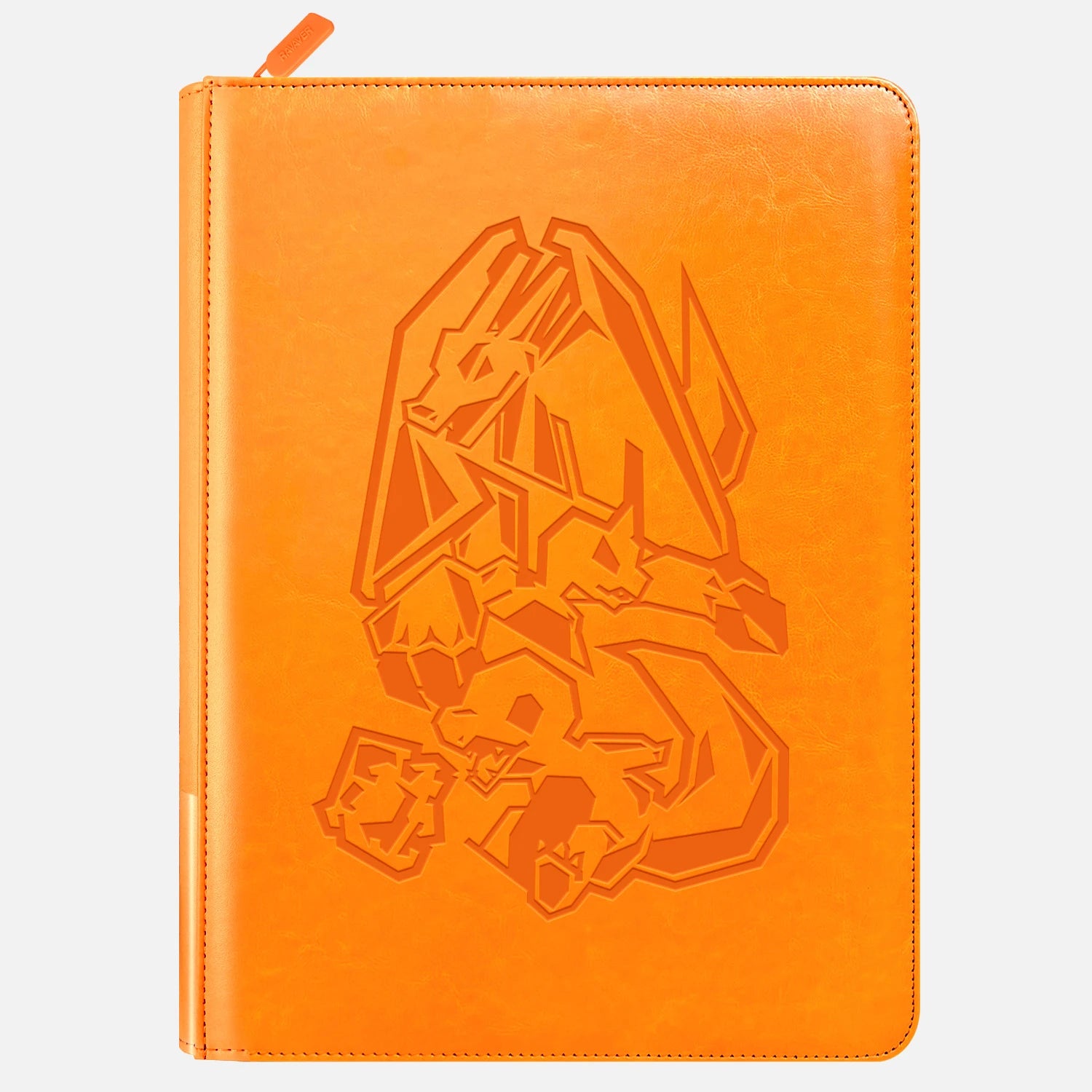
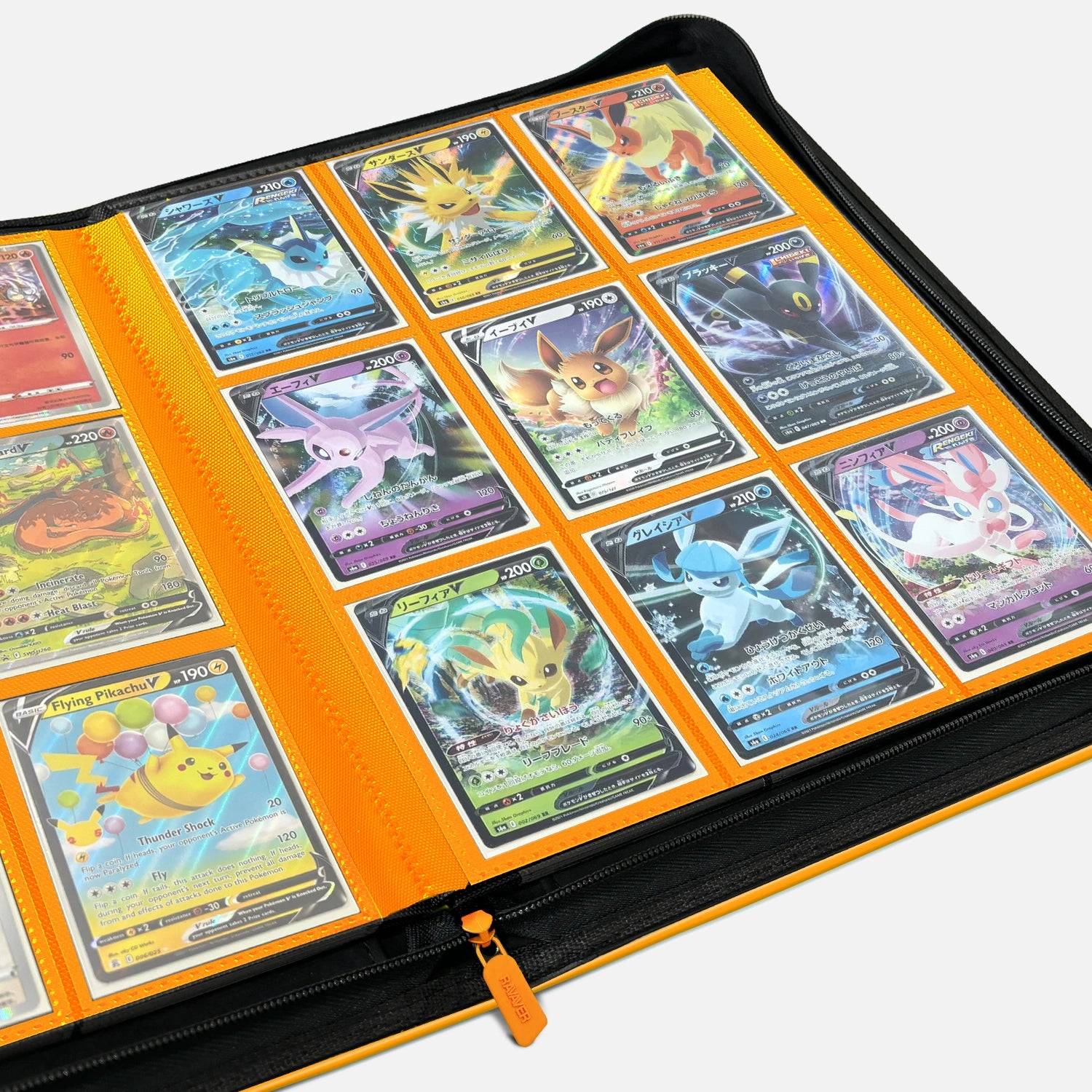
Storage choices matter as much as hold-period choices for boxes you plan to keep. A premium card binder for the singles you crack from sample boxes protects the cards you actually use, while sealed inventory stays in dedicated long-term storage. Treat the framework as a living document. Reprint announcements, chase card price moves, and TPCi licensing news all change input scores in real time.
Sources:
- TCGplayer, Top Selling Sealed Products March 2026, retrieved 2026-05-05, https://seller.tcgplayer.com/blog/top-selling-sealed-products-march-2026
- TCGplayer, Top Selling Sealed Product Right Now February 11 2026, retrieved 2026-05-05, https://seller.tcgplayer.com/blog/top-selling-sealed-product-right-now-02-11-2026
- TCGplayer, Top Selling Sealed Product Right Now January 12 2026, retrieved 2026-05-05, https://seller.tcgplayer.com/blog/top-selling-sealed-product-right-now-01-12-2026
- PSA, Grading Services Update February 2026, retrieved 2026-05-05, https://www.psacard.com/articles/articleview/15663/grading-services-update-february-2026
- PSA, Pricing and Estimated Turnaround Time Updates, retrieved 2026-05-05, https://www.psacard.com/info/submission-updates