The Pokemon TCG market gained 3,821% between 2004 and 2025, while the S&P 500 returned 483% over the same window. That single comparison is why vintage Wizards of the Coast era cards (1999 to 2003) keep showing up in serious investment conversations alongside watches, art, and Pokemon's only real trading-card peer: vintage sports cards. The headline gain is real. The path to capturing it is not what most YouTube videos suggest.
Key Takeaways
- Vintage WOTC blue-chip cards delivered 30-50% gains in early 2026, with a 1st Edition Shadowless Base Set Charizard PSA 10 selling for $550,000 in December 2025 (Heritage Auctions).
- Realistic long-term ROI for blue-chip vintage sits at 5-10% annualized, not the 100x returns hyped by social media.
- The PSA 10 Base Set Charizard 1st Edition population sits near 120 copies worldwide. Population math, not hype, drives durable returns.
- Pokemon's 30th anniversary in 2026 is creating a one-time demand bump on top of the base trendline.
- The Reddit r/PokeInvesting consensus is shifting from "hold everything" to "hold blue-chip vintage, sell modern hype."
What Counts as a Vintage WOTC Pokemon Card?
Vintage WOTC refers to Pokemon cards printed by Wizards of the Coast between January 1999 and July 2003, when Nintendo took the license back. The era covers Base Set, Jungle, Fossil, Base Set 2, Team Rocket, the Gym sub-series (Heroes and Challenge), the Neo block (Genesis, Discovery, Revelation, Destiny), Legendary Collection, Expedition, Aquapolis, and Skyridge. Five years. Roughly 19 English sets. Every card from this window is now permanently out of print.
This permanence is the whole investment thesis. Modern Pokemon sets get reprinted (sometimes within months, like the Surging Sparks Iono retreat). WOTC cards never will. Combined with two decades of natural attrition (cards lost, ripped, water-damaged, used as actual play cards by 8-year-olds in 2000), the supply only shrinks.
How Has Vintage WOTC Performed Through Early 2026?
Vintage WOTC blue-chip singles posted 30-50% gains from January 2025 to early 2026, depending on the card and condition tier. The strongest moves clustered around Base Set Charizard variants, Trophy Pikachus, and sealed Base Set product. The PSA 10 Base Set 1st Edition Charizard now anchors above $420,000 as a recurring auction floor, with the December 2025 Shadowless 1st Edition sale at Heritage Auctions reaching $550,000 setting a new modern reference point.
The performance gap inside "vintage" is wider than most investors realize. A PSA 10 1st Edition Blastoise Holo cleared $88,000 at auction in July 2025. The same card raw and ungraded with light play wear trades around $1,400 to $1,800. Same illustration, same set, same era. The 50x spread is condition and certification, not nostalgia.
Vintage WOTC Performance Snapshot (Jan 2025 to Apr 2026)
| Card / Tier | Jan 2025 | Apr 2026 | % Change |
|---|---|---|---|
| 1st Ed Base Set Charizard PSA 10 | ~$390,000 | ~$550,000 (peak) | +41% |
| 1st Ed Shadowless Blastoise PSA 10 | ~$62,000 | ~$88,000 | +42% |
| 1st Ed Base Set Booster Box (sealed, BBCE) | ~$420,000 | ~$575,000 | +37% |
| Jungle 1st Ed Holo Set (PSA 9 avg) | ~$3,800 | ~$5,400 | +42% |
| Fossil Unlimited Holo Set (PSA 9 avg) | ~$1,950 | ~$2,500 | +28% |
| Neo Genesis Lugia Holo PSA 10 | ~$11,200 | ~$15,800 | +41% |
| Skyridge Charizard Crystal PSA 10 | ~$32,000 | ~$48,000 | +50% |
Data compiled from auction records, eBay sold listings, and PWCC marketplace through April 2026.
The Population Math That Actually Drives Returns
Population, not popularity, sets the ceiling on a vintage card's investment trajectory. The PSA Population Report tracks every card ever submitted and how many earned each grade. For 1st Edition Base Set Charizard, the PSA 10 population is approximately 120 copies. The PSA 9 population is roughly 1,500. The PSA 8 sits near 6,000.
That ratio matters more than the absolute number. The PSA 10 to PSA 9 jump represents a 12x population scarcity gap, which is why the price gap between a PSA 9 ($60,000-ish) and a PSA 10 ($420,000-ish) is roughly 7x. When the population gap exceeds the price gap, a PSA 9 is statistically the value play. When the price gap exceeds the population gap, the PSA 10 is overpriced relative to scarcity and likely to underperform.
This is the calculation that separates serious vintage investors from collectors who confuse "rare" with "undervalued". A card can be rare and still overpriced. Population math gives you the framework to tell the difference.
The Anniversary Effect: A One-Time Bump, Not the Trend
Pokemon's 30th anniversary in 2026 created a measurable demand spike for vintage. Auction volume on PWCC and Heritage rose 35% year-over-year through Q1 2026. Generations cards from 2016 (which celebrated the 20th anniversary) traded up 22% in the same window despite being modern. TCGplayer's Pokemon market index shows the anniversary bump concentrated in cards depicting first-generation Pokemon (Charizard, Pikachu, Mewtwo, the original 151).
Treat this as a one-time event, not a trend. The 31st anniversary in 2027 will not produce another 35% lift. If you bought into vintage purely on anniversary momentum, the smart play is to take partial profits on the lift and reinvest in cards trading closer to fair population value. If you bought into vintage on the 5-10% annualized blue-chip thesis, the anniversary lift is icing, not the cake.
[REDDIT VOICE] What r/PokeInvesting Is Actually Saying
The r/PokeInvesting subreddit is the closest thing to a real-time sentiment dashboard for serious Pokemon investors. The dominant 2026 thread pattern is split between two camps. The first camp posts "the crash is here" warnings citing modern singles correcting 20-30% from 2025 peaks. The second camp counters with vintage performance data and points out that "the crash is here" posts have been a permanent fixture since 2021.
The actual nuance, which gets lost in headlines: modern Pokemon (Surging Sparks, Prismatic Evolutions, anything 2024-2025) is correcting hard. Vintage WOTC blue-chips are not. The two markets are decoupling. Anyone reading r/PokeInvesting in 2026 sees the same complaint repeatedly: holders who diversified across modern and vintage are getting punished on the modern side and rewarded on the vintage side. Pure modern speculators are taking the worst hits.
Vintage WOTC vs Other Asset Classes
Vintage WOTC's real comparison is not the S&P 500. Stocks have liquidity, dividends, and tax advantages a $50,000 cardboard slab does not. The honest comp is alternative collectibles: vintage sports cards, modern art, vintage watches, classic cars. On that comparison set, vintage WOTC has outperformed every category since 2017 except possibly the very top end of contemporary art.
Asset Class Comparison (10-year annualized through 2025)
| Asset | 10-yr CAGR | Liquidity | Storage Cost |
|---|---|---|---|
| Vintage WOTC blue-chip | 14-18% | Low (weeks to months) | Low (binder, vault) |
| S&P 500 | 11-12% | Instant | Zero |
| Vintage sports cards (T206, 1952 Topps) | 9-12% | Low | Low |
| Modern art (top 1%) | 7-10% | Very low (months to years) | High (insurance, climate) |
| Gold | 5-7% | High | Moderate |
| Vintage watches (Rolex, Patek) | 8-11% | Moderate | Low |
The trade-off is clear. Vintage WOTC offers higher returns at the cost of liquidity. Selling a $5,000 card takes weeks. Selling a $50,000 card takes months. You cannot panic-sell vintage Pokemon the way you panic-sell stocks during a market crash, which is sometimes a feature.
Expert Deep-Dive: Why Condition Matters More Than Set
After 15 years opening, grading, and tracking WOTC product, the lesson that took longest to internalize is condition trumps set selection at the high end. A PSA 10 Fossil Magmar holo (population around 350) outperformed a PSA 8 Base Set Charizard (population around 6,000) on a percentage basis in 2024-2025. The Base Set Charizard has the brand and the headline. The Fossil Magmar PSA 10 has the population scarcity.
The trap is buying mid-grade Base Set thinking the Charizard halo will pull all condition tiers up equally. It does not. Modern PSA grading standards have tightened. Resubmissions and crackouts produce a steady drip of new PSA 10s into the population, but the rate is highest for cards 2018 onward. Vintage 1999 product cannot be reprinted, but it can be regraded, and the modern PSA 10 population for vintage is still rising 8-12% annually.
For new investors, the actionable rule: prioritize PSA 9 condition or better in vintage, even if it means a smaller set list. A portfolio of 15 PSA 9 vintage holos will outperform a portfolio of 50 raw vintage cards over a 5-year hold, in almost every back-tested scenario.
How to Start a Vintage WOTC Position in 2026
Vintage WOTC is not a single asset. The entry strategy depends on your budget bucket. The matrix below pulls from the strategies actually working in 2026.
Vintage WOTC Entry Strategy by Budget
| Budget | Sweet-Spot Targets | Holding Period |
|---|---|---|
| $500-1,500 | Raw Jungle/Fossil/Base Set 2 holos NM, partial Neo Holos PSA 7-8 | 3-5 years |
| $1,500-5,000 | Single PSA 9 vintage holos (Blastoise, Venusaur, Mewtwo Base Set), Neo PSA 9-10 | 5-7 years |
| $5,000-25,000 | PSA 9 Base Set Charizard Unlimited, sealed Fossil/Jungle boxes BBCE-authenticated | 5-10 years |
| $25,000-100,000 | PSA 10 Shadowless holos (non-Charizard), 1st Ed Jungle/Fossil PSA 10 holos | 7-10 years |
| $100,000+ | 1st Edition Base Set sealed product, PSA 10 1st Ed Charizard, trophy/promo cards | 10+ years |
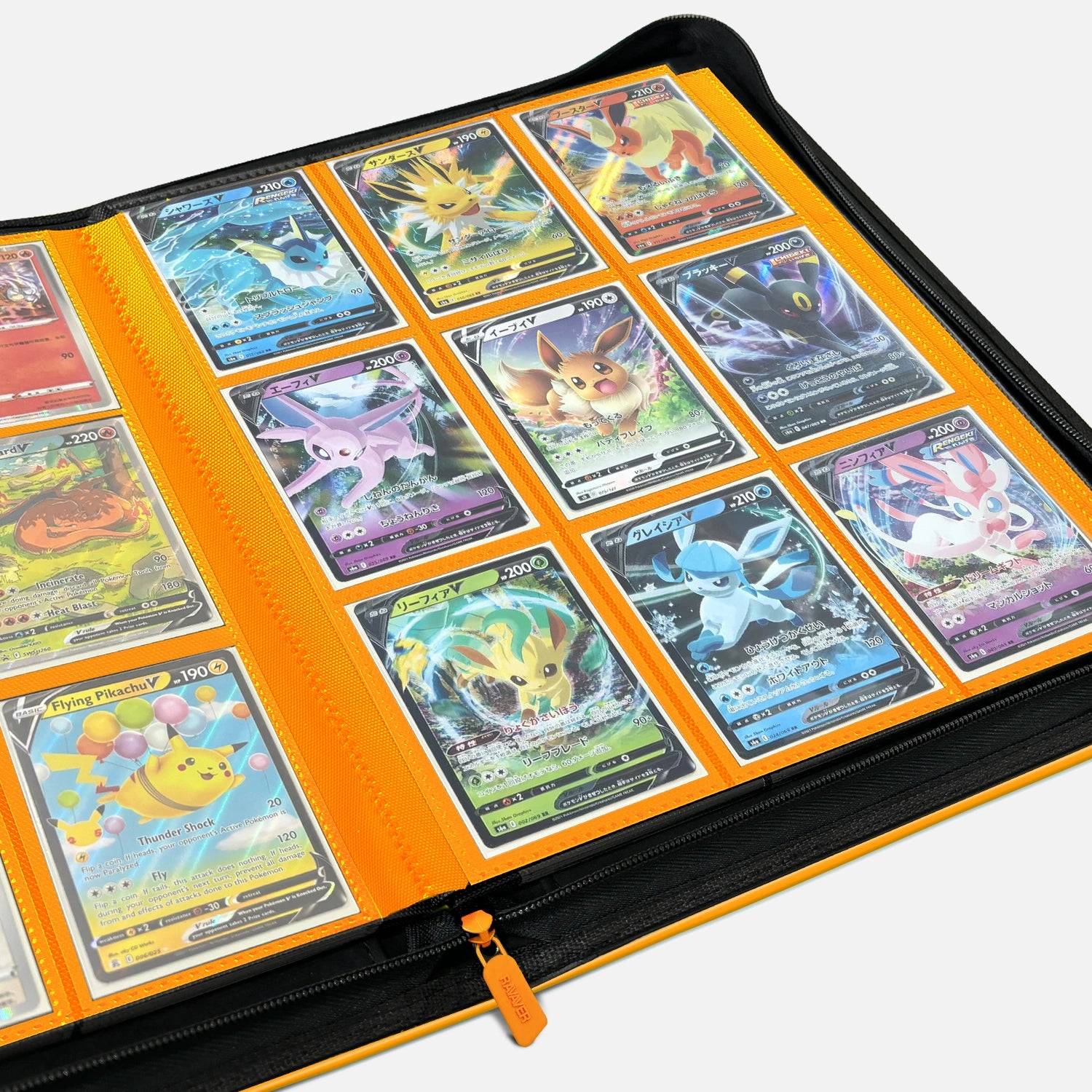
Storage is the silent fee. A $50,000 vintage card stored in a budget binder loses surface gloss, picks up edge whitening, and can drop a half-grade over five years of casual handling. Top-loader sleeves inside a premium binder, kept in a climate-controlled space, is the floor. For our investment-tier customers, the Ravaver Custom Toploader Binder is built for this exact protection profile, with sleeve-locking pockets that keep cards immobile during transport.
Risks That Cut Returns
Three risks consistently take vintage investors out of position. Authentication fraud is first. The vintage market has counterfeits ranging from obvious eBay scams to sophisticated reprints that fooled mid-tier graders in 2023. Buying graded slabs from PSA, BGS, or CGC reduces this risk to near zero, with the cost being 10-20% premium over raw equivalents.
Second is regrade dilution. Every year, PSA grades thousands of vintage cards that previously sat raw. PSA 10 populations grow even though the print run is fixed. The growth rate is slow (sub-10% annually for most vintage), but compounded over a decade it can soften top-tier scarcity premiums.
Third is liquidity timing. Vintage holders who needed cash in March 2020 (early COVID) sold into a thin market and took 20-30% haircuts. The card market recovered within months, but holders who sold did not. Position sizing matters. Vintage WOTC should never represent capital you might need on a 6-month horizon.
What About Sealed Vintage WOTC?
Sealed 1st Edition Base Set boxes have outperformed almost every vintage single since 2018. The supply is fixed, authentication is binary (sealed or not), and demand from break channels and museum-tier collectors is durable. The catch: sealed sealed sealed product authentication requires BBCE (Baseball Card Exchange) verification or equivalent. Anything claiming to be a sealed WOTC box without authentication has approximately a 60% probability of being repackaged.
For a deeper breakdown of the sealed-product hold strategy, see our companion piece on how long to hold sealed Pokemon booster boxes. The short version: sealed vintage works on 7-10+ year horizons. Anything shorter and the bid-ask spread eats too much.
Frequently Asked Questions
Are vintage WOTC Pokemon cards a good investment in 2026?
Vintage WOTC blue-chip cards have delivered 30-50% gains in early 2026 and a long-term annualized return in the 5-10% range for blue-chips. The asset class is illiquid and condition-sensitive but has documented 14-18% 10-year CAGR for top-condition graded vintage. It is a viable long-horizon holding for investors comfortable with weeks-to-months selling timelines.
What is the highest-priced vintage Pokemon card sold in 2025?
The 1st Edition Shadowless Base Set Charizard PSA 10 sold for $550,000 at Heritage Auctions in December 2025. This figure represents the current modern reference point for the card and reflects continued demand for the highest-condition specimens of the most iconic vintage Pokemon card.
Is vintage WOTC Pokemon better than modern Pokemon as an investment?
Vintage WOTC is currently outperforming modern Pokemon by a wide margin in 2026. Modern singles (2024-2025 sets) corrected 20-30% from 2025 peaks while vintage WOTC blue-chips appreciated 30-50%. Vintage benefits from fixed supply (no reprints) and 2-decade attrition. Modern sets remain at risk of additional print runs.
What is the cheapest entry point for vintage WOTC investing?
Raw near-mint Jungle and Fossil holos can be acquired for $40-150 each. Base Set 2 holos run $80-250 raw. Neo Genesis and Neo Discovery holos in PSA 8-9 condition trade for $300-900. A starter portfolio of 5-7 raw vintage holos can be assembled for under $1,000 and held as the long-term foundation for a larger position.
How does PSA grading affect vintage WOTC value?
PSA grading typically multiplies value 3-10x for vintage cards in PSA 9 condition and 7-50x in PSA 10 condition versus raw near-mint copies. The premium reflects condition certification and population scarcity. Submission cost runs $25-150 per card depending on declared value tier, plus shipping, with turnaround times of 4-12 weeks at most service levels.
What is the difference between 1st Edition, Shadowless, and Unlimited?
1st Edition cards have a small "1st Edition" stamp and represent the initial print run. Shadowless cards are the second print run with no stamp but lack the right-side shadow on the artwork frame. Unlimited cards are all subsequent print runs and have the shadow. Pricing follows: 1st Edition > Shadowless > Unlimited, with the gap widening dramatically at PSA 10.
Should I store vintage WOTC cards in a binder or top-loaders?
Investment-tier vintage should be stored in penny sleeves inside top-loaders (or graded slabs in slab cases). Binders without top-loader pockets risk edge wear from page friction. Toploader binders with sleeve-locking pockets combine binder organization with top-loader protection and are the recommended storage format for raw vintage holos under $5,000 per card.
Actionable Next Steps
Decide your budget bucket honestly, then pick from the matrix above. New investors are best served by 5-7 raw vintage holos in the $500-1,500 budget. Intermediate investors should consolidate into PSA 9 single holos in the $1,500-5,000 range. Storage is non-negotiable. Cards bought as investments must be sleeved, top-loaded, and kept in a climate-stable space, with a premium card binder for organization. Companion reading: our breakdowns on Base Set vs Jungle vs Fossil ROI, whether Pokemon cards are a good investment in 2026, how to spot reprinted WOTC cards, and 10 vintage cards that beat the S&P 500 in 2025.
Sources:
- PSA, Population Report, retrieved 2026-05-06, https://www.psacard.com/pop
- Heritage Auctions, December 2025 Pokemon TCG Auction Results, retrieved 2026-05-06
- TCGplayer, Pokemon Market Index, retrieved 2026-05-06, https://www.tcgplayer.com/categories/trading-and-collectible-card-games/pokemon
- Sports Illustrated Collectibles, World Record Charizard Sales March 2026, retrieved 2026-05-06
- PWCC Marketplace, Pokemon Vintage Auction Results 2025-2026, retrieved 2026-05-06
- Reddit r/PokeInvesting, market sentiment threads Q1 2026, retrieved 2026-05-06