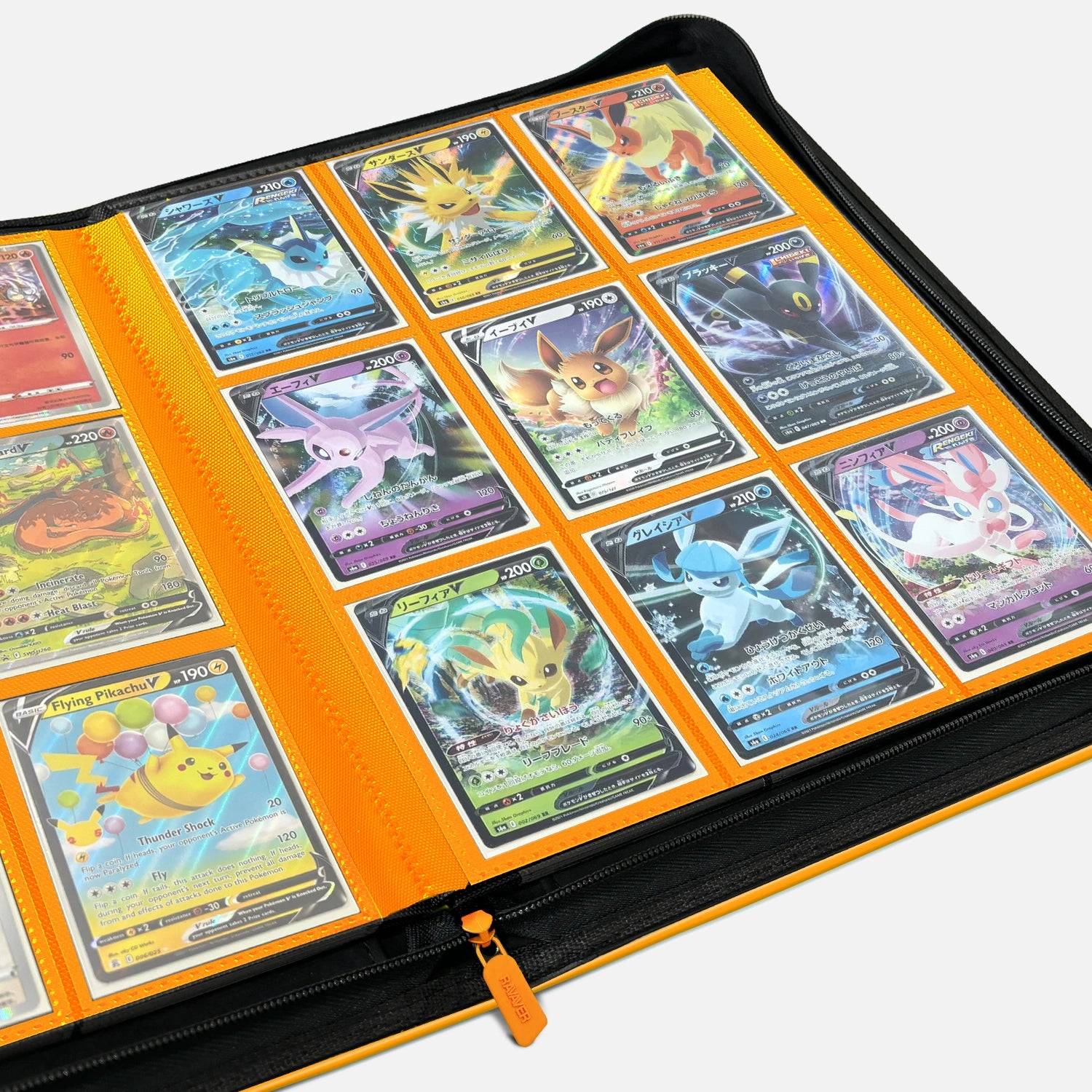
The question "are Pokemon cards a good investment" gets answered the same lazy way in almost every article: yes, with a chart of Charizard prices. That answer is useless because Pokemon cards are not a single asset class. Sealed 1st Edition Base Set boxes, raw Jungle Wartortle holos, PSA 10 Surging Sparks Iono, and ungraded modern English Mewtwo VSTAR are four entirely different investments with different return profiles, time horizons, and risk levels. The honest math depends on which one you are buying.
Key Takeaways
- Vintage WOTC blue-chip singles: 30-50% gains in early 2026, 5-10% long-term annualized. Generally yes, with caveats.
- Sealed vintage WOTC product: 14-18% 10-year CAGR, 7-10+ year hold required. Yes for patient capital.
- Modern Pokemon singles (2024-2025 sets): corrected 20-30% from 2025 peaks. Generally no for buy-and-hold.
- Modern graded slabs (PSA 10 chase cards): 10-25% gains through 2026 for top SIRs, but high attrition and reprint risk.
- Ungraded raw modern: lowest return tier. Almost never an investment, mostly a play-collect hybrid.
The Five Sub-Segments You Actually Have to Pick Between
Pokemon cards as an asset class break down into five buckets that behave differently. Conflating them is why most investment advice fails. The chart below summarizes April 2026 performance and risk profile across the five.
Pokemon Card Investment Sub-Segments (April 2026)
| Sub-Segment | 2025-2026 Return | Recommended Hold | Investment Verdict |
|---|---|---|---|
| Vintage WOTC graded singles | +30 to +50% | 5-10 years | Yes for blue-chips |
| Sealed vintage WOTC boxes | +25 to +40% | 7-10+ years | Yes for patient capital |
| Modern PSA 10 chase singles | +10 to +25% (selected) | 2-5 years | Mixed; high reprint risk |
| Modern raw singles | -15 to +5% | N/A speculative | Rarely; play-collect hybrid |
| Sealed modern boxes | +5 to +20% (set-dependent) | 3-7 years | Maybe; reprint timing critical |
Anyone telling you Pokemon cards are a good investment without specifying which of these five buckets is selling rather than analyzing. The verdict shifts dramatically based on segment.
Why Time Horizon Changes the Answer
A 12-month horizon and a 10-year horizon produce different verdicts on identical cards. The Pokemon market is volatile in the short term and steady-to-strong in the long term. Modern Pokemon singles corrected 20-30% from 2025 peaks through Q1 2026, which would crush a 12-month-horizon investor but barely register on a 10-year chart. Vintage WOTC cards held flat for 6 months in mid-2024 then ripped 35% in late 2025 and Q1 2026.
The honest rule: do not call something an investment if you might need the cash within 36 months. Pokemon cards are illiquid relative to stocks. Selling a $5,000 vintage card takes weeks of bidding patience. Selling a $50,000 vintage card takes months. Anyone forced to liquidate inside 12 months pays a 10-25% liquidity discount, regardless of segment.
[REDDIT VOICE] The Sentiment Split That Matters
The r/PokeInvesting community is split right down the middle in 2026. The pessimist camp posts every market correction as proof the bubble is bursting, citing modern singles down 20-30% from peaks. The optimist camp counters with vintage WOTC performance and the 30th anniversary cycle. Both are partially right, and the disagreement traces directly to which sub-segment each commenter holds.
Holders heavy in modern (Surging Sparks, Prismatic Evolutions, late-Sword and Shield era) are taking real losses. Holders heavy in vintage WOTC are up double-digits year-over-year. The honest read of the subreddit, filtering for actual portfolio screenshots versus pure opinion, is that diversified holders with 60%+ vintage allocation are positive in 2026, and pure modern speculators are negative.
Why Vintage Beats Modern in 2026
Three structural factors favor vintage WOTC over modern Pokemon as an investment. First, supply is genuinely fixed. The Pokemon Company can and does reprint modern sets when demand spikes (Surging Sparks Iono got a soft reprint within months). WOTC vintage cannot be reprinted under any circumstance. Second, attrition has compounded for 25+ years. Modern cards still have a full attrition curve ahead of them. Third, the 30th anniversary cycle in 2026 specifically targets generation-1 Pokemon, which means the spotlight falls on cards from Base Set, Jungle, Fossil, and the Neo era.
The math: a 1999 Base Set Charizard had 25 years of attrition before reaching today's market. A 2024 Surging Sparks Iono has 25 years of attrition still ahead. The vintage card's supply curve is already settled. The modern card's supply curve is still resolving. PSA's Population Report shows vintage holo populations growing 8-12% annually from regrades, while modern holo populations are growing 30-50% annually as fresh boxes ripped fresh boxes ripped fresh submissions hit the queue.
The Three Risks That Cut Real-World Returns
Even in the favorable vintage segment, three risks consistently trim investor returns below the headline numbers. Authentication fraud takes the top spot. Counterfeit vintage cards range from obvious eBay scams to sophisticated reprints that have fooled mid-tier graders. Solution: buy graded slabs from PSA, BGS, or CGC.
Storage damage is the silent fee. A $5,000 vintage card stored loose in a cheap binder loses surface gloss, picks up edge whitening, and can drop a half-grade over five years. The economic damage of half a grade on a $5,000 card is roughly $1,500 to $2,000. The cost of a premium toploader binder is well under that. The arithmetic is one-sided.
Liquidity timing is the third risk. Holders forced to sell during thin auction windows (mid-summer, holiday weeks) typically take 10-15% haircuts versus peak-window sales. Position sizing matters. Pokemon cards should never represent capital you might need on short notice.
Frequently Asked Questions
Are Pokemon cards a good investment in 2026?
Vintage WOTC blue-chip cards (Base Set, Jungle, Fossil, Neo holos) are a viable long-term investment in 2026, posting 30-50% gains in early 2026 with 5-10% long-term annualized returns. Modern Pokemon singles (2024-2025 sets) are not a strong investment currently, having corrected 20-30% from 2025 peaks. The verdict depends on which segment.
What kind of Pokemon cards are the best investment?
Vintage WOTC graded singles in PSA 9 or PSA 10 condition deliver the strongest risk-adjusted returns. Sealed vintage WOTC product (1st Edition Base Set boxes, BBCE-authenticated) offers higher absolute returns at the cost of longer hold periods. Both outperform modern Pokemon and ungraded raw cards on every meaningful metric.
How much money do I need to start investing in Pokemon cards?
A meaningful starter portfolio in vintage Pokemon requires $500-1,500. Below $500, you can hold one or two raw vintage holos but lack diversification. The $1,500-5,000 range allows 5-7 PSA 9 vintage holos, which is the practical entry point for diversified vintage exposure.
Will the Pokemon card market crash in 2026?
The modern Pokemon segment is already correcting (down 20-30% from 2025 peaks) and may continue softening into late 2026. The vintage WOTC segment shows no crash signal as of April 2026, with continued auction strength and tightening 1st Edition population scarcity. A broad "market crash" affecting both segments equally is unlikely.
Should I buy graded or raw Pokemon cards for investment?
Graded cards in PSA 9 or higher dominate raw cards on risk-adjusted return. Grading eliminates authentication risk, locks in condition, and provides population data. The 10-20% premium for graded vintage versus raw is recoverable through reduced holding-period risk and easier resale liquidity.
How long should I hold Pokemon cards as an investment?
Vintage WOTC graded singles work on 5-10 year horizons. Sealed vintage WOTC product requires 7-10+ year holds for the bid-ask spread to be absorbed by appreciation. Modern Pokemon singles work better as 2-5 year trades, not buy-and-hold positions, given reprint risk.
Actionable Next Steps
If you have under 36 months of holding tolerance, Pokemon cards are speculation, not investment. If you have 5-10 year tolerance, allocate to vintage WOTC graded singles (PSA 9 or higher) as the foundation. Skip modern Pokemon as a buy-and-hold investment in 2026 and treat it as a tactical 2-5 year position at most. Storage matters: a premium card binder protects what is actually a low-friction asset against the silent costs of edge wear. For deeper analysis, see our vintage WOTC investment strategy, the Base Set vs Jungle vs Fossil ROI breakdown, and the 10 vintage cards that beat the S&P 500 in 2025.
Sources:
- PSA, Population Report, retrieved 2026-05-06, https://www.psacard.com/pop
- TCGplayer, Pokemon Market Index, retrieved 2026-05-06, https://www.tcgplayer.com/categories/trading-and-collectible-card-games/pokemon
- Reddit r/PokeInvesting, sentiment threads Q1 2026, retrieved 2026-05-06
- PWCC Marketplace, Vintage Auction Results 2025-2026, retrieved 2026-05-06