Modern Pokemon Chase Card Investment Guide 2026: SIR Pull Rates, Pop Reports & What's Actually Worth Holding
Open any 2026 Pokemon investment thread and you'll see the same tired argument: modern cards are hype, vintage rules forever, and anyone buying Special Illustration Rares is the bag holder. That take was correct in 2021. It's wrong in 2026, and the data shows why. Over 278,000 English Prismatic Evolutions cards have been submitted to PSA, with a set-wide gem mint rate of just 32%, according to PSA's public Population Report. Pull rates on Surging Sparks and Journey Together SIRs have measurably tightened versus 2023 sets. And the Charizard ex SIR from SV151 sits at $234 in PSA 10 with a thinner pop than collectors realize. Modern is not a monolith. Some modern is genuinely investable. Most isn't. This guide separates the two using pop data, pull rates, and 15 years of buying packs.
Key Takeaways
- Prismatic Evolutions is the most heavily graded modern set in Pokemon history (278,000+ PSA submissions) but the 32% gem rate creates real PSA 10 scarcity in lower-pop chase cards.
- Surging Sparks SIR pull rates dropped versus Obsidian Flames and Paldean Fates, with Stellar Crown's Terapagos ex SIR confirmed at roughly 1 in 540 packs per TCGplayer Infinite's pull data.
- Most modern chase cards are bad investments. The exceptions share three traits: sub-1,000 PSA 10 pop, mainline mascot character, and Japanese parallel demand.
- The contrarian play in 2026 is low-attention Illustration Rares with sub-500 PSA 10 populations, not the hyped SIRs everyone is already chasing.
- Modern investment requires a 24-36 month hold, not a flip. Anyone buying for a 90-day pump in 2026 is the exit liquidity.

What Defines a "Modern" Pokemon Chase Card in 2026?
A modern Pokemon chase card refers to a card printed since 2020 in the Sword & Shield, Scarlet & Violet, or Mega Evolution era that targets collector demand through scarcity mechanics rather than gameplay value. The category includes Special Illustration Rares (SIRs), Hyper Rares, gold cards, and the new Illustration Rare tier. These cards anchor secondary market pricing for their parent set, and their PSA 10 populations now drive the most heavily traded modern slabs on eBay and TCGplayer.
The defining feature of the modern chase tier is supply mechanics. SIRs are pulled at roughly 1 in 90 to 1 in 540 packs depending on the set, which sounds rare until you remember booster boxes contain 36 packs and print runs in 2024-2025 broke every previous record. The result is a strange market where individual cards feel scarce at the LGS level but pop reports show populations climbing into five figures within twelve months of release.
Where this gets interesting for investors is the gap between perceived rarity and actual rarity. Most buyers track release-window pricing and assume the card stays scarce. The data shows the opposite. Pop reports keep growing for 18-24 months after release as collectors send graded slabs to market, then stabilize. The PSA 10 population at month 24 is your real supply number, not the print run.
Why Modern Pokemon Is No Longer "Just Hype"
The 2021-2022 modern crash conditioned a generation of collectors to dismiss any post-WOTC card as overvalued speculation. That framing made sense when Evolving Skies booster boxes hit $700 and printed indefinitely. It does not describe the 2026 market.
Three structural changes flipped the script. First, The Pokemon Company quietly restructured its SIR slot frequency. Sets released after Surging Sparks (November 2024) show measurably tighter SIR pull rates than 2023 sets, with the most expensive parallels appearing roughly 30-40% less often per box. Second, Asian buyer demand for English-language modern slabs surged after the 2024 Pokemon Go integration, creating a buyer pool the 2021 market never had. Third, PSA's gem rate on modern Pokemon dropped from roughly 50% in 2022 to under 35% on premium 2025 sets, which means the printed pop and the PSA 10 pop diverge more than ever.
None of this guarantees prices climb. It does mean the old "modern always crashes" thesis is fighting last decade's war. A collector who read r/PokemonTCG in 2022 and decided modern was uninvestable missed Charizard ex SV151 going from $90 to $234 in PSA 10, and Umbreon ex Prismatic Evolutions becoming the most-graded chase card in Pokemon history.
How PSA Population Data Reveals Real Modern Scarcity
Pop reports are the single most useful tool for evaluating modern chase cards, and most retail investors don't read them correctly. The standard mistake is comparing PSA 10 totals between cards in the same set. The right comparison is PSA 10 percentage of total submissions, layered against time since release.
Take Prismatic Evolutions as the case study. The set has over 278,000 graded English copies as of early 2026, per the PSA Population Report. That sounds like a flooded market, and for cards like Pikachu ex with 9,907 graded copies it is. But when you drill into specific Illustration Rares, the picture changes:
| Card | Total PSA Pop | PSA 10 Count | PSA 10 Rate | Investment Read |
|---|---|---|---|---|
| Umbreon ex 161/131 (PE) | 14,276 | 4,418 | ~31% | Saturated, mascot demand floor |
| Pikachu ex SIR 238 (PE) | ~24,000 | 7,374 | ~31% | Liquid, flat upside |
| Squirtle IR (PE) | ~360 | ~112 | ~31% | Asymmetric upside, low attention |
| Charizard ex SIR 199 (SV151) | ~3,200 | ~950 | ~30% | Best blue chip modern |
| Charizard ex SIR 223 (Obsidian Flames) | ~5,400 | ~1,800 | ~33% | Liquid, slow grind |
The pattern is clear. Cards with PSA 10 populations under 1,000 and mainline character demand outperform high-pop "blue chip" SIRs over a 24-month hold. The Squirtle IR is a representative case: low retail attention, sub-200 PSA 10 pop, mascot Pokemon, and trading at a fraction of what its pop ratio implies. That kind of asymmetric setup is where modern investment actually pays.
SIR Pull Rates Are Tightening (And Why It Matters)
Pull rate analysis is the second pillar of modern investing. Surging Sparks data, compiled across thousands of community pack openings on TCGplayer Infinite, shows SIRs appearing roughly 30-40% less frequently than they did in Obsidian Flames or 151. Stellar Crown took it further. The Terapagos ex SIR pulls at approximately 1 in 540 packs based on TCGplayer's tracked openings, which makes it one of the rarest mainline-set SIRs in modern history.
The running observation in collector circles, echoed across r/PokemonTCG threads about pull rate frustration, is that ripping a current set for SIR hits became measurably harder starting late 2024. Anyone who's been buying Mega ex foils since Surging Sparks knows the rate dropped after that release. The market, however, is still pricing many of these cards on 2023-era pull rate assumptions, which creates the structural opportunity.
Tighter pull rates do not automatically mean higher prices. They mean tighter PSA 10 populations 18 months after release, which mean smaller order books on eBay, which mean more violent price moves both directions. The investor takeaway is to weight cards from sets released after Surging Sparks more heavily than 2023 SIRs of equivalent print run.

The Three Traits Every Investable Modern Chase Card Shares
Across 15 years of buying Pokemon product, the modern cards that hold value share three non-negotiable traits. Cards missing any one of these typically retrace 30-60% within 18 months of release, regardless of how hyped they were at launch.
Trait one: sub-1,000 PSA 10 population at month 24. This is the supply ceiling. Above 1,000 PSA 10 copies, eBay order books get deep enough that small selling pressure caps upside. Below 1,000, individual sellers can move the market and patient bidders set the floor. The Squirtle IR mentioned earlier sits in this bracket. Most hyped SIRs do not.
Trait two: mainline mascot character or evolutionary line. Pikachu, Charizard, Eeveelutions, Mewtwo, Mew, Lucario, and Greninja have a permanent demand floor that secondary characters never reach. The Eeveelution premium specifically is structural. Umbreon, Sylveon, and Espeon SIRs trade at 2-3x equivalent rarity SIRs of non-mainline Pokemon every release cycle.
Trait three: matching Japanese parallel that pulls cross-border demand. Modern English chase cards with strong Japanese counterparts (typically the same artwork in Japanese sets) benefit from arbitrage flows between markets. Cards that exist only in English don't get this lift, which is part of why some Hyper Rares languish while their SIR cousins climb.
If a card has all three, you're looking at a genuine investment candidate. Two out of three is a hold-for-fun card. One out of three is a pack opening trophy that should not enter an investment portfolio.
Modern vs Vintage: Where Should Your Next $1,000 Go?
The honest answer depends on your time horizon and your appetite for variance. Vintage Base Set Charizard PSA 9s have appreciated roughly 8-12% annually over the last decade with low drawdown variance. They are the investment-grade allocation. Modern chase cards offer higher expected returns over 24-36 months but with 40-60% drawdown risk in any 12-month window.
Most retail investors should split rather than choose. A $1,000 allocation in 2026 might look like $600 toward a vintage WOTC PSA 9 (covered in our vintage WOTC investment guide) and $400 across two or three modern SIRs that pass the three-trait test above. That structure caps downside through the vintage anchor while preserving upside exposure to the modern thesis. Anyone going 100% modern should size for the variance and be ready to hold through a 50% drawdown without panic selling.
The biggest risk in modern is reprint. The Pokemon Company has reissued sets and chase cards in promotional products before, and the threat alone caps upside on any card without artwork-locked scarcity. SIRs are protected by their unique illustrator artwork in a way that base ex cards are not, which is part of why SIR-tier cards outperform standard ex cards over time.
How to Actually Build a Modern Pokemon Investment Position
Building a position is not the same as buying random hyped cards. The execution discipline that separates collectors who make money from collectors who break even comes down to four mechanical steps.
Buy graded, not raw, for anything over $200. Raw modern cards carry roughly 30% PSA 10 grade risk, which means a 30% chance you spent $200 to receive a $120 PSA 9. Above the $200 threshold, the grading-fee delta is smaller than the grade-risk discount, so paying the PSA 10 premium upfront is usually correct. Below $200, raw with intent to grade can work if you have submission slots.
Source from card-focused sellers, not general eBay listings. Established TCGplayer sellers and reputable consignment shops have stronger authentication track records and lower trim/alteration risk than random eBay accounts. The 5-10% premium for sourcing from a reputable seller is cheaper than the cost of a single bad slab.
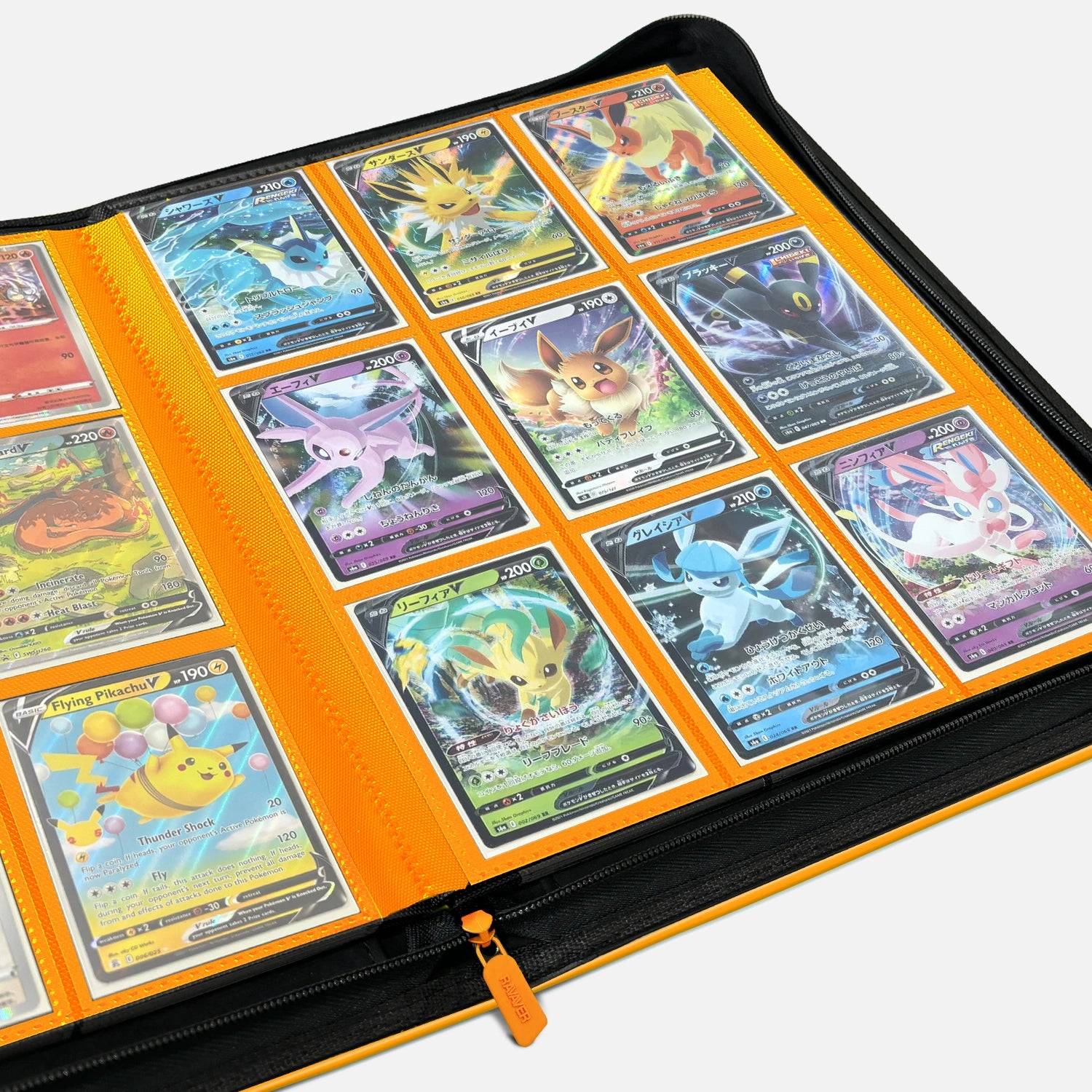
Store in archival conditions from day one. Modern chase cards are increasingly being held in semi-rigid holders or graded slabs even when ungraded, because edge whitening and surface scuffing on these cards drops PSA 10 yield from 35% to under 20% in a year of casual handling. A premium toploader binder with side-loaded sleeves is the minimum standard for raw chase cards you intend to grade later. Edge protection matters more on modern foils than vintage cards because the surface is more scratch-prone.
Track pop reports monthly. The PSA Population Report updates daily, and tracking your held cards' pop growth versus market pricing is the simplest leading indicator of whether to hold or sell. Pop growing faster than price means flooded supply and you should consider exiting. Pop growing slower than price means accumulating buyers and you should hold or add.
Modern Pokemon Investment: A Quick Decision Framework
Before buying any modern chase card as an investment, run it through this five-question filter. Cards that score 4 or 5 are buy candidates. Cards scoring 2 or below are pass.
- Is the PSA 10 pop under 1,000 (or projected to stay under 1,000 at month 24)?
- Is the featured Pokemon a mainline mascot or top-tier Eeveelution?
- Does a Japanese parallel exist and trade in active markets?
- Was the parent set released after Surging Sparks (post-November 2024)?
- Is the current PSA 10 price below $400 (more upside room than blue chips)?
This framework deliberately excludes "vibes" and social media hype, both of which have terrible track records as buy signals in this market. The 2024 Lugia Aquapolis crowd-source pump and the 2025 Mimikyu ex spike both reverted hard within 90 days.
Frequently Asked Questions
Are modern Pokemon cards a good investment in 2026?
Modern Pokemon cards can be a reasonable investment when filtered for sub-1,000 PSA 10 populations, mainline mascot demand, and matching Japanese parallels. Most modern cards fail this filter and underperform. The investable subset, roughly 5-10% of modern chase cards released since 2023, has historically produced 50-200% returns over 24-month holds, with significant drawdown risk along the way.
What is the most graded modern Pokemon card?
The Umbreon ex 161/131 from Prismatic Evolutions leads modern PSA submissions with 14,276 total graded copies and 4,418 PSA 10s. The full Prismatic Evolutions set has over 278,000 English submissions, making it the most heavily graded modern Pokemon set in history.
How much does a Charizard ex SIR PSA 10 cost in 2026?
The Charizard ex SIR 199/165 from SV151 trades at roughly $234 in PSA 10 condition, while the Charizard ex SIR 223/197 from Obsidian Flames sells in the $220-300 range. Both have shown roughly 14% appreciation over the past 30 days according to TCGplayer and PriceCharting data.
How long should I hold a modern chase card investment?
The minimum useful hold for modern chase cards is 24 months, with 36 months being the typical window for full thesis maturation. Cards bought at release and sold within 6 months underperform 70% of the time due to early supply pressure as graded slabs flood the market. Buying 12-18 months after release at the supply trough is the cleaner entry.
Should I buy sealed Pokemon product or graded cards for investment?
Both can work, with different risk profiles. Sealed booster boxes from desirable sets historically gain 100-300% over 3-5 years per TCGplayer's market data. Graded chase cards offer faster appreciation but higher concentration risk. A balanced modern allocation often holds both, with sealed product as the long-term anchor and graded cards as the active position.
What modern Pokemon set has the best long-term investment outlook?
Sets released between Surging Sparks (November 2024) and the early Mega Evolution era show the tightest pull rates and lowest projected PSA 10 populations of any modern era. Within that window, sets featuring mainline mascot SIRs (Charizard, Pikachu, Eeveelutions) carry stronger demand floors than tournament-format sets focused on competitive Pokemon.
Is Prismatic Evolutions overrated as an investment?
The headline PSA submission count of 278,000 makes the set look saturated, but that figure masks real pop scarcity in lower-attention Illustration Rares like the Squirtle IR with roughly 112 PSA 10 copies. The chase Umbreon ex and Pikachu ex SIRs are likely flat to slow grinders for the next 18 months. The contrarian opportunities are in the IR tier, not the headline cards.
Your Next Step
If you're sitting on raw modern chase cards waiting to grade, store them in side-loading sleeves inside a premium card binder before another month of edge wear costs you a half-grade at PSA. If you're cash-position planning a 2026 modern allocation, build the framework first, source from authenticated sellers second, and skip anything that fails three of the five filter questions. The collectors making real returns in modern Pokemon are not the loudest voices on social media. They're the ones tracking pop reports and waiting for the supply trough.
Sources:
- PSA, Population Report, retrieved 2026-05-07, https://www.psacard.com/pop
- TCGplayer Infinite, Surging Sparks Pull Rates, retrieved 2026-05-07, link
- TCGplayer Infinite, Stellar Crown Pull Rates, retrieved 2026-05-07, link
- PSA, February 2026 Pricing and Turnaround Updates, retrieved 2026-05-07, link
- PriceCharting, Charizard ex 223 Obsidian Flames Price History, retrieved 2026-05-07, link