A vintage Pokemon card from 1999 Base Set is not the same archival object as a 2025 Scarlet & Violet pull. The cardstock is older, the surface coatings have already begun their slow oxidation, and the resale market punishes condition issues that wouldn't even register on a modern card. The Pikachu Illustrator that sold for over a million dollars was protected by climate-controlled storage for the better part of three decades. The base-rate Charizard that grades PSA 9 instead of PSA 10 because of a 1mm edge whiten lost about $4,000 in value to a humidity swing somebody didn't notice.
This guide walks through the actual setup for climate-controlled storage of a vintage Pokemon collection, in order, from baseline measurement to long-term monitoring. It's the same workflow I use for my own pre-2003 cards, plus the pieces I added after watching other vintage collectors lose value to environmental damage they could have prevented for $40 in gear.
Key Takeaways
- Vintage cards (pre-2003 WOTC, e-Series, EX-era) need tighter environmental control than modern cards because oxidation, edge whitening, and centering issues have less margin before they affect grade.
- Target 65–70°F and 45–50% relative humidity, with daily swings under 5°F and 5%.
- The full vintage-grade setup runs $120–$320 in gear: hygrometer, dehumidifier (or humidifier in dry climates), silica gel, archival storage boxes, and a thermometer with logging.
- Where you put the collection matters more than which products you buy. An interior closet on the main floor with the door cracked at night beats a basement vault with no airflow every time.

Why vintage cards are different from modern cards
Modern Pokemon cards (2020–2026) are printed on coated cardstock with UV-resistant inks and a manufacturing process that's been refined for decades. They tolerate small environmental variations well. A modern Charizard ex SIR stored at 75°F and 55% humidity might look identical in five years to one stored at archival baseline.
Vintage cards don't have that buffer. Pre-2003 cards used different cardstock formulations, different ink processes, and (in the case of 1st Edition base set) thinner foil layers that are more prone to scratching and oxidation. A vintage Charizard stored at the same 75°F and 55% humidity for five years will show measurable changes — edge whitening, holo dulling, possibly slight warping if humidity swings are involved. Those changes are what separate a $400 PSA 9 from a $4,000 PSA 10 on the same card.
The vintage collector's mistake is assuming "close enough" works. It doesn't. The Library of Congress publishes its archival storage specs at 65–70°F and 45–50% RH for a reason: that's the range where paper degradation rates approach zero. Anything looser, and degradation rates climb. For modern cards, the difference is invisible over a typical collector's lifetime. For vintage cards, it shows up in grade differentials within five to ten years.
Step 1: Measure your current environment for two weeks
Before you buy anything else, buy a $15–$25 digital hygrometer with min/max logging. ThermoPro, Govee, and AcuRite all make units in this range. Put it in the room where your vintage collection currently lives, at the same height as the cards (not on the floor, not at the ceiling). Leave it for 14 days.
What you're looking for in the readings:
- Daily temperature swing: should be under 5°F. If it's swinging 10°F+, that's the first problem.
- Daily humidity swing: should be under 5%. If it's swinging 10%+, that's a problem too.
- Average temperature: anywhere in 60–75°F is workable. The target is 65–70°F.
- Average humidity: target 45–50%. Working range 40–55%.
Don't skip this step. The reason it matters is that you can't solve a problem you haven't measured. A collector who buys a dehumidifier without knowing their baseline often ends up overcorrecting and dropping humidity below 35%, which causes the opposite damage (micro-cracks from dry cardstock).
Step 2: Choose your storage location
The location decision matters more than any single piece of gear you'll buy. The hierarchy from best to worst, for a vintage collection in a U.S. home:
- Interior closet on the main floor. Best. No exterior walls, no temperature extremes, easy to monitor.
- Interior bedroom or office, away from windows. Good. As long as the room is climate-controlled by your home HVAC, it's stable enough.
- Finished, climate-controlled basement, above flood line. Acceptable. Watch humidity carefully — basements run high.
- Walk-in closet with exterior wall. Marginal. Temperature swings more than interior locations.
- Unfinished basement or attic. Not acceptable for vintage. Both have unacceptable humidity and temperature swings.
- Garage or shed. Catastrophic. Don't.
If your only option is a less-than-ideal location, the rest of this guide gets more important. A vintage collection in a finished basement can work, but only with a dehumidifier running continuously and a hygrometer alerting you to swings.
Step 3: Buy the gear (in this order)
Buy in this order, not all at once. Each item solves a specific problem the previous ones might have created.
| # | Item | Cost | When to buy |
|---|---|---|---|
| 1 | Digital hygrometer with min/max logging | $15–$25 | Before anything else |
| 2 | Rechargeable silica gel packets (4–6 oz total) | $15–$25 | Day 1 if humidity is borderline; mandatory |
| 3 | Acid-free BCW or Ultra Pro archival storage boxes | $20–$40 total | Replace any cardboard or plastic storage that isn't acid-free |
| 4 | 30-pint room dehumidifier | $180–$280 | If 14-day humidity readings averaged above 55% |
| 5 | Small evaporative humidifier | $40–$80 | If readings averaged below 40% (desert climates, winter heating) |
| 6 | Wi-Fi humidity/temp logger with alerts | $30–$60 | Once base setup is stable, for travel monitoring |
The total spend depends on your climate. Florida and Gulf Coast collectors usually end up at the $250–$320 range because the dehumidifier is mandatory. Arizona and Nevada collectors land closer to $100–$150 because they need a humidifier instead. Pacific Northwest collectors need both depending on season.
Step 4: Set up storage containers inside the controlled environment
The closet itself is your primary climate control. Inside the closet, your archival boxes act as secondary buffers. The structure looks like this from outside in:
- Climate-controlled room (HVAC handles temperature)
- Dehumidifier or humidifier running in or near the room (handles humidity)
- Closet or cabinet with door (buffers from room swings)
- Archival storage box, sealed lid (buffers further, holds silica gel)
- Sleeved and toplodered cards inside the box
Each layer slows down environmental changes. A 10% humidity spike outside the closet might be a 4% spike inside the box. That buffering is why archival storage works at all — cards experience averaged conditions, not raw room conditions.

Step 5: Establish a monitoring routine
For the first month after setup, check the hygrometer daily. After that, weekly is enough as long as the readings stay stable. The pattern to watch for is gradual drift, not sudden spikes. A reading that's been at 50% for six weeks and suddenly jumps to 65% means something changed (rainy week, HVAC failure, dehumidifier full). A reading that's been at 50% and has slowly climbed to 56% over three months means your silica gel is saturated and needs recharging.
Recharging silica gel is straightforward. Most rechargeable packs have a color indicator (blue/pink or orange/green) that changes as they saturate. When the indicator shows saturated, bake the packs in an oven at 200°F for two hours, let them cool, and put them back. They last indefinitely with this maintenance.
Step 6: Adjust for seasonal changes
U.S. climates swing seasonally even with HVAC running. Summer pulls humidity up and winter heating drives it down. The setup that holds 48% in March might be at 58% by July and 32% by January. Veteran vintage collectors adjust by:
- Summer: dehumidifier runs more or has its target lowered to 45%. Silica gel checked monthly.
- Winter: humidifier introduced if humidity drops below 40%. Cards farthest from humidifier checked weekly for the first month.
- Shoulder seasons (spring/fall): usually the easiest. Standard setup holds within range.
The seasonal adjustment is the difference between a collection that stays in mint condition for decades and one that slowly degrades. Most damage to vintage cards happens during environmental transitions, not during stable periods. A collector who manages transitions actively is doing more for card preservation than someone who buys expensive gear and ignores it.
Frequently Asked Questions
What's the ideal humidity for vintage Pokemon cards?
45–50% relative humidity is the target for vintage cards. The wider acceptable range is 40–55%, but vintage cards (pre-2003 WOTC, e-Series, EX-era) benefit from tighter control because oxidation and edge whitening have less margin before they affect grade. Modern cards tolerate the wider range more forgivingly. A digital hygrometer is essential — don't guess.
Can I store vintage cards in a basement?
Only a finished, climate-controlled basement with active dehumidification. Most U.S. basements run 60–75% humidity in summer, which is well above the safe range for vintage cards. If your basement has a French drain, a sump pump, or any history of flooding, don't store anything valuable there. A finished basement with a good dehumidifier running year-round and a hygrometer monitoring conditions is acceptable but not ideal.
How often should I check my hygrometer?
Daily for the first month after setup, weekly after that, with a quick check every time you enter the storage room. Use a model with min/max logging so you can see what happened overnight or while you were away. Once a year, replace the hygrometer's battery and consider replacing the unit if it's older than three years — hygrometers drift over time and inaccurate readings are worse than no readings.
Do I need a dehumidifier for vintage cards?
Depends on your climate. If your 14-day baseline humidity average is above 55%, yes — buy a 30-pint room dehumidifier. If it's between 45% and 55%, silica gel inside the storage boxes may be enough. If it's below 45%, you might need a humidifier instead. Don't buy gear before measuring your baseline.
Are silica gel packets enough on their own?
Only for small collections in stable climates. Silica gel works inside sealed containers (BCW boxes with the lid on) and buffers small humidity changes. It can't dehumidify an entire room. For collections under 200 cards in a climate-stable home, silica gel plus a hygrometer might be all you need. For larger collections or humid climates, silica gel is a supplement to a dehumidifier, not a substitute.
What temperature is too hot for vintage Pokemon cards?
Sustained temperatures above 75°F start accelerating chemical degradation in card stock, foil coatings, and ink. Short spikes (one or two days during a summer heat wave) won't cause visible damage, but sustained heat (a closet that runs 80°F all summer) will show up as edge whitening, holo dulling, and minor warping within two to three years. Air conditioning that keeps the storage room at 70°F or below is the minimum standard.
Should I store vintage cards in slabs or sleeves?
For the highest-value vintage cards (1st Edition Charizard, Shadowless Base Set holos, anything that would grade PSA 9+ raw), slabbing them is the standard answer because the encapsulation adds another layer of climate buffering. For mid-tier vintage cards, double-sleeving (Pro-Fit inner + perfect-fit outer) in toploaders inside an archival storage box is sufficient. The decision is about value and intended hold time — grade what you'll keep for decades, sleeve what you might trade or sell in the next few years.
What to do this week
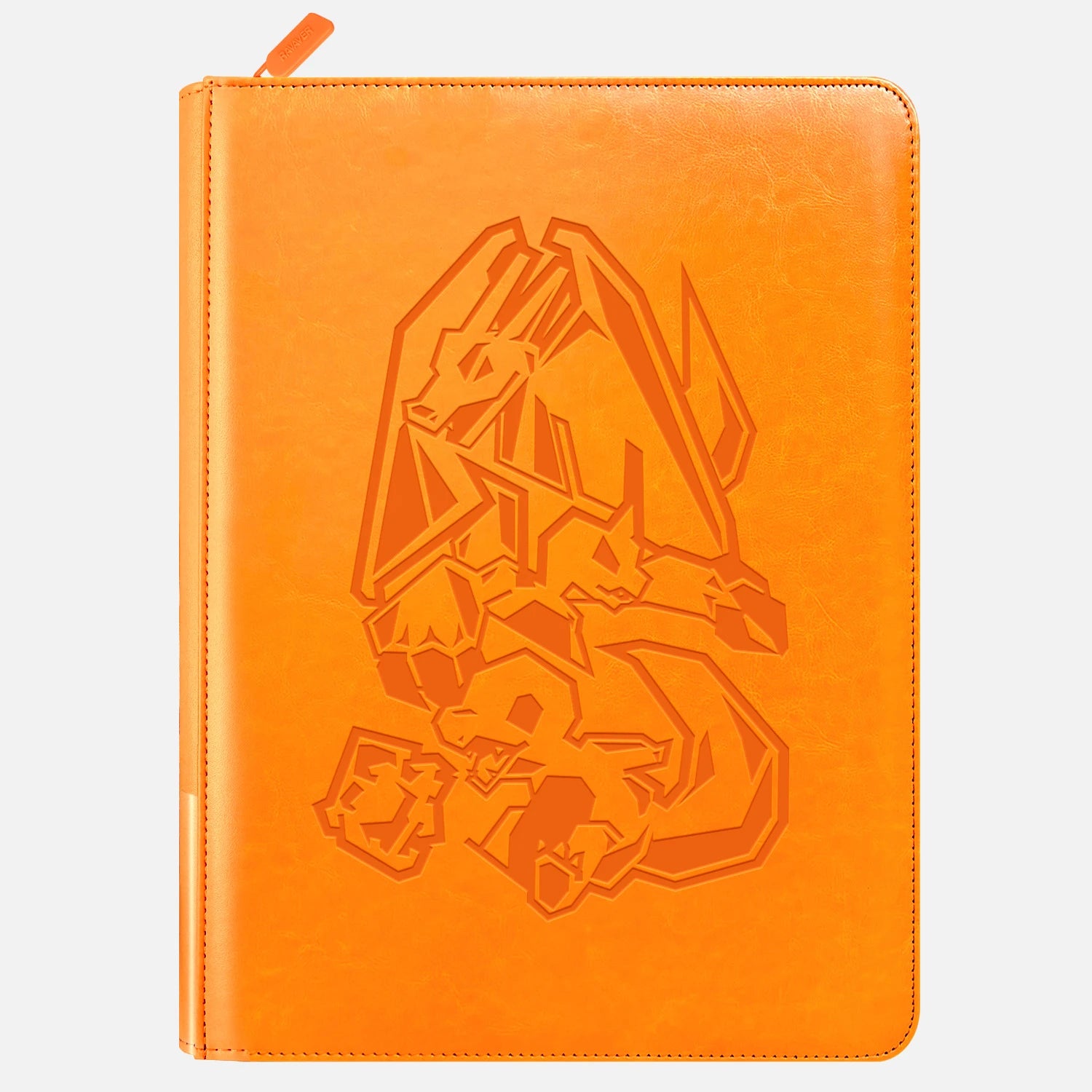
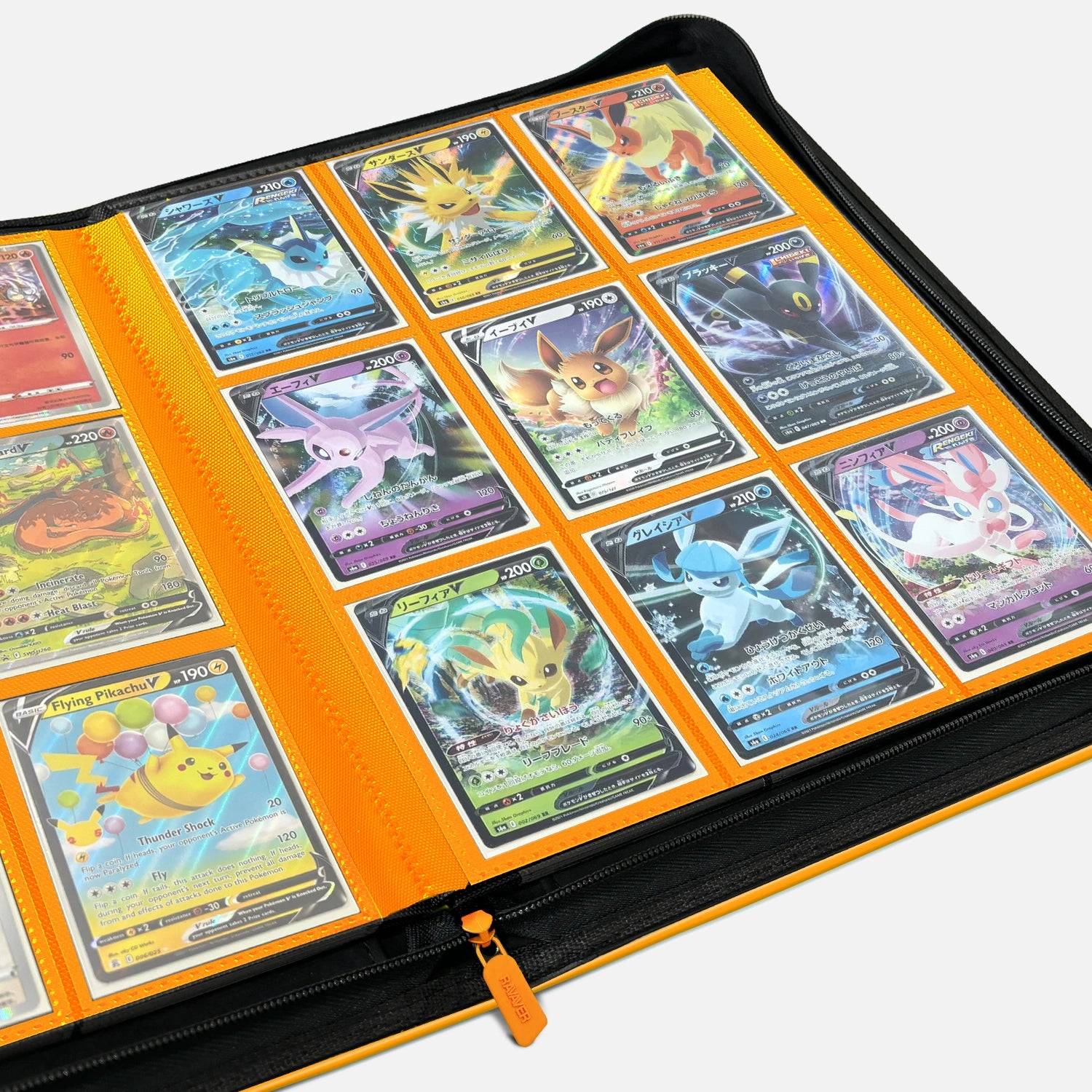
Buy a digital hygrometer with min/max logging today. Put it in the room where your vintage cards currently live. Read it daily for two weeks before buying anything else. If you already have a hygrometer and your readings have been outside the 40–55% range, the next step is identifying whether you need a dehumidifier (above 55%) or a humidifier (below 40%). The whole climate-control setup builds out from that single measurement. For toploader-friendly archival binders that pair with this storage approach, Ravaver's toploader binder collection is built for the same archival use case as the rest of the setup described here.
Sources:
- Library of Congress, "Preservation Environment for Library Collections," retrieved 2026-05-21, https://www.loc.gov/preservation/care/temp.html
- PSA Card, "Card Care and Storage Guidance," retrieved 2026-05-21, https://www.psacard.com/articles/article/3203
- r/PokeInvesting and r/PokemonTCG community discussions on vintage card storage, retrieved 2026-05-21, https://www.reddit.com/r/PokeInvesting/