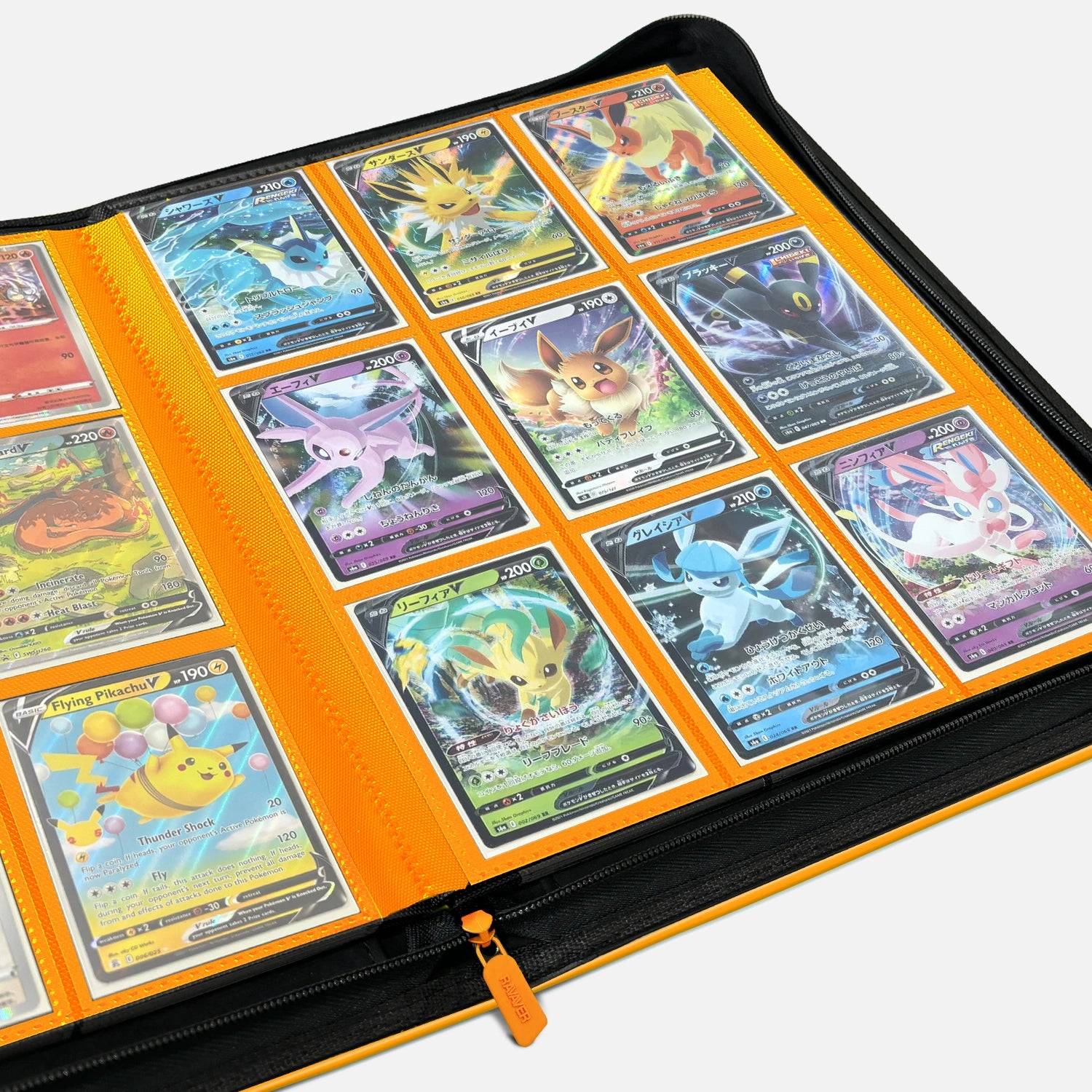
Walk into any Pokemon collector forum with the question "should I sell my master set as a whole or break it up into singles" and you will get the same answer ninety percent of the time: break it up, you'll make more. That answer is sometimes right. It is also wrong often enough that defaulting to it costs collectors thousands of dollars a year in wasted time, mispriced sales, and untapped premium opportunities.
This piece runs the math both ways using realistic 2026 fee structures, accounts for the time cost most people ignore, and surfaces the one scenario where a complete PSA-graded master set actually sells for more than the sum of its parts. By the end you will know which path applies to your specific set, not the generic advice.
Key Takeaways
- Selling individual cards typically nets 15 to 35 percent more revenue than a whole-set sale for modern unsorted collections.
- That advantage flips when the set is complete, PSA-graded, and rare - graded complete master sets can command a 10 to 25 percent premium over the sum-of-parts in collector-driven auctions.
- Time cost is the hidden killer of the singles path - a 300-card modern master set takes 40 to 80 hours of selling work over 60 to 120 days.
- The hybrid approach (sell top 15 percent as singles, sell the rest as a lot) outperforms either extreme for roughly 60 percent of real collections.
- eBay fees of 13.25 percent on TCG plus shipping eat 18 to 25 percent of singles revenue - the math has to account for it before claiming "singles wins."
The Math Behind the Default "Singles Wins" Advice
The reason singles usually beat whole-set sales on dollar-per-card revenue is straightforward. Each card finds its own buyer at that buyer's maximum willingness to pay. The chase cards reach collectors who specifically want that card. Mid-tier cards reach players or set-completers. Bulk reaches commercial buyers. Three different buyer pools, three different price levels.
A whole-set sale, by contrast, prices to the lowest common denominator - a buyer who wants all the cards. That buyer almost always demands a 20 to 40 percent discount versus the sum-of-singles math, because they are bearing the storage burden, the resale risk, and the opportunity cost on the bulk that nobody really wants.

Side-by-Side: A Real $10,000 Modern Master Set
Take a hypothetical complete Scarlet and Violet era master set with a sum-of-singles value of $10,000. Here is how the two paths actually shake out in 2026 dollars, including fees and time.
| Variable | Sell as Singles (eBay + TCGplayer mix) | Sell as Whole Lot (eBay or Mercari) |
|---|---|---|
| Gross sale price | $10,000 (sum-of-singles at market) | $6,500 to $7,500 (typical whole-set discount) |
| Platform fees (~13.25% eBay TCG) | -$1,325 | -$925 |
| Shipping + supplies (assume $4/order, 80 orders) | -$320 | -$45 (1 large shipment) |
| Payment processing (~2.9%) | -$290 | -$200 |
| Net to seller | ~$8,065 | ~$5,330 to $6,330 |
| Hours of work | 50 to 80 hours over 90 days | 3 to 6 hours total |
| Implied hourly rate (vs whole-set baseline) | $22 to $54 per hour | baseline |
The singles path nets roughly $2,000 to $2,700 more dollars. The question is whether the 50 to 80 hours of work - photographing, listing, packing, shipping, dealing with returns and messages - is worth that delta to you personally. For a US adult with a full-time job, the implied hourly rate often falls below their day-job hourly wage when factored honestly. That is the trade nobody talks about.
When Selling as a Whole Set Actually Wins
Five specific scenarios flip the math. If your situation matches any of these, the default advice steers you wrong.
1. Time Cost Exceeds the Revenue Delta
If you bill at $75 per hour in your day job and the singles path takes 60 hours of additional work for $2,000 extra revenue, you are effectively paying yourself $33 per hour to do data entry and trips to the post office. Selling whole frees those 60 hours for higher-value work or actual rest.
2. The Set Is Complete and PSA-Graded
This is the under-discussed premium that singles-only sellers leave on the table. A complete PSA-graded master set - meaning every card in the set is slabbed - commands a 10 to 25 percent premium over the sum-of-singles in collector-driven auction venues. The market for a turnkey, ready-to-display, fully-graded set is small but extremely deep-pocketed. PWCC and Goldin see these as event listings.
The buyer is willing to pay the premium because rebuilding a complete PSA-graded set involves 12 to 18 months of work, $5,000 to $15,000 in grading fees on top of card costs, and the constant risk of failing to find that one PSA 10 chase. Paying a 20 percent premium to skip all of that is rational for a serious collector.
3. The Set Has No Dominant Chase Cards
For sets where the value is spread relatively evenly across 200+ cards rather than concentrated in 5 to 10 chases, the singles premium shrinks. Without strong chase cards to drive traffic and buyer attention, individual listings underperform their sum-of-singles math by 8 to 15 percent. The whole-set discount narrows, and the time cost stops being worth it.
4. You're Moving / Liquidating Under Time Pressure
If you have a 30-day window before a move, divorce settlement, estate liquidation, or other life event, the singles path is operationally impossible. You will end up listing the chase cards, running out of time, and dumping the bulk to a card shop at 30 cents on the dollar anyway. A clean whole-set sale to a single dealer or collector through a vetted middleman recovers more in that window.
5. The Set Is Sentimental and You Want It Intact
This is qualitative, not financial, but it matters. If the set was built with someone (a kid, a partner, a friend who passed) and you want it to go to one home rather than scatter to 200 strangers' eBay accounts, sell it as a whole even if it costs you 15 to 25 percent. That premium is the price of keeping the thing whole. Some collectors are willing to pay it. That is a valid choice.

The Hybrid Path That Beats Both Extremes
For roughly 60 percent of real collections, neither pure strategy is optimal. The hybrid play looks like this:
- Sell the top 10 to 15 percent of cards by dollar value as individual graded singles (PWCC, Goldin, or eBay BIN at full ask)
- Sell the next 20 to 25 percent of cards as raw singles on TCGplayer or eBay (mid-tier holos, valuable non-chase cards)
- Sell the bottom 60 percent as a single bulk lot to a card shop, dealer, or eBay bulk listing
The math on the typical $10,000 set: hybrid nets roughly $7,800 to $8,200 in 20 to 30 hours of work versus singles' $8,065 in 50 to 80 hours. The implied hourly rate on hybrid is $50 to $100, often beating both extremes. It also reaches the right buyer pool for each tier instead of forcing one pool to swallow the whole set.
Platform Fee Reality Check
Before committing to any path, run the actual fee math. The platforms charge different rates and apply caps differently.
| Platform | TCG Fee Rate (2026) | Best Use Case |
|---|---|---|
| eBay (trading cards) | 13.25% up to $7,500, then 2.35% above | Raw singles + chase cards, broad buyer reach |
| TCGplayer (standard seller) | 10.25% commission | Mid-tier raw singles, set-completer buyer pool |
| PWCC weekly auction | ~20% buyer's premium (seller side varies) | Graded singles $500 to $5,000 range |
| Goldin major auctions | ~20%+ varies by lot | Cards over $5,000 reach institutional buyers |
| Mercari / Facebook Marketplace | Lower fees (~10%) | Whole-set lots to local buyers |
For more on TCGplayer's structure, see their official fee documentation. eBay's fee details are on their seller center. Run the numbers for your specific mix before choosing.
Frequently Asked Questions
How long does it actually take to sell a 300-card master set as singles?
Realistically, 60 to 120 days for a working adult selling on the side. Each listing requires photos, accurate condition notes, pricing research, packaging supplies, and post-office trips. Selling velocity averages 3 to 6 cards per week for a non-power seller, faster only if you batch list 50+ cards at once.
What's the discount I should accept for a whole-set sale?
Industry-standard whole-set discount runs 20 to 35 percent off the sum-of-singles value for ungraded modern sets. For graded complete master sets, the discount narrows to 5 to 15 percent because of the rebuild-cost premium. Anything more than 40 percent discount and you are likely talking to a flipper, not a real collector.
Should I grade cards before selling singles?
Only if the raw value exceeds roughly $40 to $60 per card and a PSA 9 or 10 result would 2x or more the raw value. Grading costs $20 to $25 per card economy and takes 18 to 24 weeks. The math has to clear those costs plus the holding period before grading is worth it on any single card.
Can I sell my master set to a local card shop instead?
Yes, but expect 40 to 55 percent of sum-of-singles value. Card shops need to resell the inventory at 20 to 30 percent margin themselves, so they buy at deep discounts. Shop sales win on speed (cash same day) and convenience (one transaction). They lose on dollars.
What's the biggest risk of selling singles one at a time?
Market drift during the 90 to 120 day sales window. Pokemon card prices can move 15 to 30 percent in either direction over a quarter, especially around set rotations and reprint announcements. By the time you finish selling, the cards you list in month four might be worth materially less than what you priced them at in month one.
Your Next Step
Run the quick decision test on your collection this week. List the top 15 cards by current market value, calculate what they would net after eBay or PWCC fees, and divide by the hours required to list them properly. If the implied hourly rate beats your day-job rate, the singles path is worth your time. If not, the hybrid or whole-set path likely wins.
Whichever path you choose, the cards you keep deserve protection that matches their dollar value. Browse our collector-grade binder lineup - built for the cards you decided were worth holding onto.
For the broader exit decision framework, see our pillar on when to sell your Pokemon master set, or check the related guide on reading TCG market cycles in 2026.
Sources
- TCGplayer Help Center, Marketplace Fee structure, retrieved 2026-05-22, help.tcgplayer.com
- TCGplayer Seller Blog, Marketplace Fee Cap and Direct Pricing Changes, retrieved 2026-05-22, seller.tcgplayer.com
- eBay Community Discussion, TCG seller fee structure, retrieved 2026-05-22, ebay.com