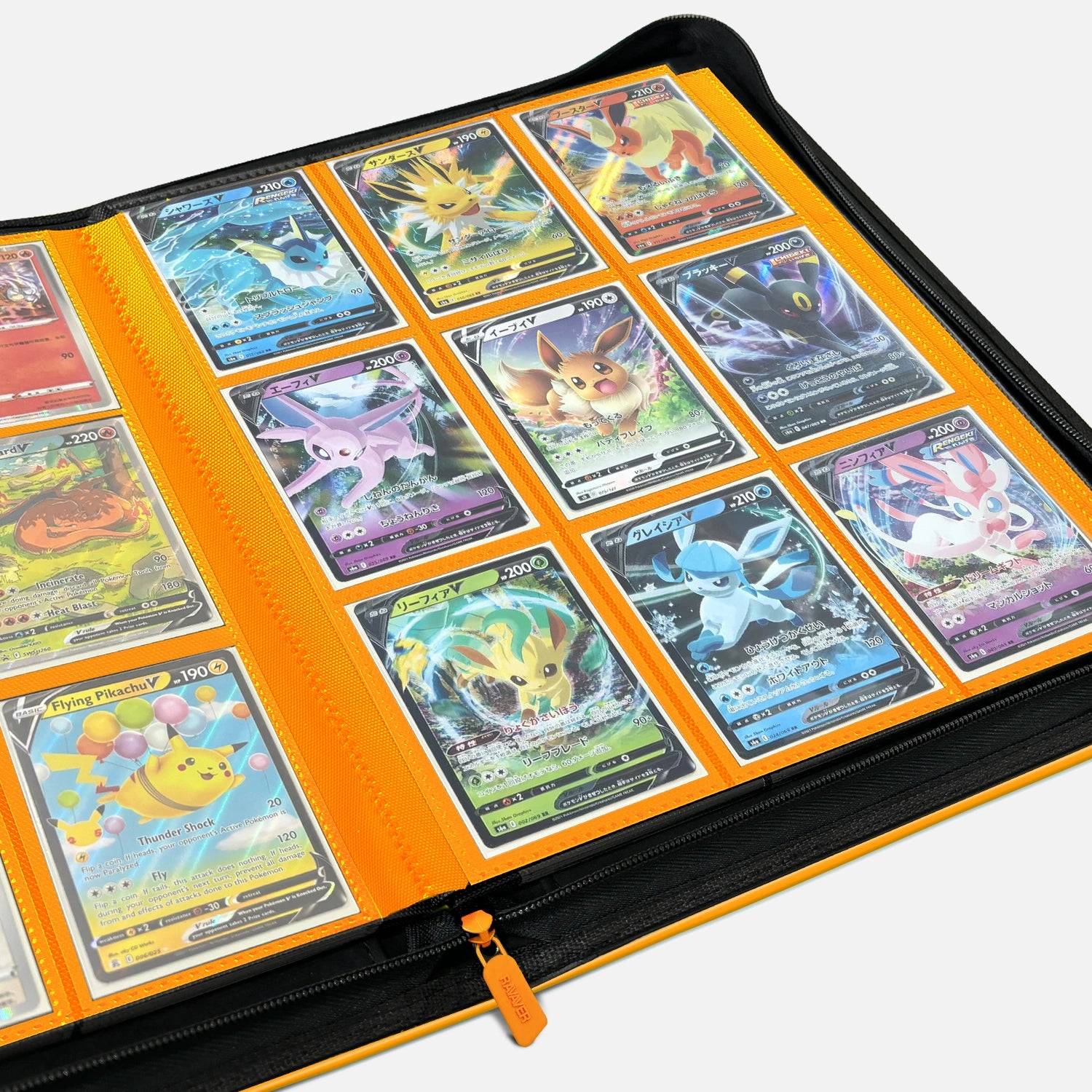
Most articles in this space teach you how to build a Pokemon master set. Almost none teach you when to exit one. That gap costs collectors real money, because the average modern master set loses 18 to 35 percent of its peak retail value in the 12 to 18 months after the set rotates out of print. Holding too long is not patience. It is procrastination wearing a collector's hat.
This piece is the framework I use for my own cardboard, refined over 15 years of pulling, slabbing, and occasionally regretting. It splits the exit decision into four triggers, walks the EV math behind each, and ends with the partial-liquidation play that most YouTube finance channels miss entirely.
Key Takeaways
- A Pokemon master set is a depreciating asset by default after the first reprint cycle - assume 18 to 35 percent peak-to-trough loss inside 12 to 18 months post-rotation.
- Four triggers force a sell decision: reprint announcement, pop-count tipping point, life-event liquidity need, and opportunity-cost rebalancing.
- Most collectors should consider a partial liquidation (sell the top 10 percent by value, keep the sentimental 90 percent) rather than all-or-nothing.
- The IRS treats trading cards as collectibles at a 28 percent long-term capital gains rate, capped, which changes the math on any sale over a $4,000 to $5,000 cost basis.
- The two worst times to sell are 30 days before a set rotation and 60 days after a major reprint - learn to identify both windows.
Why "Just Hold Forever" Is Quietly Bad Advice
The Pokemon collector internet has a strong default toward "never sell." It is comforting and feels disciplined. It is also wrong for most master sets, because a master set is not a single asset. It is a portfolio of 200 to 350 cards where roughly 80 percent of the dollar value sits in 5 to 15 chase cards. The bulk holds memory value but very little market value.
When the set's chase cards correct after a reprint or population-report milestone, the bulk does not compensate. You eat the whole drawdown on the chase side and still own boxes of $2 commons. That is the asymmetry nobody warns new collectors about.

The veteran reframe: a master set is a position, not a forever-home. Like any position, it has a thesis. Once the thesis breaks, the right move is to act, not to white-knuckle the bag.
What Counts as the "Thesis" for a Master Set?
Before you can answer when to sell, you have to answer why you held in the first place. There are exactly four collector-grade theses, and each has a different exit trigger.
| Holding Thesis | What You're Really Betting On | Time Horizon | Typical Exit Trigger |
|---|---|---|---|
| Sentimental keepsake | You wanted this set for personal reasons | Indefinite | Life event or storage cost |
| Short-term flip | Modern set will spike at sealed-EOL (end of life) | 6 to 24 months | Sealed product price plateau |
| Long-term appreciation | Set ages into modern-vintage status (10+ years) | 10 to 25 years | PSA pop stability + cultural moment |
| Mixed thesis (most common) | You started for love, then prices ran | Drifting | You need to write the rules now, not later |
If your honest answer is "mixed thesis," you are not alone. That is where most six-figure-collection collectors actually live. The fix is to split the set in your own head into two buckets - the sentimental keep pile and the position pile - and apply different rules to each.
The Four Triggers That Force a Sell Decision
A sell-trigger is not the same as a sell signal. A trigger forces you to review the position. Whether you actually sell depends on the trigger plus your thesis plus market conditions. Run any of these four through your collection and you will know which sets to look at this quarter.
Trigger 1: Reprint Announcement (Modern Sets)
The single fastest way to vaporize 20 to 40 percent of a modern set's chase-card value is an unexpected reprint - either a Japanese restock that gets imported, or an English-language Special Set that reprints the original art. The 2024 to 2025 Scarlet and Violet block saw multiple rounds of Pokemon Center Japan restocks across nearly all S&V sets, and the secondary market reacted within 14 days each time.
If you hold modern chase cards from a set younger than 30 months and a reprint is announced, your window to sell at pre-announcement prices is roughly 7 to 21 days. After that, sealed product begins flowing back into the market and single-card prices follow within a month.
Anyone who has watched modern Mega ex foils trade for the last 18 months knows the pattern - SIR pull rates tightened after Surging Sparks, prices ran, and the first reprint wave clipped 25 to 35 percent off the top in under a quarter. The pattern repeats. Trust the pattern.
Trigger 2: PSA Pop-Count Tipping Point
Population counts behave like supply curves with a delay. The first 500 PSA 10 copies of a chase card hold premium pricing. The next 1,500 grind that premium down. Somewhere between 2,500 and 5,000 PSA 10 copies (depending on the card's cultural weight) the premium normalizes to roughly 2.0 to 3.0 times raw value, where it tends to sit until a true vintage thesis kicks in years later.
You can check current population data directly on PSA's Population Report. The signal you are watching: if the PSA 10 pop has doubled in the last 12 months and quarter-over-quarter eBay sold prices are flat or down, the card is in the "grinding down" phase. Sell into liquidity before the next quarterly print.
Trigger 3: Life-Event Liquidity Need
This trigger is unglamorous and underrated. A down payment, a wedding, an unexpected medical bill, a business opportunity - a master set worth $8,000 to $30,000 is a real lever. The mistake is treating it as untouchable. The other mistake is panic-selling the whole set in a fire sale.
The disciplined version: identify the top 10 percent of the collection by dollar value. That bucket usually represents 70 to 85 percent of total liquidation value and roughly 15 percent of the cards. Sell that slice through high-end channels and keep the bulk. You raise most of the cash, take a smaller emotional hit, and preserve optionality on the long-tail appreciation.
Trigger 4: Opportunity-Cost Rebalancing
If the same $12,000 tied up in a modern set could fund a vintage WOTC base set chase, or a sealed 1st Edition box that has compounded at 11 to 16 percent annually for the last decade, the modern hold has an opportunity cost. Most collectors never run this comparison because the cards are "already owned." That is mental accounting, and it is expensive.
A useful annual ritual: list the top three holdings by dollar value. For each, write down what you would buy instead with the proceeds if you sold today. If the alternative is materially more attractive on a 5-year horizon, the position deserves a real exit review.

The Two Worst Windows to Sell (Avoid Both)
Even if a trigger fires, timing matters. Two windows consistently destroy seller value.
- The 30 days before a set rotation. Sealed product floods the market as stores liquidate. Singles get dragged down with the sealed prices for 30 to 45 days, then often recover. Sell either 90+ days before rotation or wait 60 days after the trough.
- The 60 days after a major reprint announcement. Buyers freeze, sealed restocks hit shelves, and graded card velocity on eBay drops. Sell before the announcement is priced in, or wait until the next set release cycles attention back.
The best windows? Roughly 90 days before a set rotates out of print (sealed product is scarcity-priced and singles ride along), and the 30 days immediately following a major Pokemon cultural moment - Worlds Championship in August, Pokemon Day on February 27, and big Netflix or Switch game launches. Those windows compress price discovery into your favor.
How the Partial-Liquidation Play Actually Works
This is the play that gets almost zero airtime in collector forums and zero coverage on finance YouTube. Here is the mechanic:
- Pull your master set's value list. Sort high to low.
- Identify the top 10 to 15 percent of cards by dollar value. In a typical $10,000 modern master set, this is 25 to 40 cards.
- Sell only those through high-touch channels: PWCC auction for high-end slabs, TCGplayer Pro for graded singles, eBay for raw chases.
- Keep the bulk. Re-house in a quality binder system and treat as a long-hold sentimental position.
What you keep is the experience of having built the set, displayed beautifully, with minimal carry cost. What you liquidate is the concentrated risk. This is what "selling smart" actually looks like - not posting your whole BinderPOS inventory and lighting a match.
Tax Reality Check (US Sellers)
Trading cards are classified as collectibles by the IRS, which means long-term capital gains are taxed at a maximum 28 percent rate - higher than the 15 to 20 percent that applies to stocks. Short-term gains (held under a year) get taxed at your ordinary income rate, which for most US adults sits between 22 and 32 percent.
Practical implication: a $12,000 partial liquidation with a $4,000 cost basis (so $8,000 gain) held over 12 months runs roughly $2,240 in federal tax at the 28 percent collectibles rate, before any state tax. Run the math before you decide which slice to sell - sometimes a smaller sale that stays under your bracket-jump threshold nets you more after-tax than a bigger one.
The IRS 1099-K threshold for tax year 2025 (filed in 2026) reverted to $20,000 in gross payments AND 200 transactions under the One Big Beautiful Bill. But the form is a reporting trigger, not a tax trigger. Income is taxable whether or not a 1099-K appears in your inbox.
The Sentimental Override (When Not Selling Is Correct)
Everything above assumes the position is roughly half investment, half love. If a set is genuinely sentimental - your first complete WOTC Base Set, the Scarlet and Violet set you finished with your kid, the Eeveelutions master you built for your wedding - the math does not apply. Sentimental cardboard has a different utility function. Hold it.
The honest test: if the cards burned in a fire tomorrow and you collected insurance, would you rebuild this set? If yes, keep holding regardless of market signals. If no, you have a market position pretending to be a sentimental one. That is exactly the case where the four triggers above apply.
Frequently Asked Questions
How long should I hold a modern Pokemon master set before considering a sale?
Modern sets tend to peak in secondary value 6 to 18 months after rotation out of print. If you bought near release, a 2 to 3 year hold typically captures most of the sealed-EOL spike. After year 3, modern sets enter a long flat period that lasts 5 to 10 years before any vintage-style appreciation kicks in.
Should I grade everything before selling a master set?
No. Grade the top 10 to 15 percent by dollar value where a PSA 9 to 10 result would 2x or more the raw value. Grading $20 commons is a money loser after fees, shipping, and the 18 to 24 week wait. The break-even for value grading in 2026 sits around raw value of $40 to $60 per card minimum.
What's the worst time of year to sell a Pokemon master set?
Mid-January through mid-February is consistently the weakest window for Pokemon secondary sales. Buyers have just spent on holidays, tax refunds have not landed yet, and there is no major set release driving attention. Sales velocity drops 25 to 40 percent versus the August to December peak.
Is it better to sell on eBay or use an auction house like PWCC or Goldin?
For cards under $500 raw value, eBay wins on liquidity even after 13.25 percent in fees. For graded singles in the $500 to $5,000 range, PWCC weekly auctions average higher hammer prices on Pokemon than fixed-price platforms. Above $5,000 per card, Goldin's major auctions reach institutional buyers eBay cannot.
Does the 1099-K I'll receive mean I have to pay tax on my Pokemon card sales?
The 1099-K is a reporting form, not a tax assessment. You owe tax on the gain (sale price minus cost basis minus fees), not on the gross sale amount. If you sold a card for $400 that you bought for $300, you owe collectibles tax on the $100 gain, not on the $400. Keep purchase records.
How do I sell a master set without spooking the market on the card I'm holding most of?
Stagger the sale over 60 to 90 days, alternate between two or three platforms (eBay, TCGplayer, PWCC), and avoid listing more than 20 percent of a single card's weekly sold volume in any 7-day window. Flooding a card's listing page kills its perceived value fast.
What's the single biggest mistake collectors make when liquidating a master set?
Selling the bulk first to "build momentum," then trying to sell the chase cards into an already-fatigued buyer pool. Reverse the order. Sell the chase cards first while attention is fresh and the high-dollar listings drive traffic to your bulk. The chase cards subsidize bulk discovery.
Your Next Step
Pick your largest master set by current market value. Run the four triggers against it this weekend. If any trigger fires, write down the top 10 percent of cards by dollar value and price-check each against the last 30 days of eBay sold listings. Whether you sell or not, you will have a current valuation and an exit plan that beats "I'll figure it out later."
If the partial-liquidation path appeals, the cards you keep deserve a binder that protects them through the next decade of holding. Browse our premium binder collection built specifically for high-value Pokemon collections - toploader-friendly, archival-safe, and designed to age as well as the cards inside.
Sources
- Internal Revenue Service, Form 1099-K General Information, retrieved 2026-05-22, irs.gov
- Internal Revenue Service, FAQs on Form 1099-K threshold under One Big Beautiful Bill, retrieved 2026-05-22, irs.gov
- PSA Population Report, TCG Cards database, retrieved 2026-05-22, psacard.com
- TCGplayer, Scarlet and Violet Pull Rates analysis, retrieved 2026-05-22, tcgplayer.com
- PokeBeach, Pokemon Japan Reprints Scarlet and Violet sets, retrieved 2026-05-22, pokebeach.com