Most veteran collectors have one budget month they remember. It was the month they cracked a case of Surging Sparks, sleeved every chase, paid for grading on three of them, bought a binder for the rest, and then realized their credit card bill landed the same day rent did. That month is the budget conversation everyone has eventually.
A Pokemon collecting budget that doesn't wreck your real finances isn't about spending less. It's about spending in a structure that prevents the post-pull spiral. The veteran-tested framework most active collectors use is the 1/3 rule: one third sealed, one third singles, one third storage and gear.
Key Takeaways
- The 1/3 rule splits hobby spending into three balanced buckets, sealed product, singles, and storage/gear, preventing the most common collector regret: spending everything on packs and having nothing left to protect what you pulled.
- Active veteran collectors on r/PokeInvesting and r/PokemonTCG converge on an annual hobby budget of $600-$2,400, with the 1/3 rule applied monthly rather than all at once.
- The 2026 PSA price hike to $79.99 minimum per card means the "grading" line item now needs its own subcategory inside the singles or gear bucket, not a free-floating impulse.
- The biggest budget killer for veterans isn't booster boxes, it's accidental gear purchases triggered by big pulls and convention adrenaline.
- A clean budget separates two questions: "what do I want to buy this month" and "what does my collection actually need this month." Most veterans answer the second question better than the first.
Why most Pokemon TCG budgets collapse
Veteran collector budgets fail in the same way nearly every time. The collector decides on a monthly cap, sticks to it for the first two weeks, then a new set drops, or a friend offers a graded card at a fair price, or PSA announces a fee change, or a YouTube creator pulls a Special Illustration Rare on stream. The single-event spike eats the cap, and the rest of the month becomes "I'll start fresh next month."
The structural problem isn't willpower. It's the design of the budget itself. A single monthly number is a fragile budget. The first surprise breaks it. A bucketed budget survives surprises because each bucket has its own ceiling and you can borrow from one to fund another without losing the structure entirely. The deeper context, including how the entire veteran self-upgrade playbook is built around post-event triggers rather than impulse spending, explains why the bucketing approach scales.
Pokemon Trading Card Game Pocket surpassed $1 billion in player spending in under seven months after its October 2024 release (The Pokemon Company FY2024-25 disclosures). Veterans who play Pocket alongside their physical hobby need a third bucket entirely, or the digital spend silently drains the physical budget. Most don't track this and feel the squeeze without knowing why.

The 1/3 rule explained
The 1/3 rule is a hobby-budget structure that splits your monthly Pokemon TCG spending into three roughly equal buckets:
- Sealed (33%), booster packs, booster bundles, booster boxes, Elite Trainer Boxes, premium collections, special-edition products.
- Singles (33%), specific cards bought from TCGplayer, eBay, local game stores, trade nights, and card shows. This bucket also funds grading submissions for cards already in your collection.
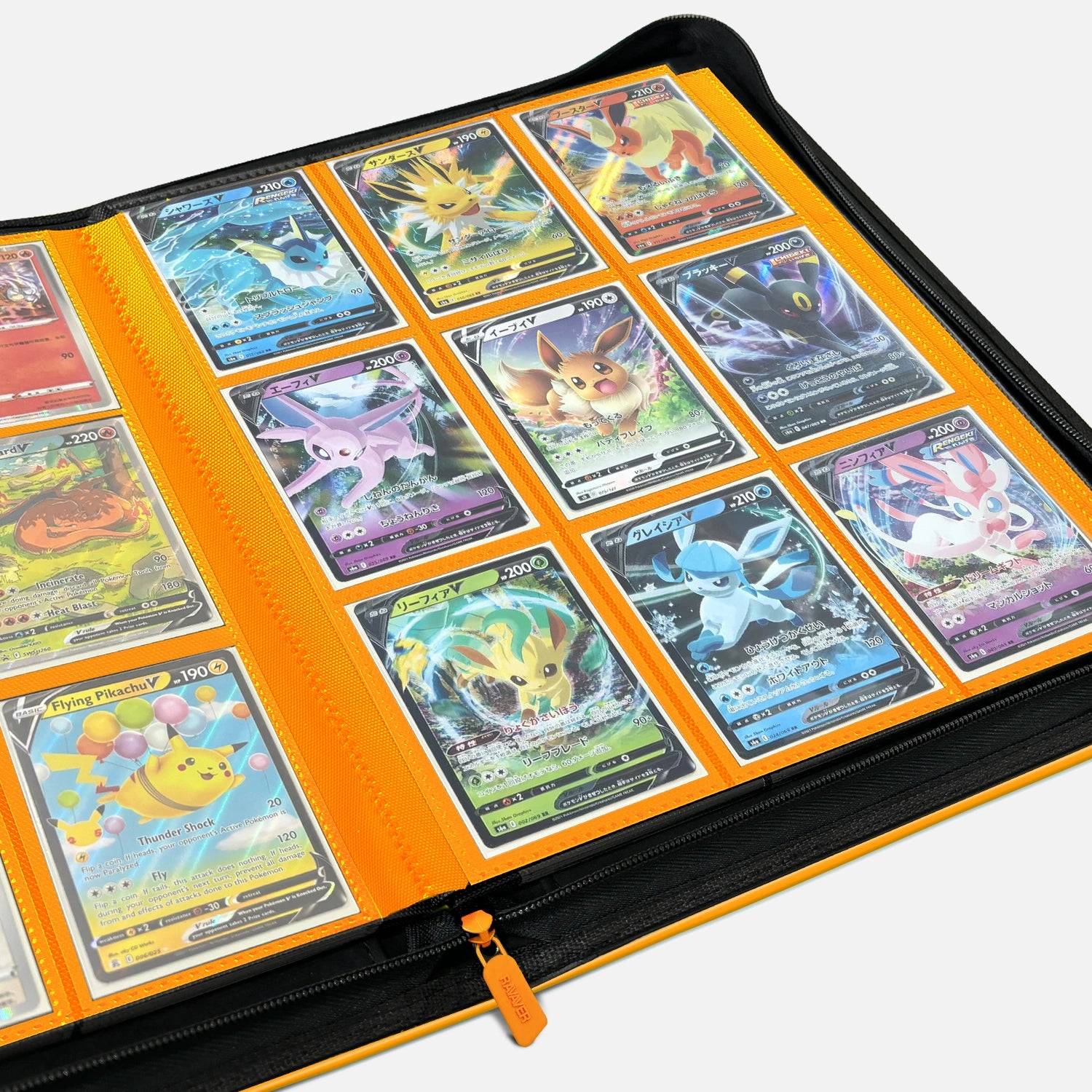
- Storage and gear (33%), binders, sleeves, toploaders, deck boxes, long-term storage, display cases, inventory software subscriptions.
The split isn't sacred. Some months will tilt one direction. New set release months will bias sealed. Card show weekends will bias singles. The point isn't perfect balance, it's that none of the buckets goes to zero. When one bucket is starved repeatedly, the collection develops imbalances you'll regret later. All packs and no storage means cards getting dinged. All singles and no sealed means the collection feels static. All gear and no cards means you have an empty premium binder.
How to set your monthly cap (the honest version)
Skip the generic "spend 5% of your discretionary income" advice. The real test is whether your hobby budget passes three checks:
- The rent and bills check. Your hobby cap is set after rent, bills, savings contribution, and any debt service have been moved off your checking account. Whatever's left in the "fun" pool is what you're working with. Pokemon competes with everything else fun in that pool, including dinner out and concert tickets.
- The 90-day test. Multiply your proposed monthly cap by 3. If you handed yourself that amount today and were told "spend it all on Pokemon by August," would you actually be able to? If not, the cap is too high. If you'd burn through it in two weeks, the cap might be honest, you just haven't been admitting it.
- The regret check. Look at your hobby spending from six months ago. What percentage of those purchases do you still feel good about? If less than 70%, lower the cap. If more than 90%, you can probably afford to raise it.
For veteran collectors with stable incomes, the realistic monthly cap usually lands between $50 and $200. Card show months and new set drops will spike higher. Quiet months can be much lower. The cap is a yearly average, not a hard monthly ceiling.
How to apply the 1/3 rule each month
Use this sequence at the start of each month, before you spend anything:
- Set the monthly cap. Look at your discretionary pool. Decide what's available for Pokemon this month. Write it down.
- Split into three buckets. Default split: equal thirds. Adjust based on what's happening in the hobby calendar. New set this month? Tilt sealed to 45%, singles 30%, gear 25%. Quiet month with a card show? Tilt singles to 50%, sealed 25%, gear 25%.
- Pre-allocate the gear bucket. Make your gear purchase early in the month, not late. Late-month gear purchases are the ones that get squeezed when the sealed and singles buckets overflow. Buying the binder, sleeves, or toploaders in week one means they actually happen.
- Track spending by bucket, not by transaction. Use a notes app or spreadsheet. Three columns. Add to whichever bucket the purchase fits. Stop spending in a bucket when it hits its ceiling, even if other buckets have room.
- Roll over carefully. Unspent budget can roll forward, but only into the same bucket. If you didn't spend your gear allocation in May, it adds to June's gear allocation, not to June's sealed allocation. This prevents the most common drift pattern (every leftover dollar gets reabsorbed into packs).
- Audit quarterly. Every three months, look at how the splits actually played out. If gear has been chronically under-spent, the binder you've been meaning to upgrade is probably overdue. If sealed has been chronically over-spent, ask whether you're chasing or curating.
How the 2026 PSA pricing change affects your singles bucket
PSA paused four value grading tiers on June 2, 2026, sitting on a backlog of nearly 10 million cards. Regular service now starts at $79.99 per card. Add shipping and insurance and the all-in cost lands between $95 and $110 for a single submission (PSA).
That price level means grading needs to live inside the singles bucket as its own line item, not as a free-floating impulse. A practical split for the singles bucket might be 60% raw card purchases, 40% grading submissions, and only for cards with raw value above roughly $300, because lower-value cards no longer break even after the price hike.
Veterans who used to grade ten cards a year on value tiers are now grading three to five on Regular. The savings go into the gear bucket, usually into a premium Pokemon-themed binder that can hold raw chase cards in a way that does justice to them while they wait for the next grading window. For a head-to-head breakdown of where a single $200 month should actually go, see the sealed vs singles vs storage comparison. And if you're shopping for someone else rather than yourself, gift card vs booster box vs premium binder covers that decision differently.
What to do when a big pull blows the budget
Cracking a Special Illustration Rare you didn't expect is the most common budget disruptor. The pull happens, the dopamine hits, and within 72 hours you've bought a new binder, fresh sleeves, premium toploaders, and you're researching grading services at 2 AM. The post-pull spend is real. It's also predictable, which means you can plan for it.
Build a small "trigger fund" into your gear bucket, roughly 20% of the bucket per month, set aside specifically for post-pull infrastructure purchases. When the pull happens, the spend doesn't break the budget. It just draws from the bucket that was already waiting for it. When months pass without a major pull, the trigger fund rolls forward inside the gear bucket and eventually funds a larger upgrade. The underlying psychology of why post-pull spending hits so hard is covered in detail in the Hot Hand trap explainer.
This is the difference between "the pull caused me to overspend by $200" and "the pull triggered a planned $80 binder upgrade I was saving for anyway."
Frequently Asked Questions
What is the 1/3 rule for Pokemon TCG collecting budgets?
The 1/3 rule splits a monthly Pokemon collecting budget into three roughly equal buckets: one third sealed product (packs, boxes, ETBs), one third singles (specific cards and grading submissions), and one third storage and gear (binders, sleeves, toploaders, display). It prevents the most common collector regret of spending everything on packs and having nothing left to protect or store the cards pulled.
How much should a serious Pokemon collector spend per month?
Active veteran collectors typically spend between $50 and $200 per month on Pokemon TCG, with spikes during new set releases, Pokemon Day, and Worlds Championship periods. The honest number is whatever's left in your discretionary pool after rent, bills, savings, and debt payments, multiplied by the percentage of "fun money" you're comfortable allocating to one hobby.
Should I include Pokemon TCG Pocket spending in my physical card budget?
No, give it a separate bucket entirely. Pocket microtransactions can silently drain a physical card budget without showing up in the same mental account. Treat Pocket as its own line item with its own monthly cap, separate from your sealed, singles, and gear buckets. Most veterans cap Pocket at $10-$30 per month.
How do I stop overspending after I pull a chase card?
Build a "trigger fund" into your gear bucket, roughly 20% of the bucket per month set aside specifically for post-pull infrastructure purchases. When the pull happens, the spend draws from the trigger fund instead of breaking the broader budget. Pair this with a 48-hour cooldown rule on any purchase over $50 triggered within 72 hours of a major pull.
Is it still worth budgeting for PSA grading after the 2026 price hike?
Yes, but only for cards with raw value above roughly $300, where the post-grading premium covers the new $95-$110 all-in cost per submission. Lower-value cards should now live raw in premium storage instead. Reallocate the grading savings to the gear bucket, typically toward a binder upgrade that displays raw chase cards properly while they wait for future grading windows.
Sources:
- Serkan Toto, "The Pokemon Company Sees Another Record Financial Year," retrieved 2026-06-02, serkantoto.com
- PSA Card, official pricing updates, retrieved 2026-06-02, psacard.com
- The Pokémon Company, FY2024-2025 financial disclosures, retrieved 2026-06-02, corporate.pokemon.co.jp