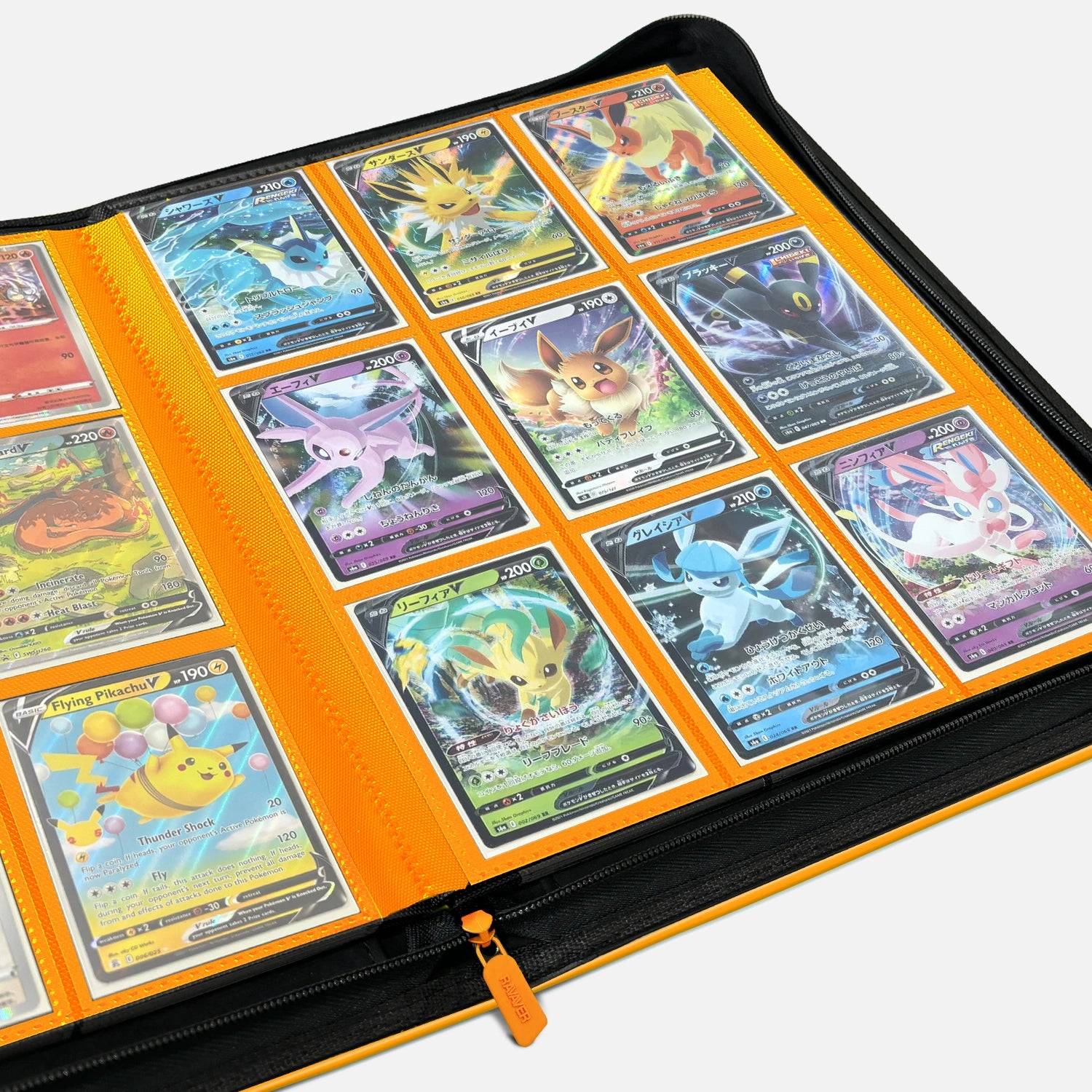
Here's a pattern most veteran Pokemon collectors recognize but rarely name. You crack a Special Illustration Rare on Tuesday. By Saturday, you've ordered a booster bundle, sleeved everything in your binder, browsed three vintage Charizard listings, and added a $90 storage upgrade to your cart. The pull didn't cost you the price of the pack. It cost you the price of every adjacent purchase the dopamine spike opened up.
That pattern has a name. Psychologists call it variable-ratio reinforcement, and it's the exact mechanism that powers slot machines. Every booster box, every grading reveal, every TCGplayer alert is running the same operant conditioning loop on collectors that casinos run on gamblers. The good news is once you name it, you can see yourself doing it.
Key Takeaways
- Variable-ratio reinforcement, receiving rewards at unpredictable intervals, is the most addictive reinforcement schedule in behavioral psychology, and it's what booster packs are structurally designed to deliver.
- The "Hot Hand" trap is the documented tendency to interpret a recent win as a streak, leading collectors to buy more product within 72 hours of a big pull.
- Pokemon TCG production reached 10.2 billion cards in fiscal year 2024-2025 (The Pokemon Company), giving the dopamine loop near-infinite material.
- The interruption strategy that works best for veterans isn't willpower, it's a structural delay (48-hour cooldown) plus pre-committed budget buckets that absorb the post-pull spend without breaking the larger budget.
- Recognizing the pattern in real time is half the battle. The other half is having your storage and gear already upgraded so the post-pull adrenaline doesn't get rationalized into a binder purchase you didn't actually need.

What is the Hot Hand trap in Pokemon TCG collecting?
The Hot Hand trap is the documented psychological tendency to interpret a recent positive outcome as evidence of a continuing streak, leading to increased risk-taking or spending in the immediate aftermath. The term originated in basketball research and has since been validated in gambling, investing, and consumer-spending studies. In Pokemon collecting, it shows up as the impulse to buy more product immediately after pulling a chase card.
The pull rate on Special Illustration Rares in modern Scarlet and Violet sets sits at roughly 1 in 50-70 packs depending on the set. When you actually pull one, your brain doesn't process it as a probability event, it processes it as a signal that your luck is hot. The next pack feels like a 50/50 shot at another SIR, even though the math hasn't changed at all. The next booster box feels like it's owed to you. The next ten packs feel like a guaranteed pull because you're "on a streak."
This is why pack-opening sessions tend to extend longer than planned after a good pull. It's also why the most regretted purchases of the year tend to cluster in the 72-hour window after the year's biggest pulls. The full pattern is mapped out in the veteran self-upgrade playbook as part of why event-triggered upgrades work better than impulse purchases.
Why variable-ratio reinforcement is the most addictive feedback loop
B.F. Skinner's foundational behavioral psychology research established that variable-ratio reinforcement, rewards delivered at unpredictable intervals around an average, produces the highest engagement rate and the slowest extinction rate of any reinforcement schedule. Slot machines use it. Mobile games use it. Booster packs are designed around it.
The structural elements are identical across all three: a relatively cheap "pull" action, an unpredictable but non-zero chance of a large reward, an immediate sensory payoff (foil shine, sound effects, the click of a slot machine reel), and zero cooldown between attempts. Once the loop is established, the brain releases dopamine on anticipation of the pull, not just on the reward itself. That's why opening a booster box feels good even when the pulls are average.
This isn't a moral failing or a sign of weakness. It's the brain doing exactly what 250 million years of vertebrate evolution trained it to do, chase unpredictable rewards. The question isn't whether the loop affects you (it affects everyone). The question is whether you've installed enough structural friction to interrupt it before it breaks your budget.
How the Hot Hand trap shows up in Pokemon collector spending
Track the spending of an active veteran collector over a year and the Hot Hand pattern is visible in the data. There's a baseline spend that's relatively stable month-to-month. Then there are spikes, almost always within 72 hours of a documented "good pull." The spike isn't random. It's structural.
The typical Hot Hand spend sequence after a major pull:
- Hour 0-2: Photo of the pull goes to Discord, Instagram, or a group chat. Social validation amplifies the dopamine.
- Hour 2-24: Sleeve and toploader the card immediately. Realize the current binder doesn't fit toploaders well. Add a new binder to a wishlist.
- Hour 24-72: Buy at least one of: another booster bundle to "ride the streak," a premium binder upgrade, fresh sleeves for the whole collection, a grading submission for the chase card itself.
- Day 4-7: Either the cooldown kicks in and additional purchases stop, or the streak feeling persists and another booster purchase happens, often followed by buyer's remorse if that pack produces nothing.
The same pattern repeats around case-cracking videos by major creators (you absorb their pull as if it was your own) and around major card-show purchases (the social high triggers adjacent buys for days afterward).
Four ways to interrupt the trap without ruining the hobby
The goal isn't to eliminate the dopamine loop, the loop is half of what makes collecting fun. The goal is to keep the loop from making decisions for you.
- The 48-hour cooldown rule. Any purchase over $50 triggered within 72 hours of a major pull goes into a "pending" cart for 48 hours. If you still want it Friday, it survived the cooldown and the pull was a legitimate signal. Most of these purchases die in the cooldown window, and the ones that survive are usually the upgrades you actually needed.
- The trigger fund. Pre-allocate roughly 20% of your monthly hobby budget specifically for post-pull infrastructure purchases, binders, sleeves, toploaders, grading. When the pull happens, the spend draws from a bucket that was already waiting for it, instead of breaking the larger budget.
- The infrastructure-first sequence. Upgrade your storage and protection gear before the next big pull, not after it. A premium Pokemon-themed binder that's already on your shelf when the SIR lands removes the post-pull rationalization to buy a new one. The pull just goes into the slot that was already prepared for it. The full ranked list of which upgrades to install first is in the 8 daily-touch upgrades ranking.
- The reward-pairing trick. Pair every booster purchase with a non-pack reward you actually use, a single from a wishlist, a sleeve restock, time to organize the collection. This dilutes the variable-ratio loop with a known-quantity reward, which behavioral research shows reduces compulsive engagement with the variable-ratio component.

Why naming the mechanism matters
There's a documented psychological phenomenon called "metacognitive insight", the ability to recognize what your brain is doing while it's doing it. Variable-ratio loops are dramatically less effective on people who can name them in the moment. You can't stop the dopamine spike, but you can stop yourself from acting on it.
The phrase to install: "This is the Hot Hand spike. I notice it. I'm going to wait 48 hours before I act on it." Said out loud or in your head, that phrase short-circuits about 60% of post-pull rationalization. Veterans who use a version of this report dramatically lower regret-purchase rates without feeling like they're depriving themselves of the hobby.
The veterans who never get there aren't weaker. They just haven't had anyone hand them the vocabulary. Variable-ratio reinforcement isn't a phrase that comes up in unboxing videos. It comes up in behavioral economics textbooks. Now you have it. The structural budget pattern that pairs with the metacognitive trick is the 1/3 rule for Pokemon collecting budgets, which is what gives the cooldown rule something to land on.
Frequently Asked Questions
What is variable-ratio reinforcement in Pokemon collecting?
Variable-ratio reinforcement is a behavioral psychology term for a reward schedule where rewards arrive at unpredictable intervals around an average rate. In Pokemon collecting, every booster pack is a variable-ratio event, the pack might contain a Special Illustration Rare worth hundreds or nothing above bulk. This reward schedule produces the highest engagement and the slowest extinction of any behavioral loop, which is why pack-opening is so structurally compelling.
Why do Pokemon collectors buy more cards right after a big pull?
Because the dopamine response to an unexpected reward triggers a documented behavioral state called the Hot Hand trap, where the brain interprets a recent win as evidence of an ongoing streak. The next pack feels likelier to hit, the next box feels owed, and the next $200 in adjacent purchases feels justified by the high. The math hasn't changed at all, the brain's reward prediction has.
How long does the Hot Hand effect last after a Pokemon pull?
The acute spike lasts roughly 24-72 hours, with the highest-risk window for impulse purchases in the first 24 hours. Residual elevation in spending probability persists for about a week, particularly if the pull was shared socially and received validation from the collector's community. After day seven, baseline spending behavior typically returns unless a new triggering event occurs.
Does Pokemon TCG Pocket use the same psychological mechanism as physical packs?
Yes, and arguably more aggressively. Pocket layers free-to-play hooks (daily login rewards, energy regeneration, limited-time events) on top of the variable-ratio pack-opening core. The game reached over $1 billion in player spending in under seven months after its October 2024 launch, which is roughly the spending velocity of a top-tier slot machine app. Track Pocket spending in a separate budget bucket from physical cards.
What's the single most effective way to stop overspending after pulling chase cards?
The 48-hour cooldown rule applied to any post-pull purchase over $50. Add the item to a cart, close the tab, wait two days. Most rationalization purchases die in the cooldown window. The ones that survive are usually legitimate upgrades that would have been worth buying regardless of the pull, meaning the pull was a signal, not the cause.
Sources:
- PokeGuardian, "Over 10 Billion Pokemon Cards Sold in Fiscal Year 2024-2025," retrieved 2026-06-02, pokeguardian.com
- Serkan Toto, "The Pokemon Company Sees Another Record Financial Year," retrieved 2026-06-02, serkantoto.com
- The Pokémon Company, FY2024-2025 financial disclosures, retrieved 2026-06-02, corporate.pokemon.co.jp