Three companies grade Pokemon cards. Each one has loud advocates on Reddit and YouTube who'll tell you their pick is the only serious option. The truth is simpler: PSA, CGC, and BGS each win in different situations, and the right choice depends on whether you're grading for resale, personal collection, or prestige.
This comparison breaks down the 2026 fees, turnaround times, grading strictness, and resale premiums for all three companies, with a recommendation matrix at the end so you can stop debating and start submitting.
Key Takeaways
- PSA commands the highest resale premiums for Pokemon cards (PSA 10 sells for 15-30% more than CGC 10 on identical cards)
- CGC offers the lowest entry price at $17/card Bulk tier, making it the budget-friendly choice for personal collections
- BGS is the strictest grader with detailed sub-grades, and a BGS 10 PRISTINE or Black Label carries more prestige than any PSA 10
- For pure ROI on modern Pokemon chase cards, PSA wins. For budget batches, CGC wins. For high-end vintage flex, BGS wins.
2026 Fees Side by Side
Grading fees vary by service tier, declared card value, and membership status. Here's the current comparison as of May 2026:
| Service Tier | PSA | CGC | BGS |
|---|---|---|---|
| Bulk (lowest tier) | $25 (Club members) | $17 | $18 |
| Economy | $33 | $20 | $22 |
| Regular | $50 | $38 | $40 |
| Express | $150 | $85 | $100 |
| Super Express | $300 | $200 | $250 |
| Membership required? | $99/yr for Bulk | No | No |
CGC undercuts both competitors at every tier. Their $17 Bulk is $8 cheaper than PSA's Club-only Bulk. On a 20-card submission, that's $160 saved. The question is whether PSA's higher resale premiums justify the extra cost.
Turnaround Times in 2026
Turnaround time is the gap between PSA/CGC/BGS receiving your cards and shipping them back. All estimates are business days, not calendar days, and none are guaranteed.
| Service Tier | PSA | CGC | BGS |
|---|---|---|---|
| Bulk | 90-150 days | 75-120 days | 80-130 days |
| Economy | 60-120 days | 45-90 days | 50-100 days |
| Regular | 30-60 days | 20-40 days | 25-50 days |
| Express | 5-10 days | 5-8 days | 5-10 days |
CGC consistently runs faster than PSA at matching tiers. If time matters to you (say you're grading a card to sell before a set rotation or price dip), CGC's speed advantage can be worth more than PSA's resale premium.
Grading Strictness: Who Gives Out 10s?
This is where the three companies diverge the most. Strictness directly affects your odds of getting a high grade, which affects your ROI.
PSA is the most generous with 10s. Their Gem Mint 10 grade has a published tolerance for minor centering variation, and they grade on a holistic impression rather than rigid sub-category scoring. Roughly 20-30% of pack-fresh modern Pokemon cards receive a PSA 10.
CGC sits in the middle. They use a 10-point scale with half-point increments (so you can get a CGC 9.5, which PSA doesn't offer). Their 10 Perfect grade is harder to get than a PSA 10 but easier than a BGS 10 PRISTINE. CGC 9.5 is roughly equivalent to a PSA 10 in market perception.
BGS is the strictest. They score four sub-categories individually (centering, edges, corners, surface) and average them for the final grade. A BGS 10 PRISTINE requires perfect or near-perfect scores across all four sub-categories. Fewer than 5% of submissions receive it. A BGS Black Label 10 (all four sub-grades at 10) is the rarest grade in the hobby, and commands massive premiums on vintage cards.
Resale Premiums: Where the Money Is
For Pokemon cards, PSA 10 slabs consistently sell for more than CGC 10 or BGS 9.5 on identical cards. The premium varies by card, but here's a general guide based on 2025-2026 eBay sold data:
| Grade | Resale Premium vs Raw | Notes |
|---|---|---|
| PSA 10 | 3-8x raw (modern) / 10-50x (vintage) | Highest liquidity in Pokemon |
| CGC 10 Perfect | 2.5-6x raw (modern) | 70-85% of PSA 10 price |
| CGC 9.5 | 1.5-3x raw (modern) | Roughly matches PSA 9 in value |
| BGS 9.5 Gem Mint | 2-5x raw (modern) | Sub-grades add buyer confidence |
| BGS 10 PRISTINE | 5-15x raw (modern) / 20-100x (vintage) | Extremely rare, ultimate flex |
Here's the reality check from r/PokemonTCG and r/PokeInvesting: PSA dominates the Pokemon secondary market. When buyers search "PSA 10 Charizard" on eBay, that's PSA they're looking for. CGC and BGS slabs take longer to sell and often sell for less, even at equivalent grades. Until CGC or BGS gains more Pokemon-specific market share, PSA is the ROI play for cards you plan to flip.
Which Company Should You Choose?
The decision comes down to three collector profiles:
| You want to... | Choose | Why |
|---|---|---|
| Maximize resale value | PSA | Highest liquidity, highest premiums, biggest buyer pool in Pokemon |
| Grade on a budget for personal display | CGC | $17 Bulk is cheapest in market, half-point grades add detail, slabs are tamper-resistant |
| Chase the ultimate flex on high-end vintage | BGS | BGS Black Label 10 is the rarest, most respected grade. Sub-grades show exactly what makes the card perfect. |
| Grade mid-value cards ($30-60 raw) for fun | CGC | Low fee makes grading financially neutral instead of negative. Display in your binder with pride. |
| Sell quickly on eBay / TCGplayer | PSA | PSA slabs sell 2-3x faster than CGC or BGS slabs on eBay for Pokemon |
One last note: you don't have to pick just one company. Many collectors use PSA for their high-value cards they plan to sell, and CGC Bulk for personal collection cards they want slabbed at minimum cost. That split strategy works. Run the break-even math for each card and let the numbers decide which company gets the business.
Frequently Asked Questions
Is CGC catching up to PSA in Pokemon card resale value?
Slowly. CGC's Pokemon market share grew through 2024-2025, and their slabs now appear in more eBay listings than two years ago. But PSA still commands a 15-30% resale premium on equivalent grades for Pokemon. In sports cards, the gap is smaller. For Pokemon specifically, PSA's lead remains strong as of 2026.
Does BGS grade Pokemon cards differently than sports cards?
The grading criteria (centering, edges, corners, surface) are the same, but Pokemon cards have thinner card stock than most sports cards, which makes surface scratches and edge whitening more visible under magnification. BGS doesn't adjust their standards, so Pokemon cards tend to receive slightly lower average grades than thicker sports cards submitted in similar condition.
Can I crack a slab and resubmit to a different company?
Yes. "Crossover" and "cracking" are common practices. If you have a CGC 9.5 that you think could be a PSA 10, you can crack the CGC slab, remove the card, and submit it raw to PSA. The risk is damage during removal and the possibility of getting a PSA 9 or lower. Some collectors also use PSA's crossover service, which reviews another company's slab without cracking it first.
Which grading company has the most tamper-resistant slab?
CGC. Their slab design uses a proprietary inner well that makes tampering significantly harder than PSA's case. BGS's slab is also more tamper-resistant than PSA's older case design. PSA responded by introducing a new slab design in recent years, but CGC and BGS still have the edge in security.
What if I'm grading cards I never plan to sell?
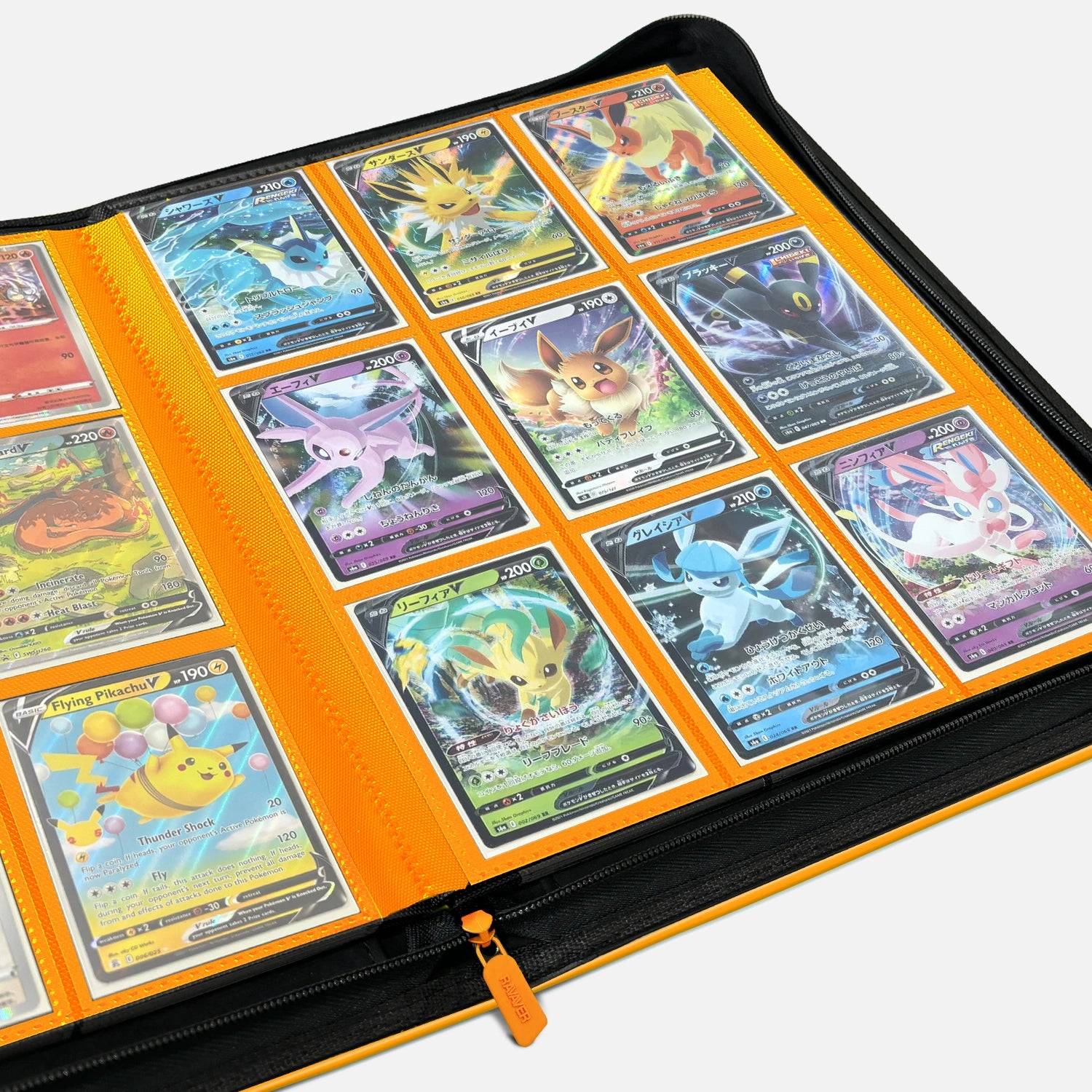
Go with CGC Bulk at $17/card. You get a professional grade, a clean slab for display, and the lowest cost. There's no reason to pay PSA's premium if resale isn't the goal. Display your graded cards alongside your raw collection in a premium binder for the full collector setup.
Sources:
- PSA, "Submission Updates," retrieved 2026-05-28, psacard.com
- CGC, "Services and Fees," retrieved 2026-05-28, cgccards.com
- PokeBeach Forums, "PSA graded cards over BGS," retrieved 2026-05-28, pokebeach.com