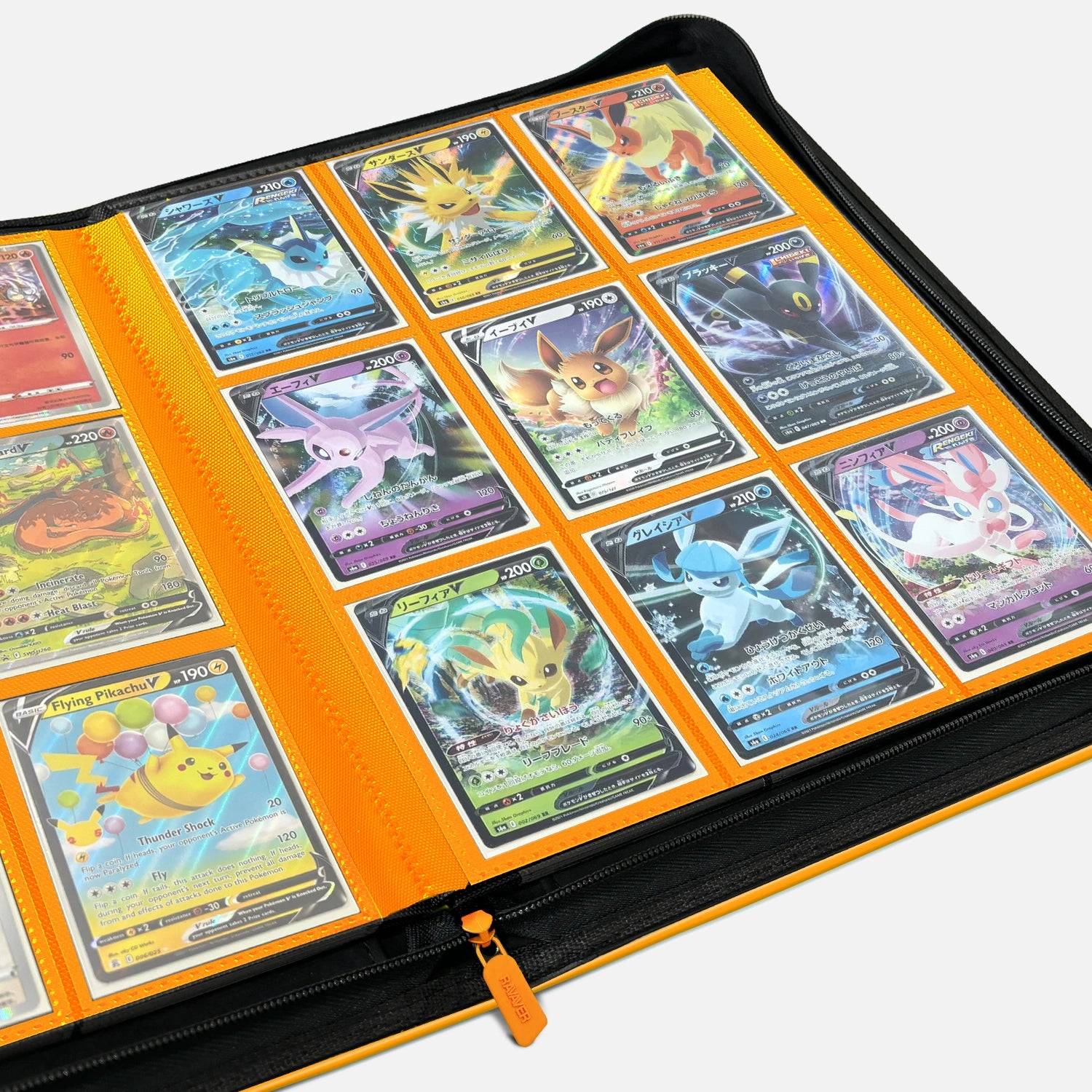
Most grading-cost guides on the internet quote the sticker submission fee and call it done. PSA Value Bulk at $24.99 per card. CGC Bulk at $12. The problem is that those numbers don't reflect what actually leaves your bank account when you grade 10 cards from your Pokemon master set. The real per-card cost, with every line item included, runs 40 to 80 percent higher than the sticker. This worksheet walks through every hidden line, with the math, so you can budget grading the way veteran master set builders actually do.
Key Takeaways
- The true per-card cost of a 10-card PSA Value Bulk submission in 2026 is roughly $36 to $42, not the sticker $24.99 — once membership amortization, two-way shipping, and supplies are included.
- CGC Bulk runs roughly $18 to $22 per card in true cost for a 10-card submission, but Bulk requires a 50-card minimum so smaller batches push you to CGC Standard at ~$23 to $28 per card true cost.
- The single largest hidden cost is two-way shipping with declared-value insurance, which scales with total submission value and can add $3 to $20 per card on its own.
- Working capital tied up for 90 to 120 days during turnaround has a real opportunity cost — modest at the $250 batch level, meaningful at the $5,000 batch level.
- For master set builders, batching submissions to hit the 25-to-50 card sweet spot per service is the single biggest cost-per-card lever.

The six cost lines every grading submission carries
Before we run the worked examples, here are the six cost lines that show up on every grading submission. Most calculators omit the last four.
- Submission fee per card. The sticker price. PSA Value Bulk $24.99. CGC Bulk $12. BGS Economy $20.
- Membership amortization. PSA's Value Bulk requires Collectors Club ($149 per year). If you submit 50 cards in a year, that adds $2.98 per card. If you submit 10, it adds $14.90 per card.
- Outbound shipping with insurance. A 10-card submission valued at $1,500 costs roughly $25 to $40 to ship to PSA's Newport Beach facility with declared-value coverage.
- Return shipping. PSA's return shipping in 2026 scales with declared value: $20 to $75 for typical batches. CGC return shipping runs $15 to $50.
- Supplies. Pro-Fit perfect-fit sleeves ($0.05 each), Ultra Pro penny sleeves ($0.02 each), Ultra Pro top loaders or card savers ($0.30 to $0.50 each), submission form printing, and a padded mailer or small box ($3 to $6).
- Working capital opportunity cost. The cards' raw market value plus submission fees, locked up for 90 to 120 days. Even at a conservative 4 percent annual cost of capital, this matters at scale.
Step-by-step: calculating true cost for a 10-card PSA Value Bulk submission
Here is the worksheet I run before every PSA submission. The 10-card example assumes you're already a Collectors Club member who will submit 50 cards across the year, total batch declared value around $1,800.
| Line item | Cost (10 cards, $1,800 declared) | Per card |
|---|---|---|
| PSA Value Bulk submission fee | $249.90 | $24.99 |
| Collectors Club membership (amortized over 50 cards/year) | $29.80 | $2.98 |
| Outbound shipping (UPS insured, $1,800 value) | $32 | $3.20 |
| Return shipping (PSA insured, $1,800 value) | $28 | $2.80 |
| Supplies (sleeves, top loaders, mailer) | $8 | $0.80 |
| Working capital cost (95 business days / 4 months at 4% APR on $2,000 tied up) | $26 | $2.60 |
| True total cost | $373.70 | $37.37 |
The sticker said $24.99 per card. The true cost was $37.37 — 49 percent higher. That gap is where most master set grading budgets break.
Step-by-step: the same submission to CGC Standard
CGC Standard at ~$18 per card with 20 to 45 day turnaround is the realistic alternative for the same 10-card modern submission, since CGC Bulk requires 50 cards minimum.
| Line item | Cost (10 cards, $1,800 declared) | Per card |
|---|---|---|
| CGC Standard submission fee | $180 | $18 |
| Membership | $0 (no membership required) | $0 |
| Outbound shipping (UPS insured to Sarasota) | $28 | $2.80 |
| Return shipping (CGC insured) | $22 | $2.20 |
| Supplies | $8 | $0.80 |
| Working capital cost (30 days at 4% APR on $1,800 tied up) | $6 | $0.60 |
| True total cost | $244 | $24.40 |
CGC Standard came in $13 per card cheaper on true cost, primarily from skipping the membership fee and from the shorter capital lock-up window. For modern master set submissions where the PSA resale premium is thin, CGC's economics win clearly.
Why batch size dominates the per-card cost equation
The single most powerful lever in grading economics is batch size. A 5-card submission and a 50-card submission to the same service can have wildly different per-card true costs because the fixed costs (membership amortization, shipping, supplies overhead) get spread over more cards.
| Batch size | PSA Value Bulk true cost per card | CGC Bulk true cost per card |
|---|---|---|
| 5 cards | ~$48 to $55 | N/A (below 50 min) |
| 10 cards | ~$36 to $42 | N/A (below 50 min) |
| 25 cards | ~$30 to $33 | N/A (below 50 min) |
| 50 cards | ~$28 to $30 | ~$17 to $19 |
| 100 cards | ~$27 to $28 | ~$15 to $16 |
The implication: if you're grading from a master set, hold candidates in a pre-submission binder until you can fill a 25-card PSA batch or a 50-card CGC bulk batch. The wait pays for itself in lower per-card cost.
Step-by-step: how to plan a master set grading submission for true minimum cost
- List every grading candidate. Pull from your master set tracker. Include raw market value and projected PSA 10 / CGC 10 price.
- Sort by service. Vintage and high-end modern → PSA queue. Mid-tier modern → CGC queue.
- Wait to hit the sweet spot. 25 cards for PSA Value Bulk, 50 for CGC Bulk. Below these thresholds, per-card true cost balloons.
- Calculate the true cost per card using the worksheet above. Include membership, shipping both ways, supplies, and capital cost.
- Run the EV check. True cost per card must be less than (Expected PSA/CGC 10 price × P(10) × 0.865) minus raw market price.
- Submit the batch that passes. Anything that fails goes back into the binder.
Frequently Asked Questions
How much does PSA Value Bulk really cost per card in 2026?
Sticker is $24.99, but the true cost for a typical 10-card submission with Collectors Club membership amortized, two-way insured shipping, supplies, and 95-business-day working-capital cost is closer to $37 per card. Larger batches drive the per-card true cost down to roughly $28 at 50 cards.
Is CGC Bulk really only $12 per card?
Only on the submission fee line. After outbound and return shipping, supplies, and the 120-business-day capital lock-up, true per-card cost on a 50-card CGC Bulk submission runs closer to $17 to $19. Still the cheapest option on a per-card basis when you can hit the 50-card minimum.
What's the cheapest way to grade just 10 Pokemon cards?
CGC Standard at roughly $24 per card true cost edges PSA Value Bulk's $37 for a 10-card batch, primarily because CGC skips the membership requirement and turnaround is short enough that capital lock-up is negligible. The trade-off is a smaller PSA 10 resale premium that you give up on the highest-value modern cards.
Does PSA's Collectors Club membership pay for itself?
Only above roughly 30 cards submitted per year. At 50 cards per year, the $149 fee amortizes to $2.98 per card — a small cost relative to the $24.99 Value Bulk rate it unlocks. At 10 cards per year, the membership adds $14.90 per card and rarely makes sense versus CGC Standard.
How do I keep grading shipping costs down?
Three levers: batch larger submissions to spread shipping fixed cost, use the grading service's own shipping label when offered (often discounted), and avoid declaring inflated values that push you into higher insurance tiers. The right answer for a $1,800 batch is the carrier with insurance scaled to that value, not the next tier up.
Actionable next step
Build the true-cost worksheet in a spreadsheet (the table above maps to columns directly). Plug in your next batch's actual card count, declared values, and target service. The number that comes out is the floor for whether each candidate card clears positive grading EV. For the EV math itself, the When to Grade Cards from Your Pokemon Master Set pillar walks through the formula card-by-card.
Sources:
- PSA, Pricing and Estimated Turnaround Time Updates, retrieved 2026-05-20, psacard.com/info/submission-updates
- PSA, How much does grading cost?, retrieved 2026-05-20, support.psacard.com
- CGC Cards, Trading Card Grading Tiers, retrieved 2026-05-20, cgccards.com/grading/services