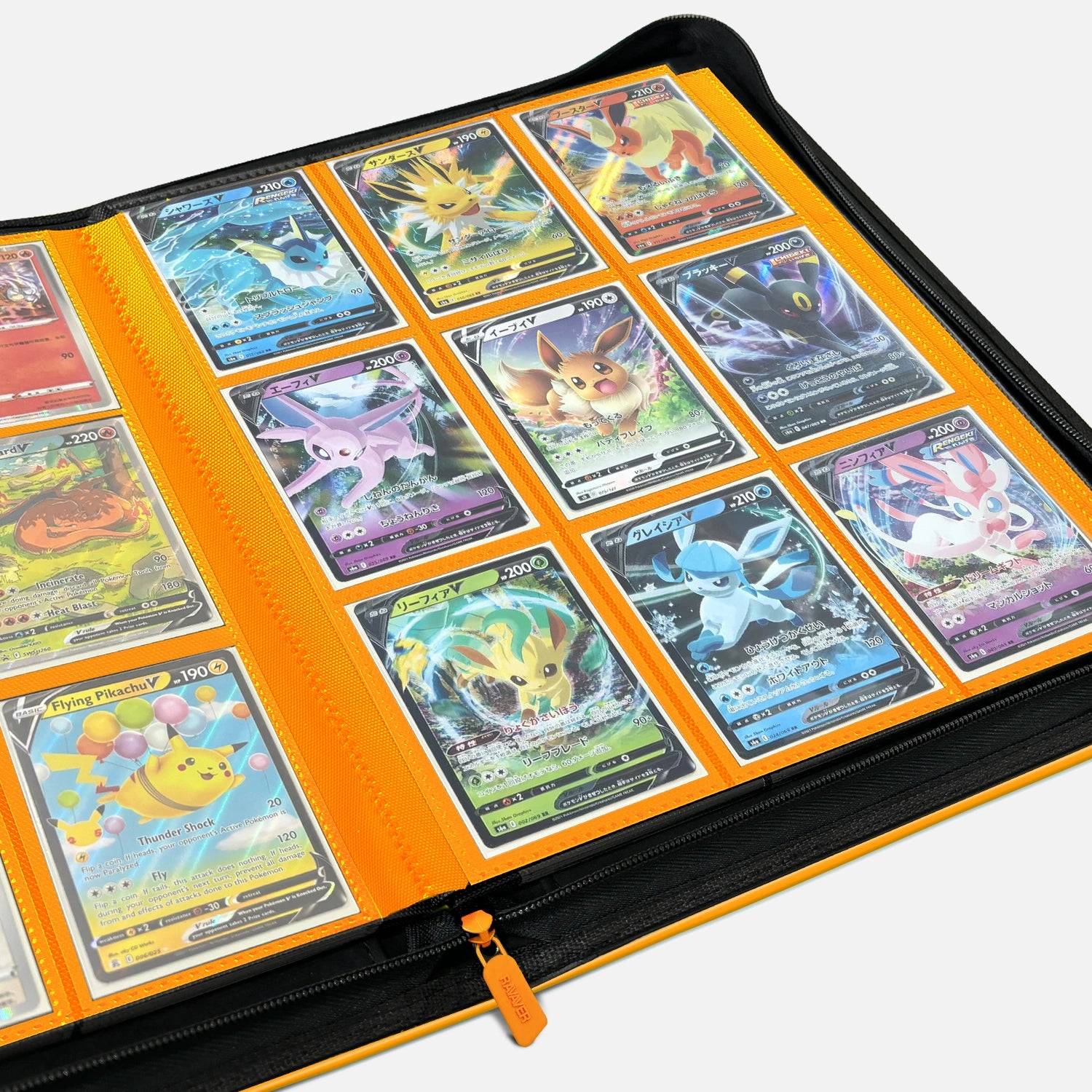
Most collectors who fail to finish a Master Set don't fail because they run out of money. They fail because they spend the wrong money at the wrong time, burning the budget on bulk cards in week one, then discovering in month four that they're $400 short on the three chase cards that complete the set.
The fix is a phased budget. Instead of treating your Master Set spend as one big pool, you split it into four allocation phases with hard percentage caps. This 4-phase method is how disciplined collectors finish on time, on budget, and without selling cards to fund the last 5% of the project.

Key Takeaways
- The 4-phase method splits a Master Set budget into Foundation (40%), Hunt (35%), Polish (15%), and Preserve (10%), each phase has a fixed cap and a clear deliverable
- Skipping the Foundation phase to chase rare cards first is the #1 reason Master Sets stall at 85-95% complete
- The Preserve allocation (sleeves, toploaders, binder) gets cut first when collectors panic, and ends up costing 30-50% more in damaged-card loss later
- For a $1,400 Standard Tier set, the realistic monthly cadence is $200-300, not $700+ "let's finish this fast" surges
Why a phased budget beats lump-sum spending
The traditional approach to Master Set budgeting is one number: "I'm going to spend $1,500 on this set." That number is technically accurate but operationally useless. It tells you nothing about which cards to buy first, when to slow down, when to push, or how to recognize you're going off-track.
A phased budget converts that one number into a decision framework. You spend in a predictable order, you measure progress against allocation caps, and you catch problems early instead of discovering them when the last chase card costs $300 more than expected. Think of it like construction phasing, you pour the foundation before you frame walls, and you frame walls before you install fixtures. Order matters.
The 4 phases at a glance
| Phase | Budget Allocation | Target Completion % | Time Window |
|---|---|---|---|
| 1. Foundation | 40% of total | 0% → 70% | Weeks 1-4 |
| 2. Hunt | 35% of total | 70% → 90% | Weeks 5-12 |
| 3. Polish | 15% of total | 90% → 99% | Weeks 13-20 |
| 4. Preserve | 10% of total | N/A (storage) | Throughout |
For a $1,400 Standard Tier Master Set, that means $560 in Foundation, $490 in Hunt, $210 in Polish, and $140 in Preserve. Total = $1,400. Notice the percentages add up to 100%, the Preserve allocation isn't an extra line item, it's carved out of the same total budget. Most collectors forget this and treat protection supplies as "found money," then wonder why they're over budget by 15%.
Phase 1: Foundation (40% of budget, 70% of cards)
Foundation is where you buy the cheapest 70% of the set. Commons, uncommons, regular holos, and the bulk reverse holos that complete the visual set. This is the boring work, and it's exactly where most collectors quit before they start because it doesn't feel exciting to spend $560 on cards that cost $0.50-$5 each.
The Foundation workflow:
- Identify the master set list (Bulbapedia or Cardrake have clean numbered lists for every recent set)
- Search for bulk commons/uncommons lots on TCGplayer or eBay, entire commons/uncommons batches typically run $30-80 for a current set
- Search for "reverse holo lot" listings, these run $80-150 for 60-100 reverse holos at a time
- Cross-reference what you receive against your set list, mark off completed cards in a spreadsheet or a tool like Collectr
- For missing cards under $5, buy them as singles from TCGplayer in batches to minimize shipping cost
The Foundation phase should take 3-4 weeks and end with your Master Set 70% complete. If you find yourself in week 5 still buying $1 cards, you've gone too long here. If you find yourself in week 2 already shopping for chase cards, you've skipped ahead and will regret it.
Phase 2: Hunt (35% of budget, 20% of cards)
Hunt phase is where the rare holos, full arts, and ultra rares come in. The card-per-dollar ratio gets worse fast, you're now spending $20-80 per card to add 50-60 cards to a 430-card set. This is where most newcomers underestimate the price acceleration.
The right tools for Hunt phase are TCGplayer's "completed sales" filter, eBay's sold listings, and a price-tracking tool like PriceCharting. You want to see what cards actually traded at over the past 30 days, not what sellers are asking. Asking prices for ultra rares routinely sit 20-30% above true market.
Key Hunt phase rules:
- Set a maximum-bid rule before you start ("I will not pay more than $X for this card") and write it next to each remaining card on your list
- Buy from sellers with 99%+ feedback for cards over $30, chargebacks are not worth the stress
- Avoid bidding wars on auction listings. "Buy It Now" with Best Offer is almost always cheaper than letting an auction run
- If a specific card sits at 20%+ above your max bid for more than 3 weeks, set a price-drop alert and move on to other cards
Hunt phase typically runs 6-8 weeks. By the end you should be at 90% completion with 35% of total budget spent.
Phase 3: Polish (15% of budget, last 9% of cards)
Polish is the brutal phase. The last 40-50 cards in a Master Set include the Special Illustration Rares, Hyper Rares, and any chase cards with sustained collector demand. Pikachu ex SIR at $250-300, Latias ex SIR at $110-150, the gold-bordered hyper rare at $80-120 each, these are the cards that drain Polish allocation fast.
The 15% allocation works because you've been disciplined in earlier phases. If you blew Foundation budget on premium bulk lots or splurged during Hunt on cards you didn't really need, Polish becomes a panic. You're staring at a 95% complete set with $50 in your budget and a $300 card list remaining.

Polish phase tactics:
- Wait for natural price corrections, chase cards typically dip 10-15% in the 90-120 day window after release as supply stabilizes
- Make best offers on TCGplayer listings, accepted offer rate on chase cards is roughly 30% if you offer 8-12% under ask
- Watch for reprint announcements. If a chase card from your set gets reprinted in a future product, the price can drop 20-40% in two weeks
- Buy chase cards last, in the last 2-3 weeks of the project, when you've validated the rest of the set is complete and not waiting on returns
If Polish exceeds 15% of total budget by week 16, you've miscalculated either the set's chase card values or your earlier phase discipline. At that point the honest call is to reset expectations (extend timeline by 4-8 weeks, accumulate more budget) or downgrade to Casual Tier on the remaining cards.
Phase 4: Preserve (10% of budget, throughout the build)
Preserve runs in parallel with the other three phases, not after. As soon as you receive a card in Foundation, it goes into a penny sleeve. Cards over $20 from the Hunt phase get a toploader and a premium outer sleeve. Chase cards from Polish go into magnetic holders or toploader-friendly binder pages immediately on arrival.
The Preserve shopping list for a 430-card Master Set:
| Item | Quantity Needed | Cost Range |
|---|---|---|
| Penny sleeves | 500-600 | $5-8 (500 pack) |
| Premium outer sleeves | 100 (for rare/holo cards) | $8-15 |
| Toploaders or card savers | 30-50 (for chase cards) | $15-25 |
| Master Set binder (24+ pages capacity) | 1 | $60-120 |
| Magnetic card holders | 5-10 (for top chase cards) | $15-30 |
Total Preserve budget: $100-200 across the project. For a Standard Tier $1,400 Master Set, that lands neatly inside the 10% allocation ($140). If you're collecting in the Toploader Tier (every card double-sleeved with rigid protection), the Preserve allocation should bump to 12-15% of total budget.
Skipping or undersizing the Preserve phase is the most expensive mistake first-time Master Set builders make. A $250 chase card that gets edge whitening from a bad binder drops to $150 instantly. That $100 loss could have funded a premium toploader-friendly binder twice over.
How to recover when you've over-spent a phase
Real talk: most first-time builders blow Foundation budget by 10-20%. They get excited, they overbuy bulk lots, they pay shipping on five small orders instead of consolidating. Then Hunt arrives and they don't have the buffer they planned for.
The recovery options, in order of severity:
- Slow the timeline. Extend the project by 4-6 weeks to accumulate more monthly budget without touching savings.
- Downgrade quality on remaining bulk. Buy from lower-feedback sellers, accept light-played condition on commons/uncommons, save the difference for chase cards.
- Sell duplicate cards. You'll have 20-40 duplicates from bulk lots. Sell them as a single TCGplayer batch listing to recover $40-100.
- Downgrade your tier. If you started chasing Standard Tier and the budget broke at week 8, finish in Casual Tier, accept ungraded chase cards from bulk markets, skip the alternate-rarity reverse holos.
The one option that ruins the project is "borrow from Preserve." Skipping protection to fund another chase card means you'll be replacing damaged cards in 6-12 months, costing more than the original card you saved on.
Frequently Asked Questions
What if my set has way more chase cards than average?
Sets like Crown Zenith, Hidden Fates, and 151 are chase-heavy by design. For these sets, adjust the allocation to 30% Foundation / 45% Hunt / 17% Polish / 8% Preserve. The Hunt and Polish phases combined can hit 60-65% of total budget on chase-heavy sets. The Foundation phase still matters, you still need to complete the base set first to know how much chase budget remains.
How do I track my progress through the phases?
A simple Google Sheet with three columns (card number, target buy price, actual paid) is enough. More structured collectors use tools like Collectr or Pikawiz that integrate with TCGplayer pricing. The key metric to watch is percentage-of-cards-complete vs percentage-of-budget-spent. If you're at 50% cards complete and 70% budget spent, you've under-allocated chase money. If you're at 80% cards and only 50% budget spent, you can either bank the savings or upgrade to Strict Tier on top cards.
Should I buy sealed booster packs during the Foundation phase?
No. The Foundation phase is about cost-efficient bulk coverage, and sealed packs are not cost-efficient for bulk. A $4 booster pack averages 1 card of value over $0.25, meaning you're paying $4 for what averages out to maybe $1.50 in usable cards. Save sealed pack purchases for the Hunt phase if at all (and only if pack opening is part of the experience you want).
What's the cheapest way to source reverse holos in bulk?
Search "[set name] reverse holo lot" on eBay and filter by "completed listings" to see real sale prices. For current Scarlet & Violet sets, a 60-card reverse holo lot typically runs $80-130 depending on which cards are included. Avoid sellers who only show partial photos, request a full lot photo before buying. Bulk reverse holo lots are also frequently posted on r/PokemonTCG_Marketplace.
Can I use the same budget framework for a Strict Tier (all PSA 10) Master Set?
The framework adapts but the numbers change. Strict Tier collectors should allocate 25% Foundation (still cheap to buy raw cards in bulk before grading) / 25% Hunt (raw chase cards before grading) / 35% Grading (PSA submission fees + shipping for the full set) / 15% Preserve (graded slabs require slab-specific storage, not standard binders). Expect total project cost to land at 2.5x-4x what a Standard Tier costs. For an extended view of grading economics, see our PSA submission timing guide.
Where to apply this immediately
Pick one set you're seriously considering. Open a spreadsheet. Write down your total budget. Multiply by 0.40, 0.35, 0.15, and 0.10 to get your four phase numbers. Then write the target completion percentage next to each phase.
That single document is what separates collectors who finish from collectors who quit at 87% complete. Everything else is execution.
For the underlying cost math behind these allocations, read our full breakdown in how much a Pokemon Master Set actually costs in 2026. For choosing which set to target with this method, see the 5-factor set selection framework.
Sources:
- TCGplayer, Surging Sparks Price Guide, retrieved 2026-05-26, tcgplayer.com/sv08-surging-sparks
- PSA, 2026 Service Levels and Bulk Submission Pricing, retrieved 2026-05-26, psacard.com/services
- Bulbapedia, Pokemon TCG Set List Reference, retrieved 2026-05-26, bulbapedia.bulbagarden.net