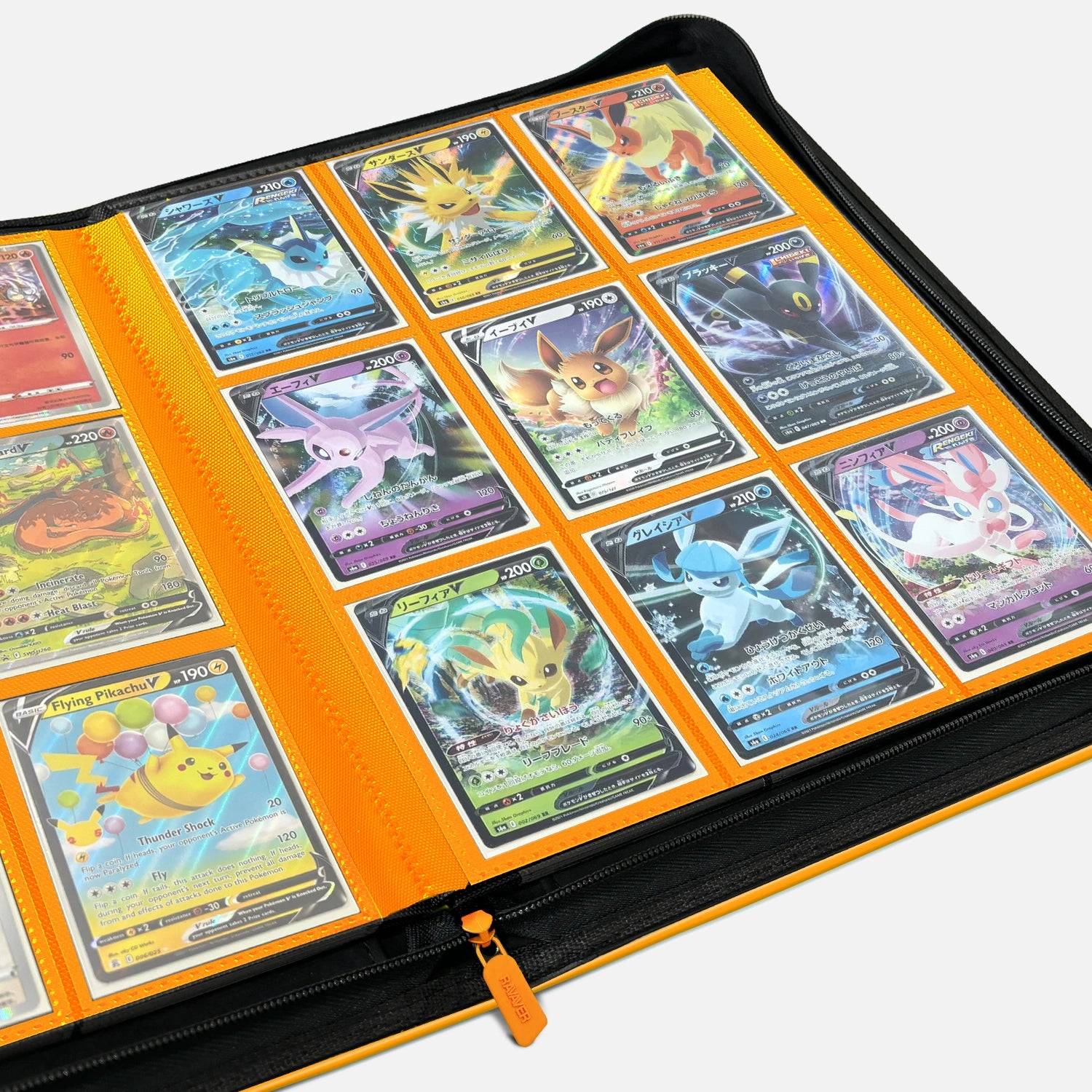
The collectors who finish master sets share one habit: they budget before they buy. The collectors who quit halfway buy chase cards on the day a set drops, then realize they have $400 left for the remaining 200 cards. This is the 6-step budget worksheet veteran completionists actually use, with real percentage allocations from finished-set spreadsheets in the r/pkmntcgcollections archive.
Key Takeaways
- Budget the chase layer first, the base layer second. Top 5-10 chase cards consume 70-85% of total set cost.
- The working percentage allocation: 70% chase tier, 15% reverse holos, 10% base/uncommon, 5% promos.
- Always add a 20% buffer for price drift and missed variants.
- Tracking spreadsheet beats mental math past 80 cards.
- A working budget produces a date-by-date purchase plan, not just a total.

Why Master Set Budgets Need a Different Approach
A master set budget is not a shopping list. It's a 6-12 month capital allocation plan with shifting chase prices, variant inventory gaps, and a finish-line moving target. The reason 60-70% of master set attempts stall (based on completion-rate threads in r/PokemonTCG) is that collectors budget the way they shop for a single deck box: total amount, single purchase. Master set budgets work the way construction budgets work: tier-based with contingency.
Read the 2026 master set completion playbook first if you haven't picked your set. This worksheet assumes you've already chosen which expansion you're chasing.
The 6-Step Master Set Budget Worksheet
- Step 1 - List every variant in the set. Pull the full variant inventory from Bulbapedia, not TCGplayer (which sometimes misses prerelease and Pokemon Center variants). Write down: base count, reverse holos, secret rares, SIRs, Hyper Rares, MHRs, promos, prerelease stamps, store exclusives. Total card count is the floor for the rest of the budget.
- Step 2 - Identify the chase tier (top 5-10 cards). The chase tier is every card priced above $50 raw or $100 in PSA 9. Look up each chase card's TCGplayer market price as of this week. Sum these prices. This is your chase budget.
- Step 3 - Estimate the rest of the variant cost. For modern sets, the non-chase variant cost (everything except the top 5-10 chase cards) typically runs 25-35% of the chase tier cost. So if chase tier = $1,000, expect $250-$350 for everything else. For vintage WOTC sets in PSA 8, the multiplier is different (closer to 60-80% of chase tier cost).
- Step 4 - Add the 20% buffer. Price drift in the chase tier alone runs 15-25% over a 6-12 month horizon. Variants you forgot to count add 5-10%. Buffer your subtotal by 20% to avoid the "I'm over budget and 30 cards short" trap.
- Step 5 - Create a date-by-date purchase plan. Split your total budget across the months you plan to spend completing the set. Month 1: base/uncommon/holo bulk lot + reverse holos. Months 2-4: secret rares and mid-tier chases. Months 5-9: top 2-3 chases timed to post-release corrections. Last 1-2 months: cleanup.
- Step 6 - Build the tracking spreadsheet. Five columns: card name, variant type, target price, paid price, status (owned / wanted / sourced). Track every purchase. After ~80 cards, mental math falls apart. We walk a working tracker setup in our spreadsheet system guide.
The Working Percentage Allocation
This is what an actual modern Pokemon master set budget looks like, drawn from three finished-set spreadsheets in the r/pkmntcgcollections archive (anonymized).
| Budget Category | % of Total | Example: $1,500 Total Budget | Example: $5,000 Total Budget |
|---|---|---|---|
| Top 5-10 chase cards (SIRs, Hyper Rares, MHRs) | 70% | $1,050 | $3,500 |
| Reverse holos (full reverse holo set) | 15% | $225 | $750 |
| Base set + uncommons + holos | 10% | $150 | $500 |
| Promos, prereleases, store exclusives | 5% | $75 | $250 |
Two corollaries from this allocation. First, the chase tier is the entire game—decide if you can afford it comfortably before committing. Second, reverse holos are the most consistently underbudgeted category. Most collectors expect them to cost less than they actually do, because reverse holo singles spike late in completion when other completionists start scrambling for them.

Real Numbers: Phantasmal Flames Budget Walkthrough
Let's walk Phantasmal Flames as a worked example. Per Wargamer's April 2026 audit, the master set runs $1,425 in singles total.
- Mega Charizard X SIR (top chase): $818. That's 57% of the total set alone.
- Other chase tier cards (4-6 SIRs/Hyper Rares): ~$300
- Reverse holos (set has ~80 reverse variants): ~$180
- Base + uncommons + holos: ~$80
- Promos and exclusives: ~$45
Adding a 20% buffer takes the working budget to $1,710. The lesson: 57% of your decision is whether you can afford Mega Charizard X SIR comfortably. If yes, the rest is sequencing. If no, pick a different set.
When to Update the Budget
Budgets aren't static. Update yours when one of three things happens. New set release (chase prices in your target set often correct as attention rotates). PSA grading announcement (population reports shift demand and pricing). Major Reddit or YouTube coverage of your set (can push chase prices 10-30% in a week). The collectors who finish under budget update their working numbers monthly.
Frequently Asked Questions
How much should I budget for a modern Pokemon master set in 2026?
Budget the top chase card cost x 1.4 as your floor. For Perfect Order, that's around $250. For Phantasmal Flames, around $1,150. For Ascended Heroes, $1,400+. Above that, the remainder of the variant layer typically runs 25-35% of the chase tier cost.
What percentage of my budget should go to chase cards?
70% on modern sets. Top 5-10 chase cards (SIRs, Hyper Rares, MHRs) consume the lion's share. For vintage WOTC sets, the chase tier consumes 50-65% because base holos and 1st Edition stamps also command significant premiums.
Do I need a buffer in my master set budget?
Yes. 20% buffer for price drift and forgotten variants. Master set chase prices typically drift 15-25% over a 6-12 month completion horizon, and most first-timers miss 5-10 variants in their first inventory pass.
Should I buy chase cards first or last?
Last for modern, first for vintage. Modern chase cards typically correct 15-25% in the 30-60 days after release—buying first locks you into peak prices. Vintage chase cards generally appreciate or hold, so buying first reduces future cost exposure.
How do I track my master set progress without a spreadsheet?
Past 80 cards, you can't reliably track without a spreadsheet. Below 80, a notebook page with card name, owned/wanted, and paid price works. Above 80, mental math creates duplicate buys and missed variants.
What's the biggest budgeting mistake first-time completionists make?
Buying the top chase card on release day. Chase prices peak in the first 14-30 days after a set drops, then correct as supply increases and attention rotates. Waiting 6-8 weeks typically saves 15-25% on the most expensive single card in the set.
Where to Start This Week
Open a spreadsheet. Pull your set's variant inventory from Bulbapedia. Sum the top 5-10 chase card prices from TCGplayer. Multiply by 1.4 to estimate the rest. Add 20% buffer. Split the total across 6-9 months. If the math works, buy the base/uncommon/holo layer this week to anchor your progress. Read the 10 master sets worth completing in 2026 if you haven't picked yet, and the Master Set vs Regular Set vs Reverse Holo comparison if you're not sure which completion path fits your budget. Sleeve everything in a binder built for completionists—the Ravaver Pokemon binder lineup is designed for toploader-friendly storage with full-zip closure.
Sources:
- Wargamer, "A full master set of all Pokémon TCG Mega Evolution expansions now costs over $13,000," retrieved 2026-05-18, wargamer.com
- TCGplayer market price data, retrieved 2026-05-18, tcgplayer.com
- Bulbapedia variant inventory, retrieved 2026-05-18, bulbapedia.bulbagarden.net
- r/pkmntcgcollections finished-set spreadsheet archive threads, retrieved 2026-05-18