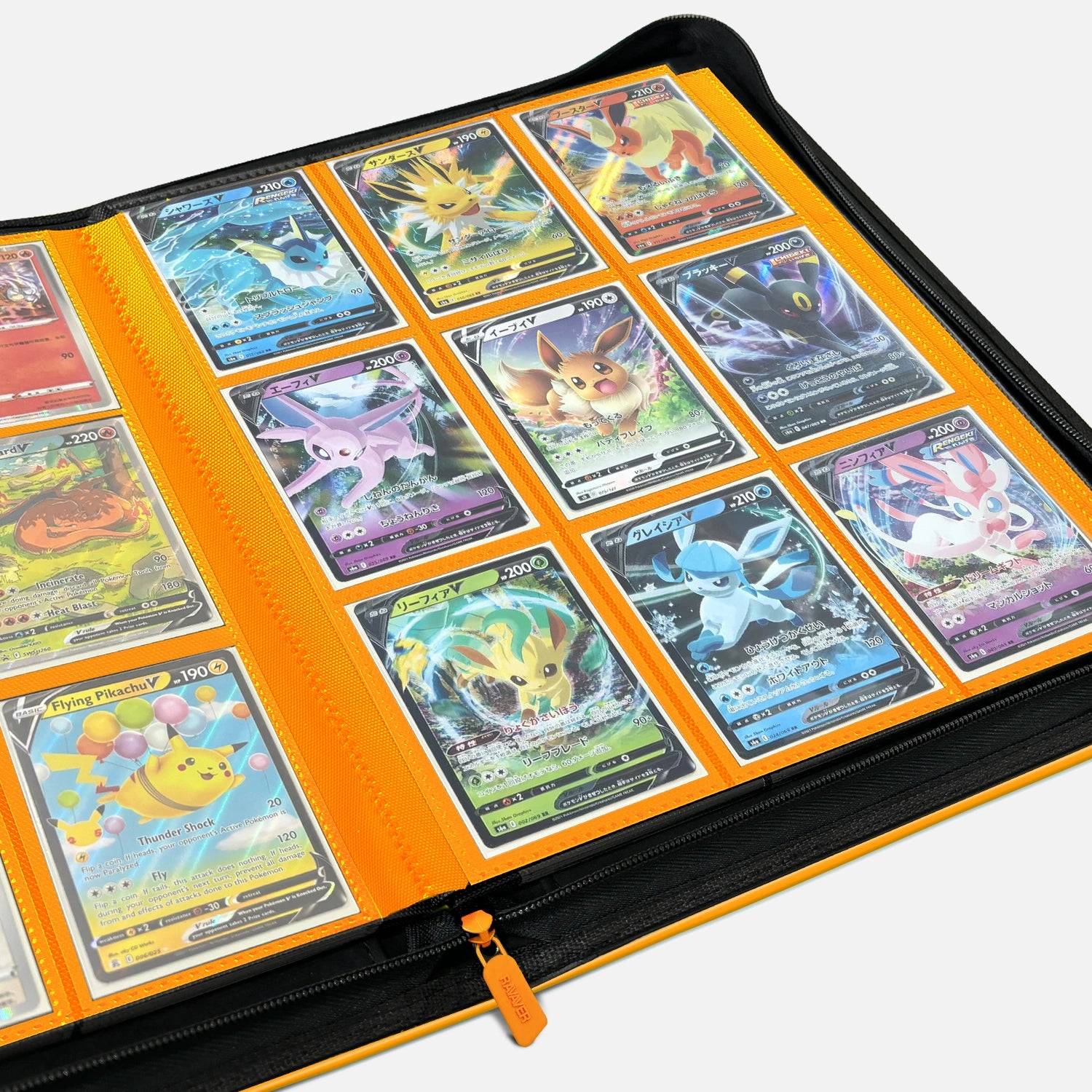
Most first-time Pokemon completionists default to "master set" without knowing there are two cheaper paths that score nearly the same social signal at a trade table. Master set is the deepest path. Regular set is the cleanest path. Reverse holo set is the underrated path. Each has a different cost curve, time horizon, and resale ceiling. Below is the head-to-head comparison veteran collectors actually use to decide.
Key Takeaways
- Master set is the highest-cost, highest-signal path. Regular set is 10-25% of master cost. Reverse holo set sits between, at 15-30% of master cost.
- For modern sets, regular set + top 3 chase singles often beats a full master set on cost-to-flex ratio.
- Reverse holo sets are the most underrated path. Cohesive visual identity, lower cost, distinct collector identity.
- Vintage WOTC tilts the math: master set premium-to-sum-of-parts hits 30-40%, so vintage master is the better investment path.

What Each Completion Path Means
The three completion paths use different definitions of "complete." A regular set is the numbered base set only—e.g., cards 1 through 165 in a 165-card expansion. No reverse holos, no secret rares, no SIRs, no promos. Just the printed base cards in their default holo or non-holo state. A reverse holo set is every base card in its reverse holo printing—the version with the holographic pattern on the non-art portion. Most modern sets release 100-200 reverse holo variants. A master set is the regular set plus the reverse holo set plus every variant: secret rares, SIRs, Hyper Rares, MHRs, promos, prerelease stamps, and Pokemon Center exclusives.
The definitional rabbit hole deepens past this point. Read our 2026 master set definitions guide for the Strict vs Standard vs Casual breakdown.
Head-to-Head: Cost, Time, Signal, Resale
Here's the comparison veteran completionists actually run. Numbers use a typical modern Mega Evolution-era set as the baseline (think Perfect Order or Phantasmal Flames).
| Path | Cost (Modern) | Time | Social Signal | Resale Premium |
|---|---|---|---|---|
| Regular Set | $80-200 | 1-3 weeks | 4/10 | None (sum-of-parts) |
| Reverse Holo Set | $150-400 | 2-6 weeks | 6/10 | 5-15% over sum-of-parts |
| Master Set (Modern) | $982-$7,091 | 6-12 months | 9/10 | 0-15% over sum-of-parts (raw); 15-40% (PSA 9-10) |
| Master Set (Vintage WOTC) | $1,500-$15,000+ | 1-3 years | 10/10 | 30-40% over sum-of-parts (PSA 9-10) |
The verdict that surprises most first-timers: regular set + top 3 chase singles as a hybrid path often beats full master set on cost-to-flex ratio for modern sets. You get the base set for $80-200, then buy the top 3 chase cards for ~50% of what the full master set chase tier would cost. The result is roughly 7/10 social signal at 30-40% of master set cost.
Path 1: Regular Set
Cost is the lowest. Time is the fastest. The downside: social signal is low. A complete regular set displays as a clean visual run but lacks the chase cards that draw eyeballs at a card show or in IG photos. Regular sets work well for collectors who care about the gameplay roster (running through every Pokemon's stat card) or building reference collections. They're also the foundation everyone starts with—you build the regular set first, then decide whether to layer reverse holos or chases on top.
When the regular set path makes sense: budget under $250, completion in under 4 weeks, primary purpose is reference or roster collecting, no display ambitions.
Path 2: Reverse Holo Set
Reverse holo sets are the most underrated path in 2026. Three reasons. First, cohesive visual identity—an entire set in reverse holo printing has a unified shimmer that regular sets don't have. Second, lower variant count than master sets (no secret rares, no SIRs to chase). Third, distinct collector identity. Walking into a trade table with a complete reverse holo set in a binder produces real recognition without the master set price tag.
The cost math: reverse holo singles typically run 1.5-3x the price of the regular version, so for a 165-card set with $80 regular set cost, expect $150-400 for the reverse holo set. Time is 2-6 weeks if you batch-buy from a single TCGplayer seller; longer if you piece-meal.
When the reverse holo path makes sense: budget $150-400, want display value, don't want to chase SIRs, like the cohesive look of holo printing across the entire set.

Path 3: Master Set
The most complete, most expensive, highest social signal. Master set completion in modern Pokemon runs $982-$7,091 depending on the set, per Wargamer's April 2026 audit. Time horizon is 6-12 months for modern, 1-3 years for vintage WOTC.
Master set completion is the right path when three things align: budget can comfortably absorb the top chase card without strain, time horizon of 6+ months is realistic, and the social signal at a trade table or in IG content genuinely matters to you. If any one of those isn't true, the hybrid path (regular set + top 3 singles) usually delivers better cost-to-flex.
For vintage WOTC sets, the math tilts toward master set. Auction premiums for complete graded master sets run 30-40% over sum-of-parts (versus 15-40% for modern), so vintage master sets are the better long-term investment path. Modern master sets are better collection trophies than investments.
The Hybrid Path Most Collectors Don't Consider
The hybrid path is regular set + top 3-5 chase singles. You buy every base card (regular set, $80-200) plus the top 3-5 most recognizable chase cards from the set ($200-800 typically). Total: $280-1,000 versus $982-$7,091 for the full master set. Social signal lands at 7/10—not the 9/10 of a full master set, but at 30-40% of the cost.
The hybrid path is what most experienced collectors quietly do when they want to be associated with a hyped set (Mega Evolutions, Prismatic Evolutions, Phantasmal Flames) without committing to the full master set timeline and budget. The top chase cards do the social signaling. The regular set provides the completion satisfaction.
Frequently Asked Questions
What's the difference between a master set and a regular set?
A regular set is the numbered base set only (e.g., cards 1 through 165). A master set is the regular set plus every printing variant: reverse holos, secret rares, Special Illustration Rares, Hyper Rares, MHRs, promos, prerelease stamps, and Pokemon Center exclusives.
Is a reverse holo set worth completing in 2026?
For collectors who want display value at moderate cost, yes. Reverse holo sets run 15-30% of master set cost while delivering 60-70% of the social signal. The cohesive holographic look across the full set is a distinct collector identity.
Which completion path is cheapest?
Regular set at $80-200 for modern Pokemon. The cheapest social signal upgrade is reverse holo set at $150-400. Master set is the most expensive at $982-$7,091 for modern, $1,500-$15,000+ for vintage WOTC.
Which Pokemon completion path has the best resale value?
Vintage WOTC master sets in PSA 9-10. They sell at 30-40% premiums over sum-of-parts because completion verification matters in the auction market. Modern master sets sell at 0-15% premiums in raw condition, 15-40% in PSA 9-10.
Should I do a master set or a hybrid path?
Hybrid path (regular set + top 3-5 chases) for modern Pokemon under $1,500 budget. Full master set for vintage WOTC investment plays, or modern when budget comfortably absorbs the top chase. The hybrid path delivers ~80% of the social signal at ~35% of the cost.
What's the most underrated completion path?
Reverse holo set. Lower cost than master set, cohesive visual identity, distinct collector signature. Most first-timers don't consider it because they don't realize reverse holos can stand alone as a complete collection.
Where to Start This Week
Decide which path fits your budget and time horizon honestly. Under $250 budget and 4-week timeline: regular set. $200-500 budget and 6-week timeline: reverse holo set. $500-1,500 budget and 6-month timeline: hybrid path (regular set + top 3-5 chases). $1,500+ budget and 6-12 month timeline: full master set. Pull your target set's variant inventory from Bulbapedia, then use the 6-step budget worksheet to build the cost plan. Read the 2026 master set completion playbook for the full framework. Whichever path you pick, you're going to want a binder built for display, not a shoe box—see the Ravaver Pokemon binder lineup.
Sources:
- Wargamer, "A full master set of all Pokémon TCG Mega Evolution expansions now costs over $13,000," retrieved 2026-05-18, wargamer.com
- TCGplayer market price aggregate, retrieved 2026-05-18, tcgplayer.com
- r/PokemonTCG and r/pkmntcgcollections completion path threads, retrieved 2026-05-18