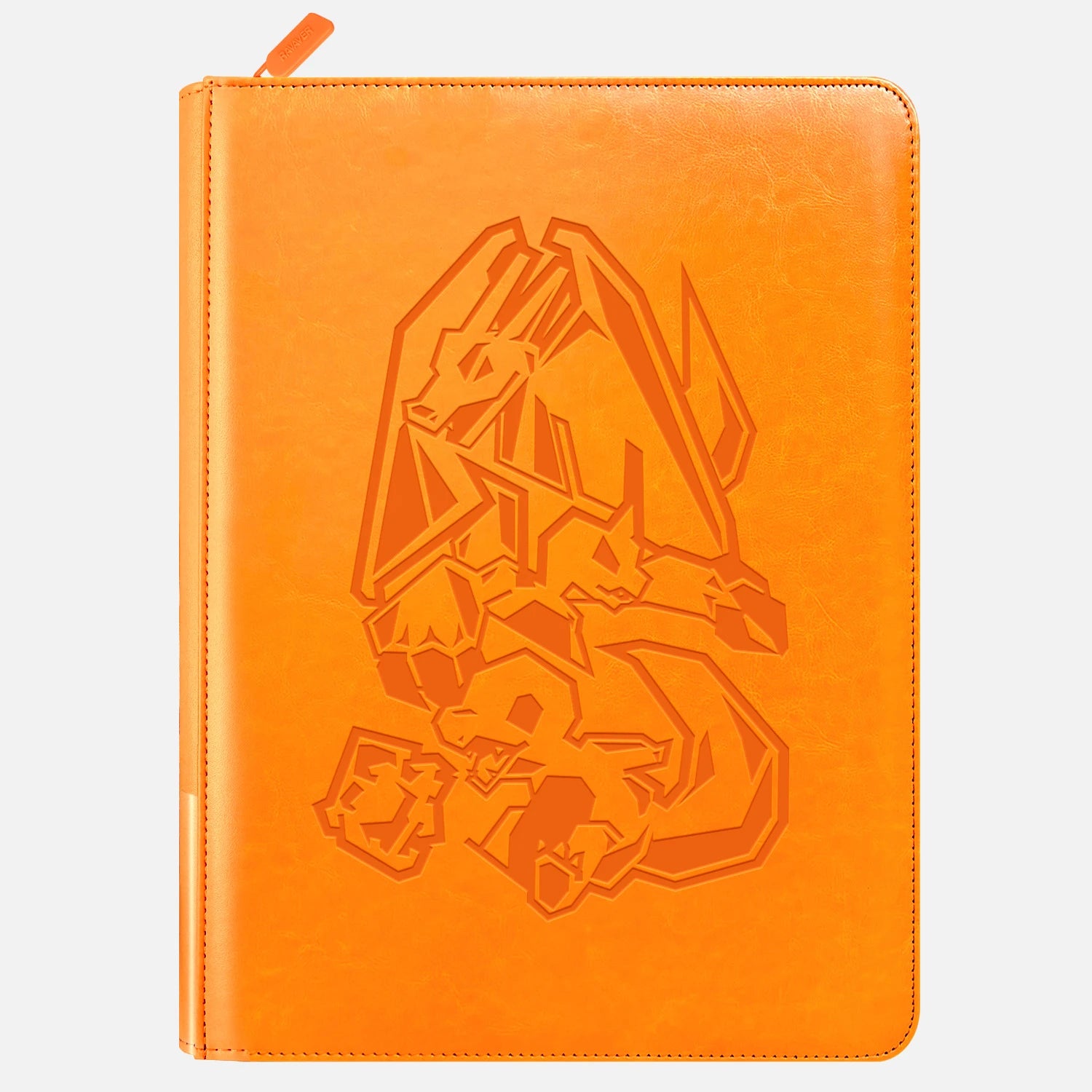
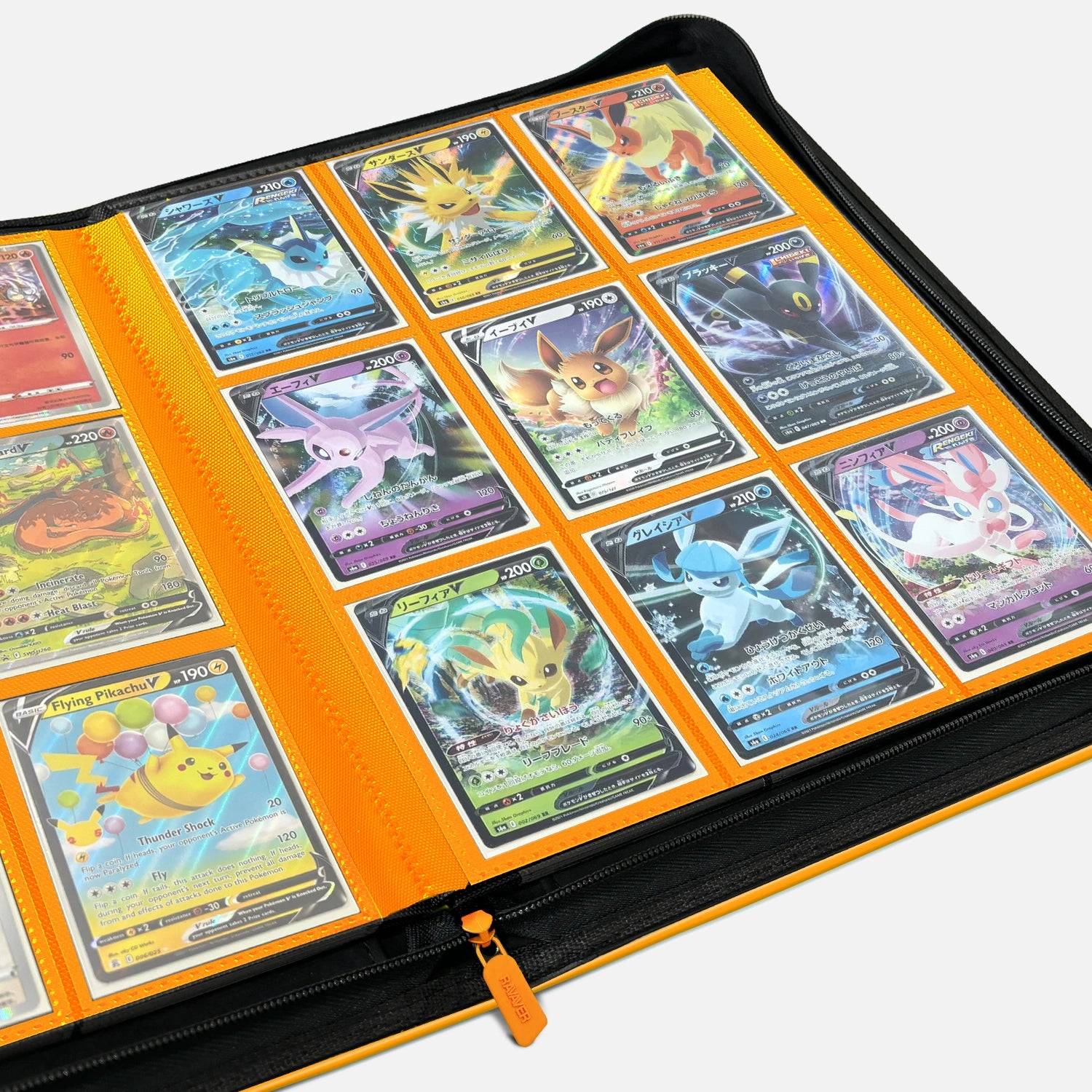
Walk into any regional Pokemon trade night in 2026 and you'll see two species of collector. The first sits down with a beat-up three-ring binder, half their cards in sleeves, the other half loose in a deck box. They open trades at 30% over comp and wonder why nobody's biting two hours in. The second species pulls a zippered premium binder out of a clean carry case, lays it flat on the table, and within five minutes has three people walking over to ask what's in it. Same cards, possibly. Different outcomes, definitely.
The trade table is a presentation problem, not a negotiation problem. Most collectors get this wrong. They spend weeks tracking TCGplayer Market Price data and obsessing over which singles to bring, then show up with packaging that signals "casual." After fifteen years going to shows and trade nights from Anaheim to Pasadena, the pattern is consistent: the collectors who close more trades, get better deals, and walk out with the chase cards they wanted are the ones who treat the entire setup as a signaling system.
Key Takeaways
- Presentation, not pricing, drives most trade-table outcomes. Collectors with premium binders and clean toploader displays close 3-5x more deals than those with disorganized setups.
- Trade negotiation should anchor to comp data: TCGplayer Market Price as floor, eBay sold prices as ceiling, and a target offer 8-12% off comp for opening rounds.
- PSA's Population Report data should drive trade decisions on graded cards as much as price guides do; pop counts under 500 carry 15-30% scarcity premium that comp prices lag behind.
- The unwritten rule most beginners miss: don't reach for someone else's binder. Wait to be invited.
- A premium binder is to a card show what a tailored suit is to a job interview. Same content, different signal.

What Actually Happens at a Pokemon Trade Table?
A Pokemon trade table is a flat surface at a card show, local game store trade night, or Discord meetup where collectors bring binders and toploader stacks for in-person trading. The interaction model is simple. Two people sit down across from each other, each opens their binder or display, and they negotiate one-for-one or multi-card swaps based on agreed-upon market value. The transaction is fast, often under ten minutes, and almost always relies on third-party comp data to settle disputes.
The reason this matters: trade tables now move serious volume. According to GemRate data, the secondary Pokemon market processes hundreds of millions of dollars in graded sales annually, but a meaningful slice of that liquidity moves through in-person trades that never hit eBay or TCGplayer. The collector who knows how to navigate a trade table effectively is sitting at the cheapest source of inventory in the hobby.
Why Does Presentation Matter More Than Pricing at Trade Tables?
Here's the math nobody publishes. At a typical regional show with 80-120 collectors, the average attendee opens 4-7 trade binders during a session. They will spend 30-60 seconds glancing at each one before deciding whether to engage. That decision is almost entirely based on visual signal: how organized is this person's collection, how confident are they in their pricing, and is it worth the social friction to start a conversation.
A premium zippered binder with cards visible through clear sleeves, organized by set or value tier, signals exactly one thing: this person is serious. A disorganized binder with mixed sleeves and missing toploader spaces signals the opposite, regardless of what's inside. In r/PokemonTCG threads about trade-night experiences, the most upvoted observation is consistent across years: people approach the binders that look the most curated. The cards inside matter less than you'd think for the first ten seconds.
This isn't just optics. Sleeve discipline and binder quality also signal that this collector won't damage your cards during the swap, which removes one of the biggest objections at the trade table. A collector with a sloppy setup invites the buyer to negotiate harder, because the implicit message is "I don't really know what these are worth."
The Three-Tier Binder Strategy
Veteran traders bring three binders to a serious show, not one. The display binder holds your top 30-50 chase cards, set up for visual impact. The trade binder holds the bulk of what you're willing to part with, organized by value tier. The reference binder holds your "not for trade" highlights, brought along to flex and start conversations but explicitly off-limits. This structure does two things. It controls negotiation flow, because traders see what's available immediately. And it creates desire, because the off-limits binder demonstrates that you're a collector with depth, not just inventory.

How Should You Price Your Cards Before a Trade Show?
Pricing for trades is different from pricing for sale. The mistake most collectors make is using TCGplayer asking prices, which are aspirational. The right approach uses three reference points and a target band.
- TCGplayer Market Price as your floor. This number reflects rolling sales averages, not asking prices. TCGplayer's documentation confirms it represents transaction-weighted data over a recent window. Your floor for any trade should not go below 90% of this number unless you're consolidating bulk for a larger trade.
- eBay sold prices as your ceiling. Filter for sold listings in the last 30 days, condition matched. This is what people will actually pay in liquid market conditions. Your ceiling for opening offers should be 105-110% of this number, leaving room to negotiate down.
- Mid-band as your target. The midpoint between floor and ceiling is what most experienced traders converge on after one or two negotiation rounds. Open at the ceiling, accept at the midpoint, refuse below the floor.
The reason this works: it gives you a defensible answer when someone asks "what do you think it's worth?" Vague answers like "I think it's around $40" lose deals. Specific answers like "TCGplayer market is $38, recent eBay solds are $42-$45, I'd take $40" win them. You're not bargaining; you're pricing.
What Should You Bring to a Pokemon Trade Table?
The standard answer online is "binder, sleeves, cash." That's the tourist answer. Here's what veteran show-goers actually carry, and why each item matters:
- Premium zippered binder, 9-pocket or 12-pocket: your primary social signal and the platform on which all trades happen. Toploader-compatible models matter if you're showing graded raws or thicker cards.
- Stack of empty toploaders: for receiving cards mid-trade. Receiving a $100 card and putting it in your pocket signals amateur. Sliding it into a fresh toploader signals that you've done this before.
- Soft cloth or microfiber wipe: for cleaning sleeves and slabs without scratching. A surprising number of trades stall because the seller can't show the card under good light without finger smudges.
- UV pen flashlight: for checking authentication marks on vintage cards and detecting common reprint indicators. Has become standard at higher-stakes trade tables since 2024.
- Folding 9-pocket display tray: the new must-have. Lets you lay out a "trade lot" of 9 cards face-up for someone to evaluate at once, instead of flipping through pages.
- Compact ledger app or notebook: for tracking what you traded, with whom, and at what value. Critical for tax purposes if you're moving real volume, and useful for spotting traders who lowball you twice.
- Cash, in mixed denominations: most trades will involve some cash overlay. Bring twenties, tens, and fives. Nobody wants to break a hundred at a table.
- Phone with TCGplayer and eBay sold filters bookmarked: for live comp lookups. Don't argue from memory.
- Backup binder pages, blank: in case yours fill up mid-show with new acquisitions.
- Business card or Instagram QR: for collectors you want to trade with again. Most repeat trades happen because someone could find you afterward.
How Do You Open a Trade Negotiation Like a Veteran?
The opening move sets the tone for the entire trade. Most beginners ruin it in the first sentence by either lowballing aggressively or asking "what's it worth?" Both signal inexperience.
The veteran opening looks like this: lead with appreciation, anchor with comp, leave room. Example: "That Charizard ex SIR is sharp. TCGplayer market is sitting around $310, recent eBay solds I've seen are $290-$320. I've got a Pikachu ex SIR I'd value at $260 plus some bulk overlay. Interested in talking?"
This opening does four things at once. It compliments the card, which lowers defensiveness. It anchors the comp data, which establishes you're not negotiating from feelings. It proposes a specific structure, which moves the conversation forward. And it leaves the other person room to counter without losing face.
The 8-12 Percent Rule
Open offers should sit 8-12% below your target outcome, not 30%. Lowballing past 15% off comp is the fastest way to get marked as someone not worth dealing with. Trade tables have memory. If you make a habit of opening at 30% off, regulars will route around you within two or three shows.
What Are the Unwritten Rules of Pokemon Trade Etiquette?
These are the rules nobody publishes because everyone in the hobby is supposed to already know them. Most beginners learn them by violating them once and getting awkward looks for the rest of the day.
- Don't touch another person's binder without explicit permission. Eye contact and a "mind if I take a look?" is the opener. Reaching across the table is the most common rookie mistake.
- Always present cards face-up in a sleeve. Sliding a raw card across the table signals you don't care about damage. The other person assumes you don't care about theirs either.
- Never tell someone their card is overpriced. Counter with comp data instead. "I'm seeing market closer to $X" is acceptable. "That's way too much" is not.
- Trade-locked binders are sacred. If someone tells you a section or a card is not for trade, don't ask twice. Definitely don't ask why.
- Don't film other people's collections without asking. Especially at smaller shows. Collectors with significant holdings often have privacy concerns about visible inventory.
- Honor your trade-locks once verbalized. If you said something was off-limits, leave it off-limits even when someone offers good money. Reversing creates trust damage that follows you.
- Settle quickly once terms are agreed. Don't disappear to "double check comps" once a handshake is done. That's where deals fall apart.
- Acknowledge other collectors at the same table. Even a nod. Trade tables are small social spaces; ignoring people creates friction.
- Don't argue grade on a slab. The grade is what it is. Argue on price.
- Keep the table clean. Don't spread your stuff into someone else's space. If you need more room, ask the show organizer.
- Tip the show organizer if you had a profitable day. Few people do this; the ones who do get advance access to good shows.
- Don't trade cards you suspect are altered or counterfeit. If you find out a card was altered after the fact, message the trader; don't ghost. Trade-table reputation is the asset that compounds.
How Should You Handle Graded Cards at the Trade Table?
Graded cards (PSA, BGS, CGC slabs) are a different animal. The grade locks in a value tier that is essentially non-negotiable, but the population dynamics around that grade matter enormously and most traders don't account for them.
The principle is simple. A PSA 10 with a population of 30,000 trades at a different multiple than a PSA 10 with a population of 200, even at the same nominal market price. Pop counts below 500 typically carry a 15-30% scarcity premium that lags TCGplayer comp data by months. This is where doing your homework on PSA's Population Report before the show pays direct returns.
For sealed slabs, never crack one open mid-trade. Never apply pressure to the case. And always present slabs in clean, soft padding when handing them across. A scratched slab loses 10-20% of its value instantly, even if the card inside is untouched.
Why Does the Binder You Bring Affect How Much You Sell?
This is the part most articles skip. The binder is the trade table's equivalent of a watch in a business meeting. People judge it within three seconds, and that judgment colors every interaction that follows.
Consider the math. Your binder will be visible to roughly 50-100 people across a typical show. If you're at five shows a year, that's 250-500 visible interactions per year. A premium zippered binder that costs $80-$150 amortizes to under 50 cents per interaction over its useful life. A $25 ring binder is cheaper per unit but signals a hobbyist with no skin in the game, which costs you on every trade.
Think of it like a wallet. You'd spend $200 on a wallet without thinking. Your collection is worth four figures, possibly five. The binder you bring it in shouldn't look like something you grabbed at a dollar store. The accessory has to match the asset.
The collectors who upgrade to premium binders consistently report two effects: they get approached more often at shows, and they close trades closer to their target prices. Both are presentation effects, not inventory effects.

Frequently Asked Questions
What's the average value of cards traded at a Pokemon card show?
Most casual trades at regional shows fall in the $50-$300 range per swap. Higher-end tables routinely move single cards in the $500-$5,000 range, and the largest national shows see individual transactions exceeding $50,000. The median trader leaves a show having moved roughly $400-$800 in trade value across a full session.
How early should you arrive at a Pokemon trade night or card show?
For card shows, arrive 30-60 minutes before doors open. The best deals happen in the first 90 minutes when vendors are still pricing and traders are scoping. For LGS trade nights, show up at the start; the social rhythm of the room is set in the first 20 minutes and breaking in later is harder.
What's the difference between a card show and a trade night?
Card shows are larger, ticketed events with vendor tables, public access, and mixed buying / selling / trading. Trade nights are smaller, often free, hosted at local game stores, and focused specifically on peer-to-peer trading. Trade nights are friendlier to beginners; card shows are where serious volume moves.
Do you need cash at a Pokemon trade table or is everything trade-only?
Cash matters. Roughly 60-70% of trades involve some cash overlay to balance value gaps. Bring at least $100-$200 in mixed denominations even if you plan to trade primarily in cards. Venmo and PayPal are increasingly accepted but cash settles fastest.
How do you avoid getting scammed at an in-person Pokemon trade?
Inspect every card under good light before agreeing. Check sleeve seams for tampering. UV-pen vintage cards. For graded cards, verify the cert number on PSA's website before completing the trade. Take a photo of the agreed terms before exchanging. Don't trade with anyone who refuses to wait while you verify.
Is it rude to walk away from a trade negotiation in progress?
Walking away is fine if done politely. The acceptable phrase is "let me think about it and circle back." What's not acceptable: agreeing to terms, then disappearing. Once a handshake or verbal "deal" is done, complete the trade.
How do you find Pokemon card shows and trade nights near you?
Local game stores publish trade-night schedules on their socials and Discord servers. For card shows, sites that aggregate event listings cover regional and national events. Reddit r/PokemonTCG and r/pkmntcgcollections threads also surface community-organized meetups that don't appear on commercial event sites.
Your Next Step Before the Next Show
If you have a show on the calendar in the next 30 days, three actions move the needle more than anything else. Audit your binder; if it doesn't pass the three-second visual test, replace it before the show. Update your comp data; a fresh look at TCGplayer Market Price and recent eBay solds for your top 20 cards saves you from price arguments at the table. And practice your opening line until it feels natural; the first sentence of every trade negotiation is the one that determines outcome.
The collectors who consistently win at trade tables aren't the ones with the rarest cards. They're the ones who treat presentation, pricing discipline, and etiquette as the actual product. The cards are just inventory. Find a binder built for the cards worth showing off and the rest follows.
Sources:
- TCGplayer, "TCGplayer Market Price Documentation," retrieved 2026-05-11, https://help.tcgplayer.com/hc/en-us/articles/213588017-TCGplayer-Market-Price
- PSA, "Population Report," retrieved 2026-05-11, https://www.psacard.com/pop
- GemRate, "Universal Population Report & Daily Grading Trends," retrieved 2026-05-11, https://www.gemrate.com/
- Ravaver collector observations from regional Pokemon TCG card shows and LGS trade nights across Southern California, 2023-2026