The standard packing list every Pokemon trade show guide repeats: cards, sleeves, cash. That's the tourist version. Spend a year going to enough regional shows and trade nights and you'll watch the same people consistently walk out with better cards, better deals, and more contacts than the rest of the room. They aren't more skilled negotiators. They're better equipped.
What separates serious collectors from casual show attendees is a small set of low-cost tools that handle the friction points casual traders never see coming: live comp lookups, smudged sleeves, mid-trade card receiving, lighting issues, and the simple problem of having a way for a good trader to find you again afterward. Below are the ten items veteran show-goers actually carry, with the why behind each one.
Key Takeaways
- The five highest-impact items beyond cards: a premium binder, empty toploaders for receiving, a UV pen flashlight, a folding 9-pocket display tray, and a phone with comp data bookmarked.
- Carry items that solve friction, not items that look impressive. The best traders are the ones who never slow a deal down.
- The sleeve cleaning cloth and ledger app are the two most-overlooked tools. Both pay for themselves in a single show.
- Bring an Instagram QR or business card. Repeat trades are where most relationships and rare-card pipelines come from.

1. A Premium Zippered Binder (Your Primary Social Signal)
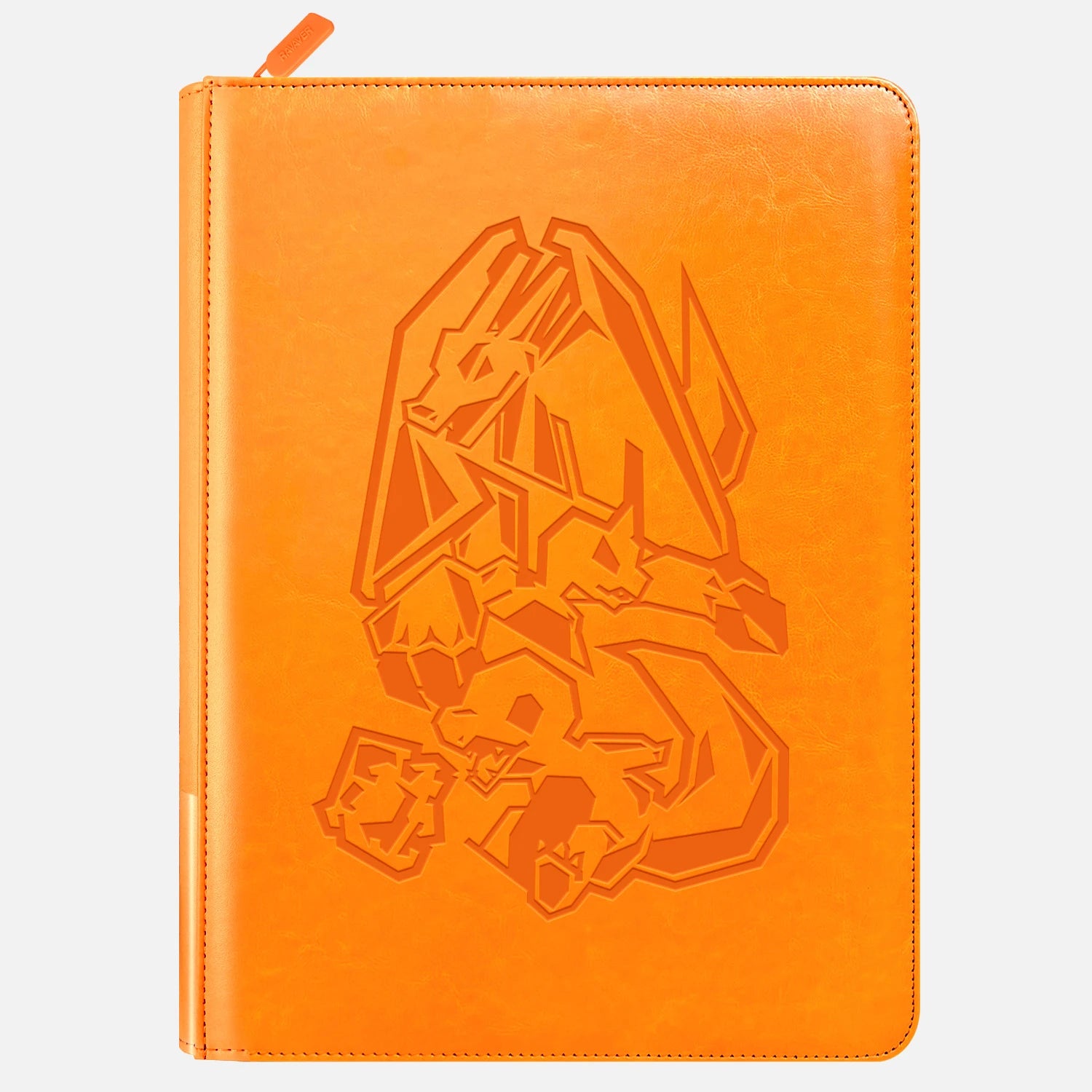
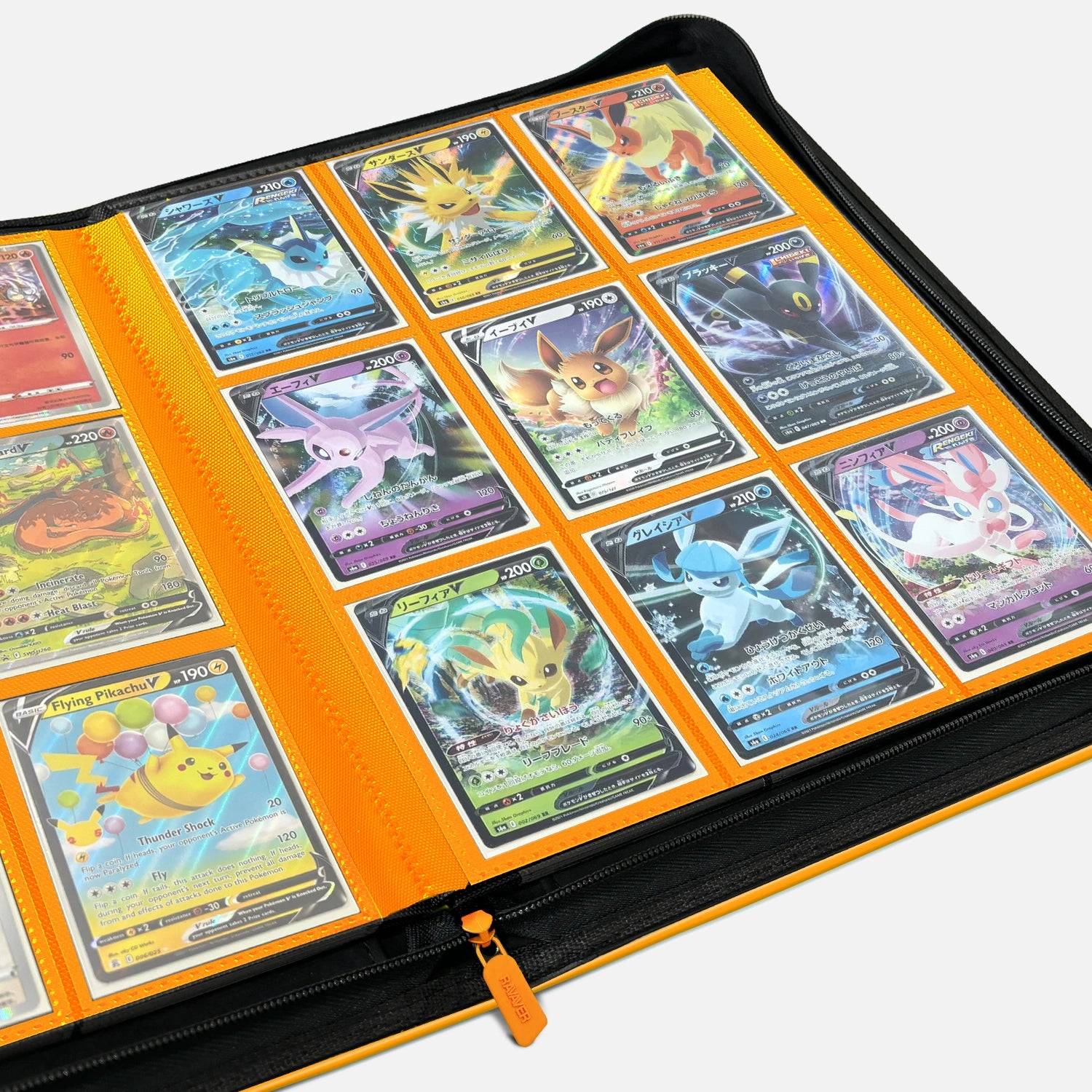
The binder is the most-judged item at any trade table. People assess your seriousness as a collector within the first three seconds of seeing it open, and that judgment colors every interaction that follows. A premium zippered binder with full PU leather exterior, toploader-friendly pockets, and clean side-loading pages signals one thing immediately: this person knows what they're doing. The collectors who get approached most often at shows are almost always the ones with the cleanest binder presentation.
Cost: $80-$150. Useful life: 3-5 years across hundreds of shows. The math works out to under 50 cents per visible interaction. Compare that to a $25 ring binder seen the same number of times; the cheaper binder costs less per unit but signals "casual" on every interaction.
2. A Stack of 25-50 Empty Toploaders
The most under-discussed item on every show packing list. You will receive cards mid-trade. Where you put them tells the other person whether you treat their cards with the same care they expect from you. Sliding a $200 card into a fresh toploader signals you've done this before. Putting it in your pocket signals amateur and invites them to be careful about future trades with you.
Buy these in bulk; they cost roughly 25 cents each in 100-packs. A 50-count stack handles even a heavy trade day. Carry them in their original sleeve or a rubber-banded stack so they stay clean.
3. A Microfiber Cleaning Cloth
Sleeves and slabs accumulate fingerprints throughout a show. A small microfiber cloth, the kind sold for cleaning eyeglasses, lets you present a card under good light without smudges blocking the surface. This is a one-dollar item that prevents the most common mid-trade interruption: "wait, can I clean this off?" while the buyer's enthusiasm cools by the second.
The other use case: cleaning slabs before a trade. PSA, BGS, and CGC cases all attract dust and fingerprints. A buyer evaluating a $1,000 slab wants to see it clean.
4. A UV Pen Flashlight (For Vintage Authentication)
Since the wave of high-quality reprint counterfeits hit the market in 2023-2024, UV pen flashlights have become standard equipment at any table where vintage cards are being traded. A genuine WOTC vintage card has specific UV-reactive properties on the backs and around the holographic foils that most reprints fail to reproduce. A $10 UV pen lets you spot-check authentication in 5 seconds without needing to send the card to PSA.
This matters more than ever for trades involving Base Set, Jungle, Fossil, and early Neo-era cards, where reprints have driven measurable doubt into the grey market. For more on what to check, our 9-test counterfeit detection guide covers the full procedure.
5. A Folding 9-Pocket Display Tray
This is the new must-have at higher-end tables. A folding 9-pocket tray, often sold as a "trade tray," lets you lay out a curated selection of nine cards face-up for someone to evaluate at once instead of flipping through binder pages. The visual impact is immediate. A buyer scanning a 9-card tray of your best singles closes a trade twice as fast as one paging through a 360-card binder.
Use the tray for your top trade-targets. Keep it covered when not in use. The tray creates focus, which speeds up negotiations and signals confidence in your inventory.
6. A Compact Ledger App or Notebook
Track every trade: what you gave, what you got, agreed value, and the other person's name or handle. Two reasons. First, if you trade enough volume to matter for taxes, this is the only documentation you'll have. Second, you'll spot patterns across shows. The trader who lowballed you last time will try again; having the record makes the pattern visible.
Apps like Notion or even the iPhone Notes app work fine. The point is consistency. The collectors who build long-term value out of trade activity all have some form of running ledger.
7. Cash in Mixed Denominations
Roughly 60-70% of trades involve some cash overlay to balance value gaps. Bring at least $200 in mixed denominations: a few twenties, several tens, and some fives. Nobody at a trade table wants to break a hundred for a $15 cash overlay. The trader with cleaner cash availability closes more deals because they remove the friction of "let me find change."
Avoid carrying anything you can't afford to lose. Trade tables are public. Don't display large stacks. Most veteran traders keep cash in a discreet inner pocket and only bring out what's needed for the current transaction.
8. A Phone With TCGplayer and eBay Sold Filters Bookmarked
Live comp lookups settle 80% of trade-table pricing disputes. TCGplayer Market Price as the floor, eBay sold prices in the last 30 days as the ceiling, and a midpoint as your target outcome. Don't argue from memory. The trader who pulls up live comp data wins more pricing arguments and is harder to lowball, because there's no room for "I think it's around $X" hand-waving.
Bookmark the relevant filters before you arrive. The seconds you save mid-negotiation matter; nobody wants to wait while you fumble through search filters with someone watching.
9. A Backup Stack of Blank Binder Pages
If you have a productive day, your binder fills up with new acquisitions. A spare 10-pack of side-loading binder pages lets you organize on the fly instead of stacking new cards loose in a pile until you get home. Loose card stacks invite damage and signal disorganization to the next trader who sees you sorting.
Get the page format that matches your binder. Top-loading pages work in a pinch but lose cards if the binder tilts. Side-loading is the standard at this point.
10. A Business Card or Instagram QR
The trades that compound into the most value over years are repeat trades with the same people. A small business card with your name, Instagram handle, and a QR code, or just a printed QR card, lets a trader you connected with find you again two months later when they pull a card you've been hunting. The same person you met casually at a show might end up sourcing your next chase card at a fair price because they remembered you.
Most collectors don't bother. Which is exactly why doing it works. The trader who hands a clean card or QR after a good interaction is the one who builds a network. The traders who don't are starting from zero at every show.

Bonus: What Not to Bring
A few items show up on every "what to bring to a card show" list that veterans deliberately leave at home. Heavy duffel bags get in the way at crowded tables. Loose cards in deck boxes signal disorganization and slow trades down. Cards that aren't sleeved at all are an instant credibility hit. Anything fragile that can't survive being bumped (open booster packs, ungraded high-value singles in toploaders without an outer sleeve) introduces unnecessary risk.
The general principle: bring tools that solve friction. Leave anything that creates it.
Frequently Asked Questions
What's the most important item to bring to a Pokemon card show?
A premium zippered binder. It's the most-judged item at any trade table and sets the tone for every interaction that follows. A clean binder with sleeve discipline closes 3-5x more trades than a disorganized one.
Do I need cash at a Pokemon trade night?
Cash matters. Roughly 60-70% of trades involve some cash overlay to balance value gaps. Bring at least $100-$200 in mixed denominations even if you plan to trade primarily in cards.
Are UV flashlights actually useful at Pokemon card shows?
Yes, especially for any trade involving vintage WOTC product. Genuine vintage cards have specific UV-reactive properties that most reprints fail to reproduce. A $10 UV pen lets you spot-check authentication in seconds.
How many empty toploaders should I bring to a Pokemon card show?
25-50 is the standard range. You'll use them to receive cards mid-trade. Buying in bulk costs roughly 25 cents each, and a stack of 50 handles even a heavy trade day comfortably.
Do I need a folding display tray to trade Pokemon cards at a show?
It's not required, but it speeds up trades meaningfully. A 9-pocket folding tray lets you display your top trade-targets face-up at once, which closes deals faster than flipping through binder pages.
Your Next Show Is the Test
The next time you go to a trade night or card show, run an audit on your kit. If you're missing more than three of these items, you're trading with one hand tied. The collectors who win at trade tables aren't the ones with the rarest cards; they're the ones who removed every friction point between "interested in trading?" and "deal." For the binder side of that equation, our trade table playbook goes deeper into the presentation strategy that turns interest into closed trades. And if you're hunting for the binder that handles all of this, browse the Ravaver lineup built for collectors who take this seriously.
Sources:
- TCGplayer, "TCGplayer Market Price Documentation," retrieved 2026-05-11, https://help.tcgplayer.com/hc/en-us/articles/213588017-TCGplayer-Market-Price
- PSA, "Population Report," retrieved 2026-05-11, https://www.psacard.com/pop
- Ravaver collector observations from Pokemon TCG card shows and LGS trade nights across Southern California, 2023-2026