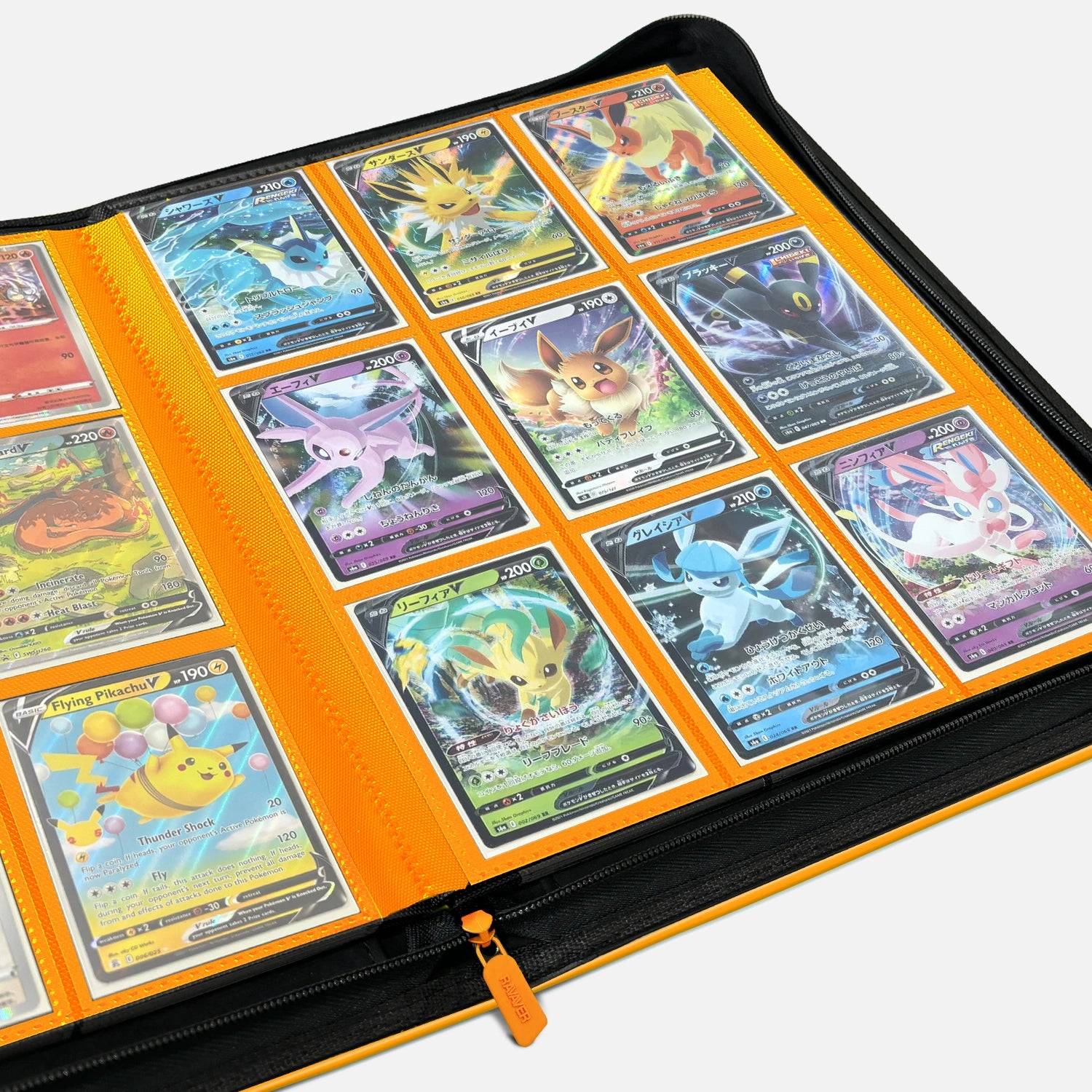
Grading Pokemon cards should be straightforward. Pick the right cards, send them off, wait, profit. But between the first-timer sending a $5 holo rare to PSA Economy and the veteran misreading a centering ratio, the same costly errors keep showing up in collector communities.
These aren't vague warnings. Each mistake below comes with a real dollar estimate of what it costs, based on the current 2026 fee structure and typical collector behavior patterns discussed across r/PokemonTCG and r/PokeInvesting.
Key Takeaways
- The most expensive grading mistake is submitting cards that fail the break-even test, costing $30-50 per card in wasted fees
- Wrong service tier selection due to under-declared values adds $17-100+ in upcharges and delays
- Toploader packaging instead of Card Savers accounts for avoidable transit damage on roughly 5-10% of toploader submissions
- Skipping the pre-screen with a jeweler's loupe wastes $25+ on every card that comes back PSA 8 when you expected a 10
Mistake #1: Grading Cards That Don't Pass the Break-Even Test
What it costs: $30-50 per card, every time
This is the most common and most expensive grading mistake. A collector pulls a nice-looking holo or full art, feels excited, and ships it to PSA without checking whether the graded value justifies the fee.
Here's the math that gets ignored. A modern holo rare worth $8 raw goes to PSA Economy at $33. Add $15 for shipping. That's $48 all-in. The PSA 10 value for that card? Maybe $25. Even a perfect grade loses you $23. A PSA 9 sells for $12. You lost $36.
The fix: before submitting any card, run the break-even formula. If the expected graded value (factoring in realistic grade probabilities, not just the dream PSA 10 scenario) doesn't exceed raw value plus all costs, keep it raw in your binder.
Mistake #2: Choosing the Wrong Service Tier
What it costs: $17-100+ in upcharges plus 2-4 weeks of additional delay
PSA's service tiers are based on declared card value. Economy ($33) covers cards up to $499. Regular ($50) covers $500-$1,999. Express ($150) handles $2,000+. If you under-declare to save money and PSA determines the card exceeds your tier's value cap, they bump it to the correct tier and charge the difference.
The bigger problem isn't the fee. It's the delay. Tier corrections require manual review, which adds 2-4 weeks to an already long process. Meanwhile, your card's market value might be dropping.
The fix: use TCGplayer Market Price to declare accurate values. Don't round down hoping to sneak into a cheaper tier. The $17 you save on Economy vs Regular isn't worth the headache if PSA flags it.
Mistake #3: Shipping Cards in Toploaders Instead of Card Savers
What it costs: 1-2 grade points on roughly 5-10% of toploader submissions
Toploaders are great for storage. They're terrible for shipping. Cards inside toploaders have room to shift, and that shifting causes edge contact during transit. The result is edge whitening or corner dings that weren't there when you packaged the card.
Card Savers (semi-rigid holders) grip the card snugly. No rattling, no sliding, no transit damage. Every major grading submission guide recommends Card Savers, and PSA specifically designed their intake process around them.
A single grade-point drop from transit damage on a $200 card means the difference between PSA 10 ($600) and PSA 9 ($220). That's $380 lost because of a $0.50 packaging decision.
Mistake #4: Skipping the Pre-Screen
What it costs: $25-50 per card that comes back lower than expected
Over 70% of modern cards that collectors believe are PSA 10 candidates come back as PSA 8 or 9. The flaws that drop grades, like edge whitening, surface micro-scratches, and centering issues, are invisible to the naked eye.
A $10 jeweler's loupe at 10x magnification catches these flaws before you spend money confirming them. Spend 2 minutes per card checking centering, edges, corners, and surface under magnification. If you spot any issue, check the grading readiness checklist to determine whether the grade ceiling still makes the submission profitable.
Mistake #5: Grading Modern Cards During Price Peaks
What it costs: 20-40% of the card's value in depreciation during turnaround
Modern Pokemon card prices are volatile. A chase card from a new set might peak at $150 during release week and settle to $80 three months later. If you submit that card to PSA Economy during the peak, your slab won't come back for 60-120 business days. By then, the raw price has already dropped, and the PSA 10 premium has shrunk proportionally.
The fix: wait at least 8-12 weeks after a set releases before submitting modern cards. Let the price stabilize. The rush to grade new pulls is emotional, not mathematical. The exception is vintage cards, where prices are more stable and timing matters less.
Mistake #6: Submitting One Card at a Time
What it costs: $10-15 per card in wasted shipping overhead
Shipping a single card to PSA costs about the same as shipping twenty: $15-25 depending on insurance. One card means that $15 shipping cost applies entirely to that one card. Twenty cards means you're paying $0.75-1.25 per card in shipping.
On a 20-card batch, the shipping savings alone are $280-300 compared to submitting each card individually. That's money you can spend on more cards, better storage, or just keeping in your pocket.
The fix: batch your submissions. Collect cards that pass the break-even test over a few months, then send them all at once. Aim for batches of 15-25 cards for the best economics. If you don't have that many high-value cards, consider joining a local group submission through your LCS (local card shop) or a trusted Discord community that pools shipments.
Mistake #7: Ignoring CGC and BGS When They're the Better Play
What it costs: $8-16 per card in unnecessary PSA premium fees
PSA is the default for Pokemon grading, and for resale it deserves that position. But not every card is being graded for resale. Personal collection cards, display pieces, and mid-value cards in the $20-50 range often make more sense at CGC or BGS.
CGC Bulk at $17/card saves $8 per card over PSA's Collectors Club Bulk at $25, and $16 per card over PSA Economy at $33. On a 20-card personal collection submission, that's $160-320 saved by choosing CGC.
For high-end vintage where sub-grades and prestige matter, BGS is the play. A BGS 10 PRISTINE or Black Label carries more weight among serious collectors than a PSA 10 on the same card. Match the grading company to the card's purpose, not to habit.
Frequently Asked Questions
How much money do beginners typically waste on grading mistakes?
First-time submitters who skip pre-screening and submit without running break-even math typically waste $100-300 on a 10-card submission. The biggest cost drivers are submitting cards below the $50 raw value threshold and shipping them individually instead of batching. A little math upfront saves hundreds.
Is it worth joining PSA's Collectors Club just for the cheaper Bulk rate?
If you submit 13+ cards per year, yes. The $99 annual membership saves $8 per card on Bulk ($25 vs $33 Economy). At 13 cards, the membership pays for itself ($8 x 13 = $104 saved vs $99 fee). Below 13 cards per year, submitting at Economy without membership is cheaper.
What's the best way to learn card centering before submitting?
Practice with bulk cards you don't plan to grade. Hold them at eye level, compare borders, and try to estimate the ratio before measuring. Many collectors use a centering tool (a transparent overlay with alignment marks) that costs $5-10 and gives precise measurements. After 50 cards of practice, your eye calibrates well enough for quick screening.
Should I avoid grading Japanese Pokemon cards?
Not necessarily. Japanese cards often have better centering and print quality than English cards, which means higher PSA 10 rates. The trade-off is that Japanese graded cards sell for less than English graded cards to US buyers. If you're grading for personal collection, Japanese cards at CGC Bulk ($17) are a great deal. For resale, English PSA 10 commands the highest prices.
Can I get a refund if PSA gives my card a low grade?
No. PSA charges for the grading service, not the result. Once your card is graded and slabbed, the fee is non-refundable regardless of the grade assigned. This is another reason why pre-screening and the break-even formula matter: the fee is spent whether you like the outcome or not.
Sources:
- PSA, "Submission Updates," retrieved 2026-05-28, psacard.com
- PSA, "How much does grading cost?" retrieved 2026-05-28, support.psacard.com
- CGC, "CGC Updates Bulk and Economy Tiers," retrieved 2026-05-28, cgccards.com