Master set binders fall apart for one of two reasons. The layout was never planned, so the binder turned into a scrapheap halfway through. Or the layout was planned for the wrong size, and now there's a 60-card gap on the last page that ruins the flow. Both problems are avoidable with thirty minutes of setup before the first sleeve goes in.
This guide gives you page-by-page layouts for five recent Pokemon TCG sets, plus the rule of thumb that decides which layout fits which set. We're using real card counts from the actual 2024-2025 releases, not generic templates. Skip to your set if you're already mid-build.
Key Takeaways
- Surging Sparks needs a 480-card binder minimum to hold the full 445-card master set with growth room
- National dex order is the strongest layout for Surging Sparks, Stellar Crown, and Twilight Masquerade because their illustration rares cluster by Pokemon line
- Rarity-based layouts work best for chase-heavy sets where the SIRs and hyper rares deserve their own showcase pages
- Always reserve the first two pages and the last page for traders, promos, and acquisition placeholders
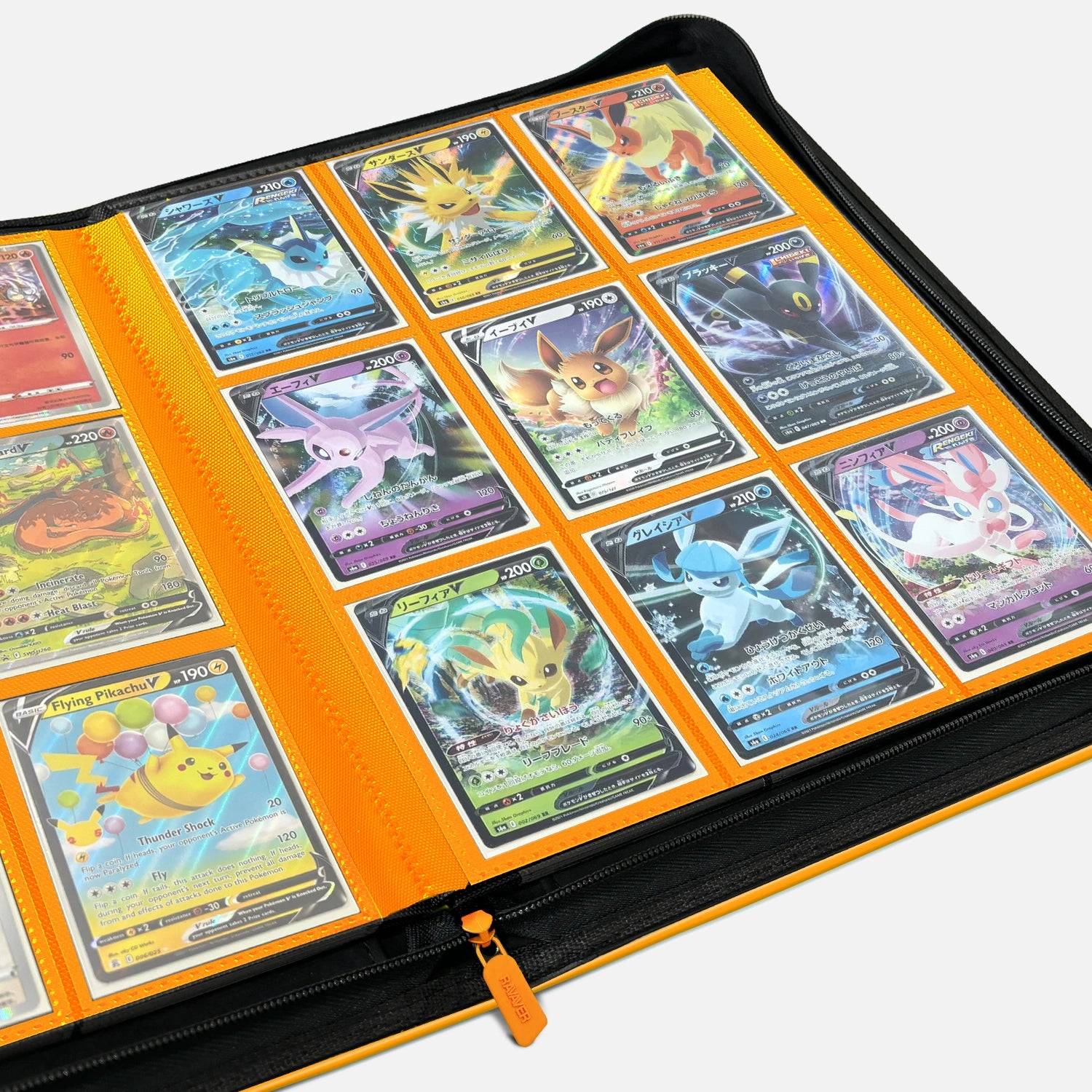
- 9-pocket toploader-friendly pages prevent the edge whitening that ruins master set value

What Size Binder Do You Need for a Modern Master Set?
Pokemon Surging Sparks holds 252 cards in the base set and roughly 445 cards as a full master set. That's the high end for modern releases. According to Bulbapedia, the breakdown includes 8 ACE SPEC cards, 9 Stellar Tera Pokemon ex, 9 Pokemon ex, 23 illustration rares, 11 special illustration rares, and 6 hyper rare gold etched cards.
For a binder, that means you need at least 50 pages of nine-pocket capacity, which works out to a 480-card binder minimum. A 360-card binder will leave you short by 85 cards. A 720-card binder gives you room for future reprint variants, promo tie-ins, and the second copies you'll pull while chasing the rare slots.
For smaller sets like Twilight Masquerade base or Shrouded Fable, a 360-card binder fits comfortably. For Stellar Crown master, 480 cards is the safer target.
Step 1: Pick Your Sorting Logic Before You Open the First Pack
There are three viable layout strategies for master sets. Each one optimizes for a different priority.
- National Pokedex order. Cards arrange by Pokedex number, with all variants of the same Pokemon clustered together. Best for sets like Surging Sparks where illustration rares often reuse a Pokemon line already in base.
- Set number order. Cards arrange by their official set number (1/252, 2/252, etc.). Best for completionists who think about the set as a numbered sequence and want the binder to mirror the official set list.
- Rarity order. Cards arrange from commons up through hyper rares. Best for chase-heavy sets where the SIRs and gold cards deserve their own showcase pages near the end.
For most modern sets, national dex order wins on display value because evolution lines stay together visually. A page with Charmander, Charmeleon, Charizard side by side reads better than a page with cards 22, 47, and 113.
Step 2: Reserve the First Two and Last Page
Before you sort a single card, mark these pages as off-limits to the main layout:
- Page 1: Set logo card, official base set 1/252, and any rule box or starter cards. This is the "title page" of the binder.
- Page 2: Promos tied to the set, prerelease holos, Build & Battle promos.
- Last page: Trader pile and acquisition placeholders. Cards you're trading away or duplicates waiting to be moved.
This convention saves you from rebuilding the binder every time a new promo drops. Reserved pages stay flexible. Sorted pages stay sorted.
Page-by-Page Layout: Surging Sparks (252 Base / 445 Master)
Surging Sparks lays out cleanly in national dex order because the illustration rares mostly follow Pokemon already in the base set. Here's a 50-page template for a 480-card binder.
| Pages | Contents | Card Count |
|---|---|---|
| 1-2 | Set title page + promos | ~18 |
| 3-8 | Gen 1 Pokemon (commons → ex → SIR) | ~54 |
| 9-14 | Gen 2-4 Pokemon (Johto → Sinnoh) | ~54 |
| 15-22 | Gen 5-7 Pokemon (Unova → Alola) | ~72 |
| 23-32 | Gen 8-9 Pokemon (Galar → Paldea), including Stellar Tera ex line | ~90 |
| 33-36 | Trainers and Supporters | ~36 |
| 37-40 | ACE SPEC cards (single feature page each) | ~8 |
| 41-44 | Illustration rare showcase | ~23 |
| 45-47 | Special illustration rare showcase | ~11 |
| 48-49 | Hyper rare gold etched showcase | ~6 |
| 50 | Trader pile and acquisition placeholders | varies |
The reason this works: the showcase pages at the back (illustration rares, SIRs, hyper rares) become the "flex section" of the binder. When you open the binder for someone at trade night, you can flip straight to page 45 and skip the commons.
Page-by-Page Layout: Stellar Crown (142 Base / ~310 Master)
Stellar Crown is smaller and more Pokemon-line-focused. National dex order still wins, but you can compress to a 360-card binder.
| Pages | Contents |
|---|---|
| 1-2 | Title page + promos |
| 3-6 | Gen 1-3 Pokemon |
| 7-12 | Gen 4-7 Pokemon |
| 13-20 | Gen 8-9 Pokemon (heavy Paldea representation) |
| 21-24 | Trainer and energy |
| 25-28 | Illustration rare showcase |
| 29-31 | Special illustration rares and hyper rares |
| 32 | Trader and placeholder |

Page-by-Page Layout: Twilight Masquerade and Shrouded Fable
These two sets are smaller. Twilight Masquerade base is 167 cards, Shrouded Fable is 64 cards (and is technically a special set). Both fit a 360-card binder comfortably with room for promos and trader cards.
For Twilight Masquerade, the Ogerpon line and Greninja ex showcase pages are the obvious highlight. Reserve pages 25-27 for those, plus the Pecharunt ACE SPEC if you pull it.
For Shrouded Fable, the entire set is small enough that a single binder can hold base + multiple variants + promos. A 240-card binder works if you don't intend to grow it.
Step 3: How to Handle the Toploader Decision
For master sets, the toploader question is one of the most underrated decisions. There are three viable approaches:
- Whole set in toploaders, then toploader-friendly binder. Maximum protection. Adds about $0.50-1 per card in toploader cost. Best for sets you plan to grade individual cards from later.
- Only chase cards in toploaders, rest in archival sleeves. Practical compromise. The illustration rares and above get toploaders. Commons and rares stay in standard sleeves. Most collectors land here.
- No toploaders, all archival sleeves. Lowest cost. Works only if the binder pages themselves are archival polypropylene and the binder gets handled gently. Not recommended for cards you'd later want to grade.
The middle option is what most experienced TCG collectors use for master sets. It balances protection, cost, and the practical reality that you'll flip through commons but not the SIRs.
Step 4: Sleeve and Page Material Check
Before any card goes into the binder, confirm both the sleeve and the page are PVC-free polypropylene. PVC contains plasticizers that migrate to cards over time, causing yellowing and surface haze. The dollar-store sleeves and older binder pages are the most common offenders.
Look for "acid-free," "PVC-free," or "archival polypropylene" on the packaging. Most major brands (Ultra Pro, Dragon Shield, BCW archival) now produce polypropylene by default, but verify on the box. For long-term master set storage, this is the difference between cards that age gracefully and cards that age into damage.
Step 5: The Last Decision — Where the Binder Lives
You can have the perfect layout in the perfect binder and still lose value if you store it wrong. Master set binders should live:
- In a closed binder, not propped open
- Stored vertically on a shelf, not flat (flat storage stresses the spine over years)
- In a room kept at 65-70°F and 45-55% relative humidity
- Out of direct sunlight, even when closed
- Away from areas with humidity spikes (kitchens, bathrooms, basements without dehumidifiers)
For collectors building toward their first card show, the binder you bring will tell everyone how seriously you take this. The layout should look intentional from page one. Sloppy layouts read as new to the hobby. Clean layouts read as collector with taste.
Frequently Asked Questions
Should I sort by set number or by Pokedex number?
For sets with strong evolution line representation in illustration rares (Surging Sparks, Stellar Crown, Twilight Masquerade), Pokedex order looks better. For sets with chase cards spread across set number ranges, set number order keeps the official sequence intact. Pick one and stay consistent across your collection.
How many empty pockets should I leave for promos?
Two full pages at the front (18 pockets) covers most sets. Sets that get heavy crossover promos (anniversary tie-ins, anime promos, Build & Battle decks) may need a third page. Reserve more than you think you'll need — it's easier to leave pockets empty than to rebuild the layout when a promo set drops six months later.
What's the right binder size for a Surging Sparks master set?
480 cards minimum. The full master set is around 445 cards, plus reserved pages for promos and traders. A 720-card binder gives more flexibility for future variants and second copies, but 480 is the floor.
Should I use top-loading or side-loading pocket pages?
Side-loading is the safer choice for any binder you'll handle frequently. Cards can't slide out when the binder tips. Top-loading is fine for stationary display binders kept on a shelf. For master sets you'll bring to card shows, always side-loading.
Is it OK to mix sleeve brands in one binder?
Technically yes, practically no. Different sleeve brands have slightly different thicknesses, which means some pockets bulge and others stay flat. The binder looks inconsistent, and the uneven pressure on pages over time can cause edge whitening on the cards in the thicker sleeves. Stick to one sleeve brand per binder.What's the best binder for a master set on a budget?
Look for archival polypropylene side-loading pages first, then the binder cover. A solid 480-card archival binder runs $40-60 at the budget tier. Going higher to $70-90 gets you better stitching, toploader-friendly pockets, and a zipper closure that protects the cards in transit. The $20 binders almost always use PVC pages and are a false economy for any set you care about.
Build the Layout, Then Stop Rebuilding
The best master set binders look effortless from the first page through the last. That comes from planning the layout once, picking the right binder size, and committing to the system. The rebuild urge is real — every collector feels it when they pull a card that breaks the flow — but rebuilding once a month is how master set binders end up half-finished forever.
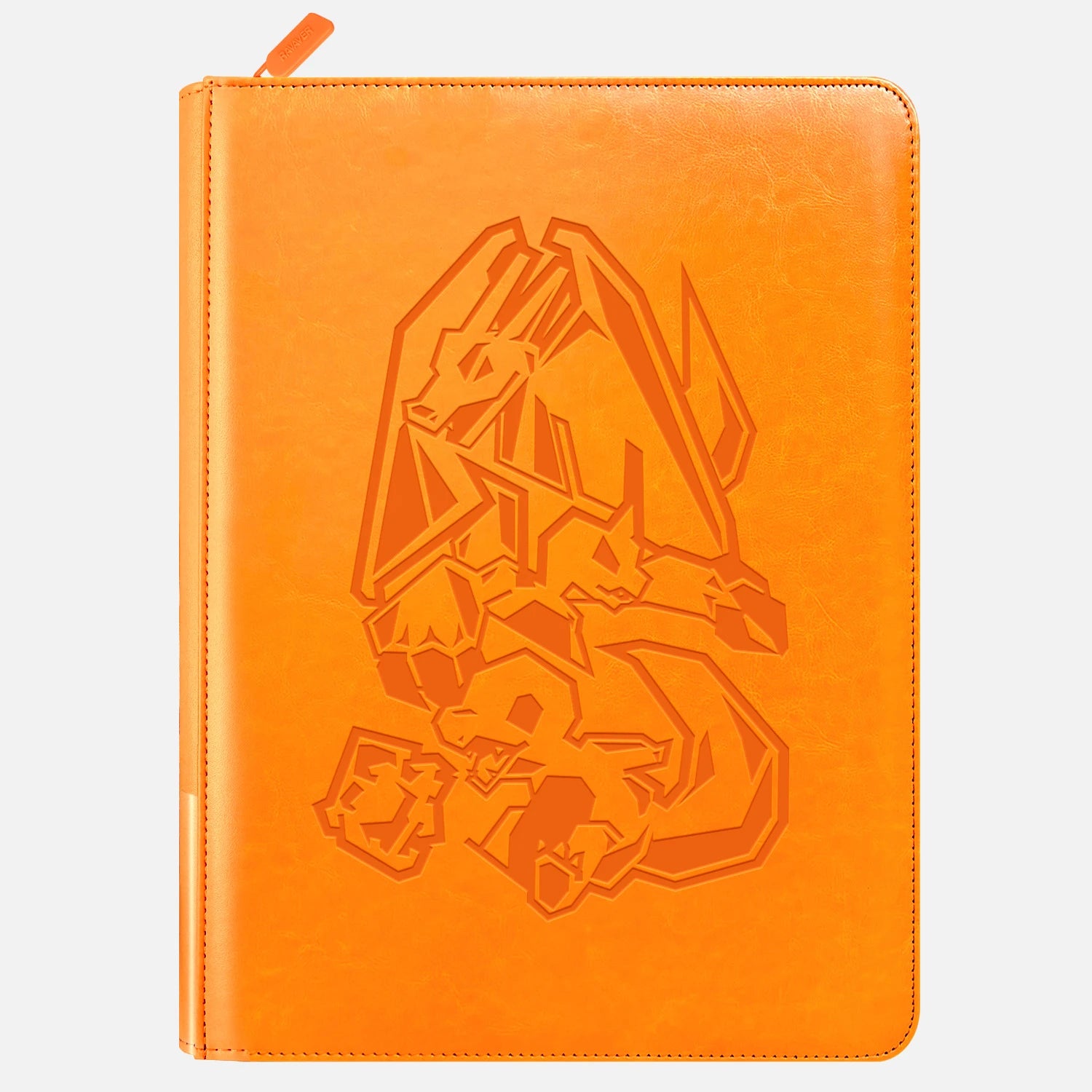
For a deeper look at how display method affects long-term value, see our pillar on how to display your Pokemon card collection in 2026. For the broader toploader vs binder debate, check the toploader vs binder storage comparison. And if you're shopping for an archival master set binder, the Ravaver toploader-friendly binders are sized for 480 and 720 card master builds.
Sources:
- Bulbapedia, Surging Sparks (TCG) Set Page, retrieved 2026-05-29, https://bulbapedia.bulbagarden.net/wiki/Surging_Sparks_(TCG)
- TCG Collector, Surging Sparks Visual Set List, retrieved 2026-05-29, https://www.tcgcollector.com/sets/11636/surging-sparks
- JustInBasil, Surging Sparks Visual Set List, retrieved 2026-05-29, https://www.justinbasil.com/visual/sv8