Pokemon collectors have been fighting the toploader vs binder debate since the WOTC days, and the answer keeps shifting because the threats keep shifting. The honest answer in 2026 is that both methods have failure modes most collectors don't see coming. Toploaders aren't automatically safer just because they're rigid. Binders aren't automatically inferior just because they're flexible.
The thing nobody talks about: in high-humidity environments, a stack of toploaders can trap moisture against the card surface in ways that an archival binder won't. That alone has wrecked more collector inventories than the fabled "binder bend" ever did. This article goes through the real protection data, the situations each method wins, and the hybrid setup most experienced TCG collectors land on.
Key Takeaways
- Toploaders win on corner and edge protection, but only when stored vertically with airflow and good archival sleeves
- Binders win on master sets, frequent browsing, and protection against humidity — archival polypropylene pages breathe better than sealed toploaders
- The "humidity trap" effect happens when toploaders stack horizontally in humid environments above 60% RH, accelerating edge whitening
- Cost per card: archival binder is $0.08-0.15 per card, toploader is $0.50-1.50 per card
- The hybrid setup (toploader binder) is the only method that wins on both axes — protection and viewability

Which Protects Pokemon Cards Better: Toploader or Binder?
For corner and edge protection against handling damage, toploaders win. For long-term protection against humidity, archival binders win. For browsability and showing the cards to other people, binders win by a wide margin. For the highest-value chase cards in your collection, toploaders win because the rigid plastic prevents flex damage during transport. Most serious TCG collectors split their collection: toploaders for the 5-10% that matter most, binders for the 90% that doesn't.
The framing matters because the question isn't really "which is better." It's "which is better for what I'm trying to do." A collector building toward a card show needs different storage than a collector freezing 200 PSA submissions for the next bulk order.
Where Toploaders Actually Beat Binders
Toploaders shine in three specific situations:
- Single-card transport. Mailing a card, taking a card to a grading drop-off, carrying a card to a trade. The rigidity prevents bending during handling, which is the single most common way modern cards drop from PSA 10 candidate to PSA 9.
- Vertical storage of high-value singles. A toploader stored upright in a card storage box with archival foam spacers keeps the card perfectly flat for decades. PSA's own storage guidance recommends this approach for ungraded cards waiting on submission.
- Pre-grading staging. Cards awaiting PSA, CGC, or BGS submission live in toploaders by industry default. Centering, surface, edges, and corners stay protected from the moment you pull the card to the moment it ships.
What toploaders aren't designed for is mass storage in non-ideal climates. The plastic that protects corners also traps any moisture in the air against the card surface. A 100-card stack of toploaders in a humid garage is a worse environment than the same 100 cards in an archival binder on a climate-controlled shelf.
Where Binders Beat Toploaders
Binders win three different scenarios:
- Master set building. 200-500 cards organized for visual flow. A toploader-only approach for a master set costs $100-500 in toploaders alone and takes up four times the space of a binder.
- Frequent handling and browsing. Trade nights, card show appearances, sharing your collection with friends. Pulling 30 toploaders out of a box to show someone your set is impractical. Flipping through a binder takes seconds.
- Humidity stability. Archival polypropylene binder pages allow microscopic airflow that prevents moisture from pooling against the card. In environments at 55-65% relative humidity, this is genuinely safer than sealed toploaders for long-term storage.
The visibility advantage isn't just about ego. A binder you can actually browse is a binder you actually enjoy. A collection in toploaders stacked in a closet might as well not exist for most of its lifespan.
The Toploader Humidity Trap (Nobody Mentions This)
This is the trap that catches most collectors moving from binder storage to toploader storage. Conventional wisdom says "toploaders are safer." The wisdom is mostly right, but it assumes climate-controlled storage. In reality, plenty of collectors store toploaders in garages, basements, and bedroom closets where humidity swings 40-70% across seasons.
Toploaders are rigid plastic, mostly polystyrene or polypropylene. When humidity in the room rises, that plastic surface doesn't breathe. Moisture from the air gets trapped in the small space between the card surface and the inside wall of the toploader. Over months, this creates two visible problems:
- Edge whitening. The card's edges absorb moisture, the cardstock fibers swell slightly, and when humidity drops the fibers don't return perfectly flat. The result is a slight white halo around the card edges that grading services penalize.
- Surface haze. A very thin film develops on the card surface from condensation cycles. This shows up under PSA's grading light and pulls the grade down half a tier or more.
Archival binder pages don't have this problem because the page material is more permeable. Moisture passes through instead of pooling. As long as the binder itself isn't in a sealed plastic bag in a humid room, the cards breathe naturally with the room.
The recommended archival range is 45-55% relative humidity. The Image Permanence Institute uses this standard for paper preservation. Above 65% RH, both toploaders and binders start having problems, but toploaders fail faster because the moisture has nowhere to go.

Head-to-Head Protection Comparison
| Threat | Toploader | Archival Binder |
|---|---|---|
| Corner dings from handling | Excellent | Good (if side-loading pockets) |
| Edge whitening from page rub | Excellent | Good (avoid top-loading pages with tight pockets) |
| Bending and flex damage | Excellent | Fair (binder spine can stress edges) |
| UV exposure | Poor (clear plastic transmits UV) | Excellent (closed binder = zero UV) |
| Humidity damage above 60% RH | Poor (traps moisture) | Fair to good (breathes) |
| Surface dust and fingerprints | Excellent | Excellent (closed binder) |
| Transport safety | Excellent | Good (if zippered binder) |
| Theft visibility | Depends on storage | Low (binders hide easily) |
The pattern: toploaders win the acute threats (handling, bending, transport), binders win the chronic threats (UV, humidity, dust over years).
The Cost Math Most Collectors Don't Run
The cost gap between toploaders and binders is significant when you scale.
| Collection Size | Toploader-Only Cost | Archival Binder Cost |
|---|---|---|
| 100 cards | $50-150 | $30-40 (one 360-card binder) |
| 500 cards | $250-750 | $50-70 (one 720-card binder) |
| 2,000 cards | $1,000-3,000 | $150-300 (3-4 binders) |
| 10,000 cards | $5,000-15,000 | $700-1,500 (14-20 binders) |
For collections over 500 cards, the binder cost advantage becomes hard to ignore. For chase cards under 50 in total, the toploader cost is rounding error against the card value. The math reinforces the hybrid strategy: toploaders for the high-value singles, binders for everything else.
Toploader Binders: The Hybrid That Wins
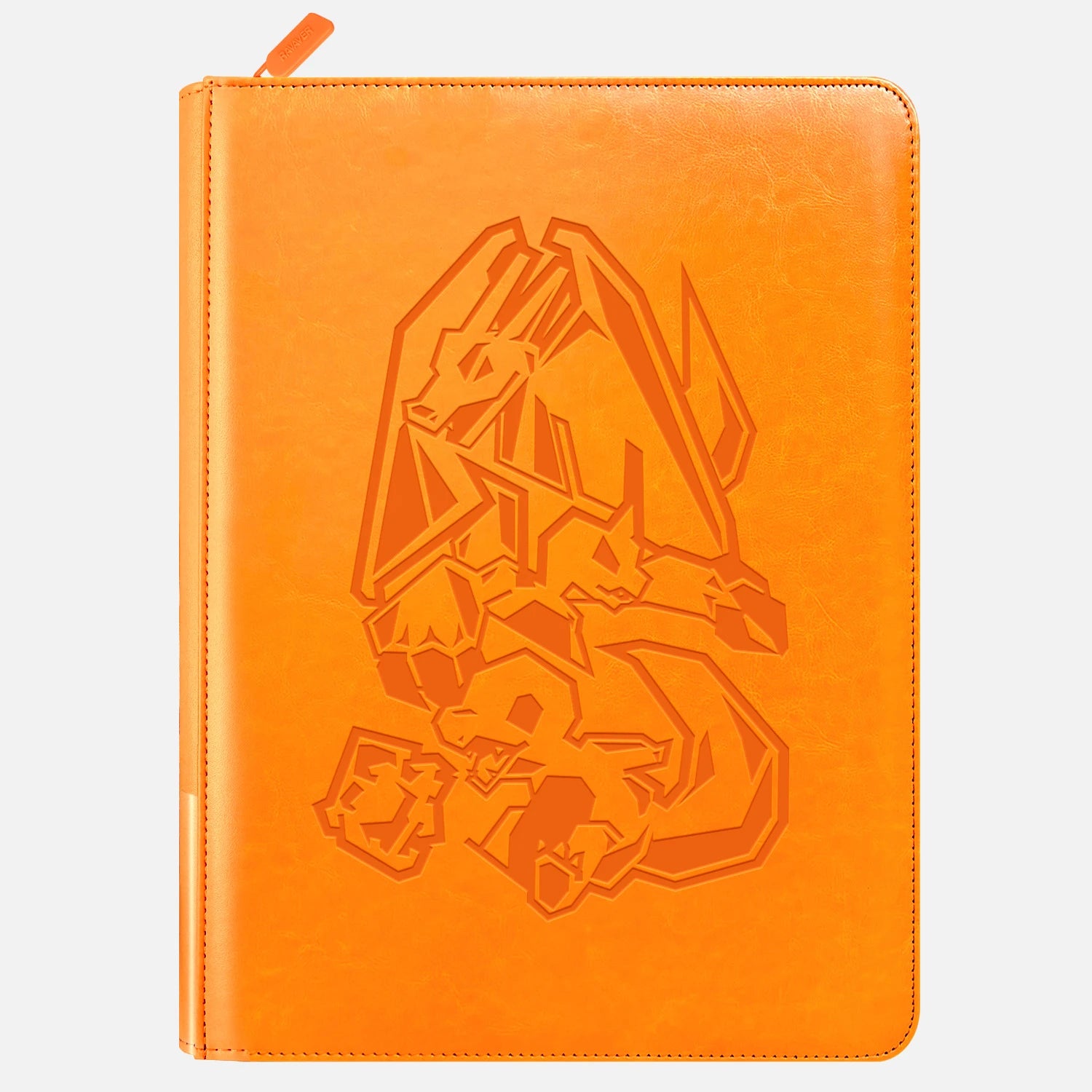
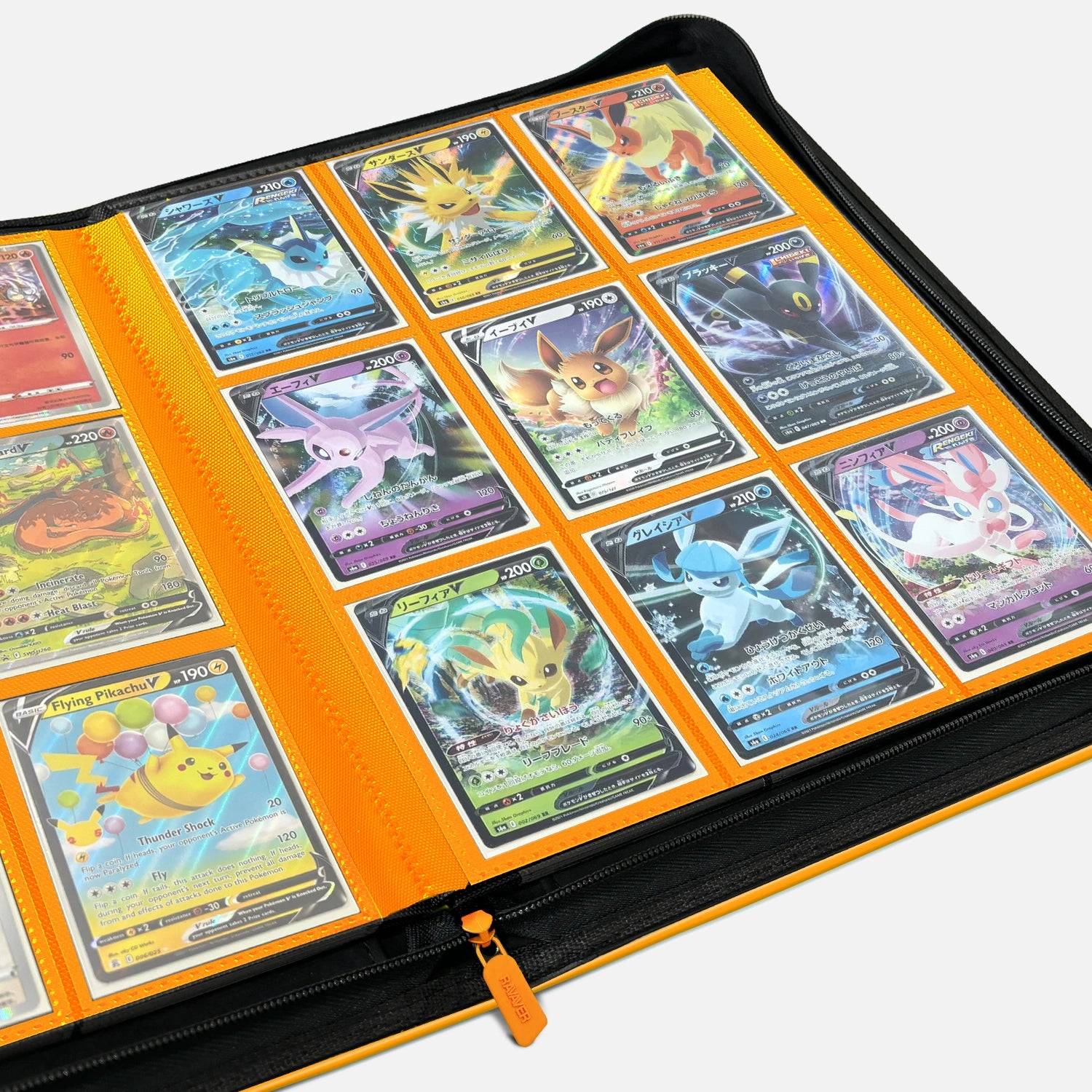
Toploader-friendly binders solve the binder vs toploader trade-off for most use cases. The card sits in a toploader sleeve. The toploader sits in a side-loading binder pocket sized for it. The binder zips shut around the whole thing. You get:
- Corner and edge protection from the rigid toploader
- UV protection from the closed binder
- Humidity stability from the breathing binder material
- Visibility for browsing and trade nights
- Transport safety from the zippered closure
The trade-off is cost and weight. A toploader binder holding 360 cards in toploaders costs $80-150 for the binder plus another $90-300 in toploaders. The weight is roughly 2-3x a standard binder. For master sets you'd ever transport or grade later, this is what most serious collectors run.
What Reddit and Card Show Conversations Reveal
In TCG collector circles, the consistent pattern from Reddit threads on r/PokemonTCG and r/pkmntcgcollections is that collectors with five-plus years in the hobby almost never run pure-toploader or pure-binder strategies. The exact ratio varies, but the structure is consistent:
- The PSA 10 chase cards: sealed toploaders or graded slabs in storage boxes
- The master sets and chase-card collections under PSA submission threshold: toploader-friendly binders
- The bulk holos and commons: standard archival binders
- The trade pile and traders: standard sleeves in soft binders
The collectors who lose value to storage damage are usually the ones who picked one method and forced everything into it. The collectors who hold value across decades are the ones who matched the method to the card.
The Pokemon Card You Probably Shouldn't Put in a Binder
There's a small set of cards where toploader storage is strictly better than any binder, including the hybrid setup:
- Cards being prepped for PSA, CGC, or BGS submission within the next 90 days
- Vintage WOTC holos where surface preservation is the entire value
- SIRs and hyper rares above $200 raw value
- Cards with known centering issues where any pressure could shift the print
For these cards, the right move is a sealed toploader stored vertically in a climate-controlled card storage box. Not a binder. Not a display wall. A box on a shelf at 65-70°F and 45-55% relative humidity, untouched until grading or sale.
Frequently Asked Questions
Do toploaders prevent all bending damage?
Yes for normal handling, no for severe pressure. A toploader will protect a card against being sat on, dropped, or stacked under a stack of books. It will not protect against being shipped in a flimsy envelope without proper packaging. For mailing, always combine toploader plus team bag plus a Card Saver, plus a rigid mailer or bubble mailer.
Are some toploader brands better than others?
BCW, Ultra Pro, and Cardboard Gold are the industry standards. The differences are in fit (some are slightly looser, which can let cards rattle), clarity, and edge cleanliness. For any card under $50 raw value, the differences are minor. For cards over $200, the tighter-fit options reduce the chance of micro-shifting during transport.
Can I store toploaders horizontally?
Short term, yes. Long term, no. Horizontal storage creates the humidity trap problem and adds slight pressure to the cards under the stack. Always vertical for long-term storage. PSA's storage guidance is clear on this point.
What humidity level should I keep my card room at?
45-55% relative humidity is the archival standard. Below 40% is dry enough to cause paper brittleness over years. Above 65% accelerates moisture damage. A $20 hygrometer and a $40 dehumidifier solve this for most rooms.
Do binder pages cause edge whitening over time?
Top-loading pocket pages can if the pockets are too tight. Side-loading archival pages don't, because the card sits in the pocket without friction. For master set binders, always side-loading archival polypropylene pages.
Is it worth toploading every card in a binder?
No. For commons, rares, and bulk holos, toploading inside a binder adds cost without meaningful protection. Toploading inside a binder makes sense for the 5-10% of cards that are illustration rares, SIRs, hyper rares, or candidates for future grading. Everything else stays in standard archival sleeves.
Pick the Right Method for the Right Cards
The toploader vs binder debate ends when you stop treating it as a single decision. The cards that need toploaders are the cards going to grading, the chase cards above $200 raw value, and anything in transit. The cards that need binders are master sets, bulk holos, and anything you'd ever actually browse. The cards that benefit from a toploader binder are the master set cards you'd want both protected and visible at the same time.
For the bigger picture on display vs storage decisions, see our pillar on how to display your Pokemon card collection in 2026. For the long-term yellowing question, our guide on how to prevent Pokemon card yellowing covers the conditions that affect both toploaders and binders. For master set layout templates, the best binder layouts guide walks through real card counts for recent sets. And if you're shopping for a toploader-friendly binder, the Ravaver collection is sized for current master sets.
Sources:
- PSA, Card Storage and Protection Guidelines, retrieved 2026-05-29, https://www.psacard.com/sportscardstorage
- Image Permanence Institute, Archival Humidity Standards, retrieved 2026-05-29
- Radiant Cards, Binder vs Toploader Storage Guide, retrieved 2026-05-29