The eBay versus TCGplayer question gets asked weekly in every collector circle, and almost every answer you've read online is wrong by 2026 standards. Both platforms changed their fee structures within the past 18 months, and the math that worked in 2023 no longer applies to a $1,500 master set in 2026. This is the actual current comparison, with the full fee structure on both sides and the per-card cost breakouts that determine where your money should go.
Key Takeaways
- TCGplayer wins on commons through ultra rares (typically 70% of master-set card count and 50% of budget) due to lower seller fees and cart consolidation savings.
- eBay wins on graded slabs above $500 and rare vintage singles, where its auction format produces wider price discovery.
- For a typical $1,500 master set, the optimal split is roughly 70% TCGplayer / 25% eBay / 5% other channels, saving $80-$200 vs. using either platform exclusively.
- Counterfeit risk on eBay raw singles under $50 is meaningfully higher than on TCGplayer; over $200 raw, both platforms carry similar risk with proper seller vetting.
What's the actual fee difference between eBay and TCGplayer in 2026?
The seller fee structures determine the buyer price floor on both platforms. According to TCGplayer's published fee schedule, the standard marketplace commission for sellers is 10.25%, with Pro sellers paying an additional 2.5% Pro fee (12.75% effective) for the tools and platform access. According to eBay's official selling fees page, the final value fee for trading cards runs from 2.5% to 15.3% depending on category and seller status, with a typical effective rate of around 13.25% for standard trading card singles, plus a per-order fee of $0.30 (orders $10 and under) or $0.40 (over $10).
The fee gap on a $50 card: TCGplayer takes roughly $5.13 from the seller; eBay takes roughly $7.03 (13.25% plus $0.40). That $1.90 gap gets baked into the seller's asking price. Multiply by 50 cards and the structural buyer cost difference on a master set is $95 in TCGplayer's favor on the mid-value tier alone.
Above $1,000 per card, the math flips. eBay's promotional structure (sales $1,000 and over receive 50% off the 13.25% final value fee for the portion up to $7,500) cuts seller fees roughly in half on high-value sales. That promotion structurally rewards eBay sellers on chase cards, and they pass some of that savings to buyers through more aggressive pricing.
The card-tier comparison table
| Card Tier | TCGplayer Avg Premium | eBay Avg Premium | Winner |
|---|---|---|---|
| Commons ($0.10-$1) | Market price | +30-60% | TCGplayer |
| Uncommons / low holos ($1-$5) | Market price | +15-30% | TCGplayer |
| Mid rares / full arts ($5-$80) | Market price | +5-15% | TCGplayer |
| SIRs / alt arts ($80-$500) | Market price | -5% to +10% | Mixed |
| Raw chase ($500-$2,000) | +5-12% | -3% to +5% | eBay |
| PSA 9/10 graded ($500+) | +8-18% | Market price | eBay |
| Vintage WOTC raw | +10-30% | Market price | eBay |
Why TCGplayer wins on bulk-card master-set building
The cart optimizer is the single feature that swings the comparison for master sets. TCGplayer's mass-entry tool plus cart consolidation routes a 180-card want list through 3-5 sellers in a single transaction, with $8-$15 total shipping. The equivalent eBay buy means 30-50 individual transactions, 30-50 separate shippings, and 30-50 separate per-order eBay fees that sellers bake into their listing prices.
Translated to actual money on a typical SV-era master set: buying the 180 commons through ultra rares on TCGplayer costs roughly $250 in cards plus $12 in shipping. Buying the same 180 cards on eBay costs roughly $325 in cards (higher per-card pricing because of fee pass-through) plus $90-$120 in cumulative shipping. That's a $150-$200 swing in TCGplayer's favor for the bulk tier alone.
The cart optimizer also reduces decision fatigue. On a 180-card master set, manually price-comparing each card across both platforms takes 8-12 hours. The cart optimizer does the equivalent work in 30 seconds. The time savings alone (valued at the collector's hourly rate) covers the marginal cost difference even before counting actual cash savings.
Why eBay wins on chase cards and graded slabs
The eBay advantage shows up clearly on high-value cards. The platform's auction format produces price discovery that fixed-price listings can't match. When a PSA 10 Moonbreon goes to auction with three serious bidders, the closing price reflects what the market actually pays at this moment, not what one seller listed it for two weeks ago.
On graded slabs specifically, eBay's seller base is wider than TCGplayer's. The volume of PSA 9 and PSA 10 chase cards listed on eBay at any given moment is typically 3-5x what's available on TCGplayer. More inventory means more price competition, which means lower buyer prices on average. For the 3-5 high-value cards that anchor a master set, eBay is usually the right call.
The vintage market follows the same pattern. WOTC-era cards (Base, Jungle, Fossil, Team Rocket, Neo, Gym, e-Card) have thin and inconsistent TCGplayer inventory, because the vintage seller community concentrates on eBay's auction format. A Near Mint Base Set Charizard on TCGplayer might list for $2,200; the same card on eBay might close at $1,950 with the right patience. For master sets that include vintage components, eBay is the default sourcing channel.
Counterfeit and condition risk: where the platforms actually differ
This is where the comparison gets serious. According to TCGplayer's authentication guidance, counterfeit Pokemon cards typically show through light tests, layered-cardstock inspection, and color comparison against legitimate copies. The risk profile differs sharply by platform.
TCGplayer's counterfeit risk on master-set tier cards is very low. The platform's seller onboarding requires identity verification, the dispute system favors buyers, and the Direct program adds a layer of physical inspection at TCGplayer's warehouse. Counterfeit reports on TCGplayer raw singles are rare and almost always resolved through refunds within 14 days.
eBay's counterfeit risk is concentrated on raw singles under $50 from low-feedback sellers (under 100 positive feedback) and any seller asking for off-platform payment. The risk drops sharply for sellers with 1,000+ feedback and 99%+ rating. For graded slabs, the slab itself is the authentication, which means PSA, BGS, or CGC graded cards from established eBay sellers carry minimal counterfeit risk regardless of platform.
Condition risk follows a similar pattern. TCGplayer's condition standards are explicit and consistent. eBay's condition descriptions vary widely by seller, and "Near Mint" from one eBay seller might mean "Lightly Played" from another. For master-set binders where condition matters across the entire collection, TCGplayer's consistency is worth the slight premium.
The 70/25/5 strategy that works for most master sets
The optimal channel split for a typical $1,500 SV-era master set:
- ~70% TCGplayer ($1,050): 180 commons through ultra rares via cart optimization. 3-5 sellers, 5-10 business day delivery, near-zero counterfeit risk.
- ~25% eBay ($375): 3-5 high-value chase cards (SIRs, alt arts, hyper rares above $80). Patient watching for the right price, verified high-feedback sellers, BIN or auction depending on which is currently cheaper.
- ~5% other ($75): 1-2 cards sourced from local card shop, COMC, or trades. Useful for the last 1-2 stubborn cards that nobody on TCGplayer or eBay has at fair prices.
A collector running this split on a Surging Sparks master set typically lands $80-$200 below the all-eBay equivalent and $40-$100 below the all-TCGplayer equivalent. The discipline is using each platform for what it's best at, not for what feels easier in the moment.
Why your binder choice intersects with this comparison
The platform comparison only matters if the cards arrive in a condition that justifies the price. Near Mint cards from TCGplayer arriving into a basic ring binder with PVC sleeves will degrade to Lightly Played within 2 years. The 15-30% premium you paid for Near Mint over Lightly Played at purchase is gone, plus you're now looking at a master set that doesn't look complete when you pull it out at a card show.
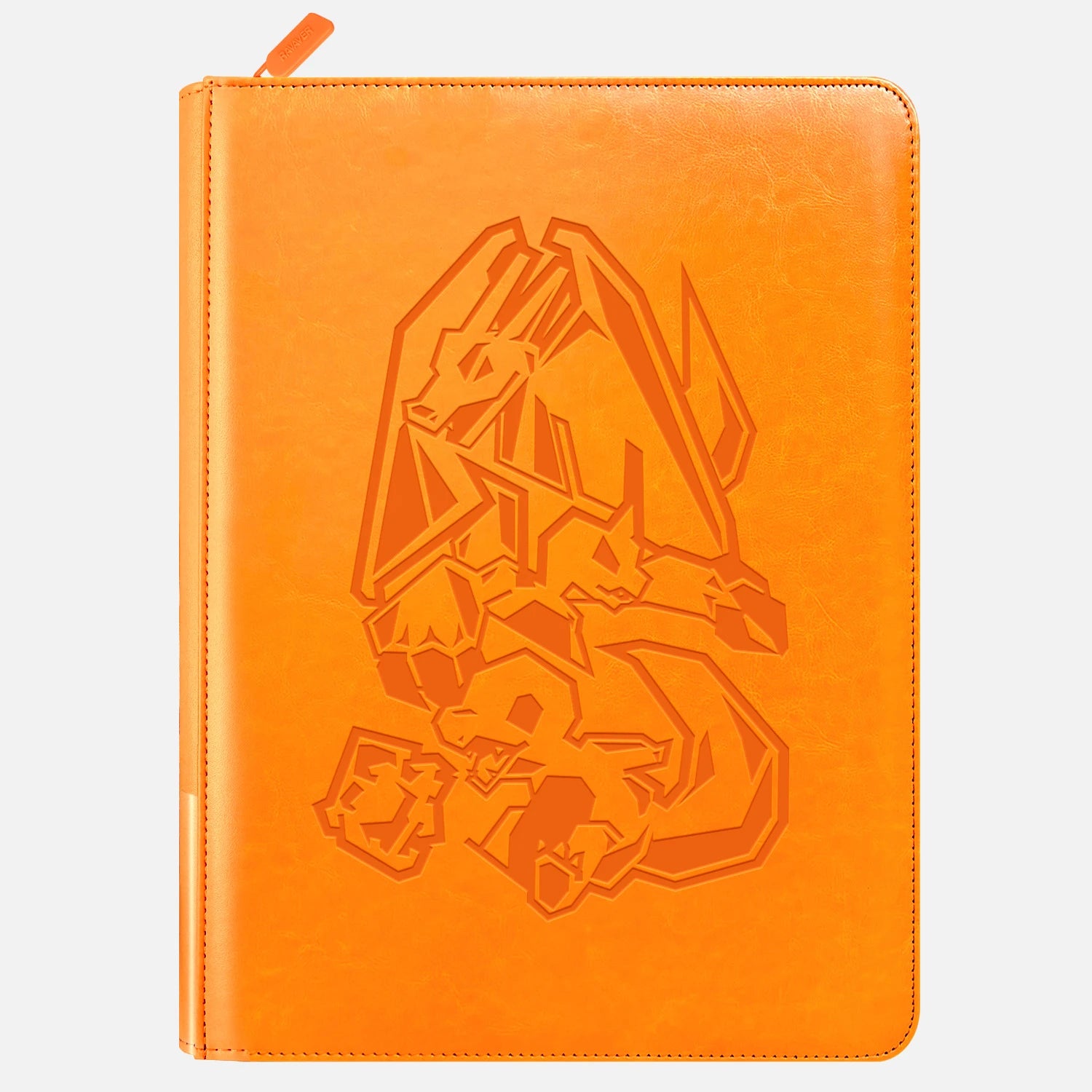
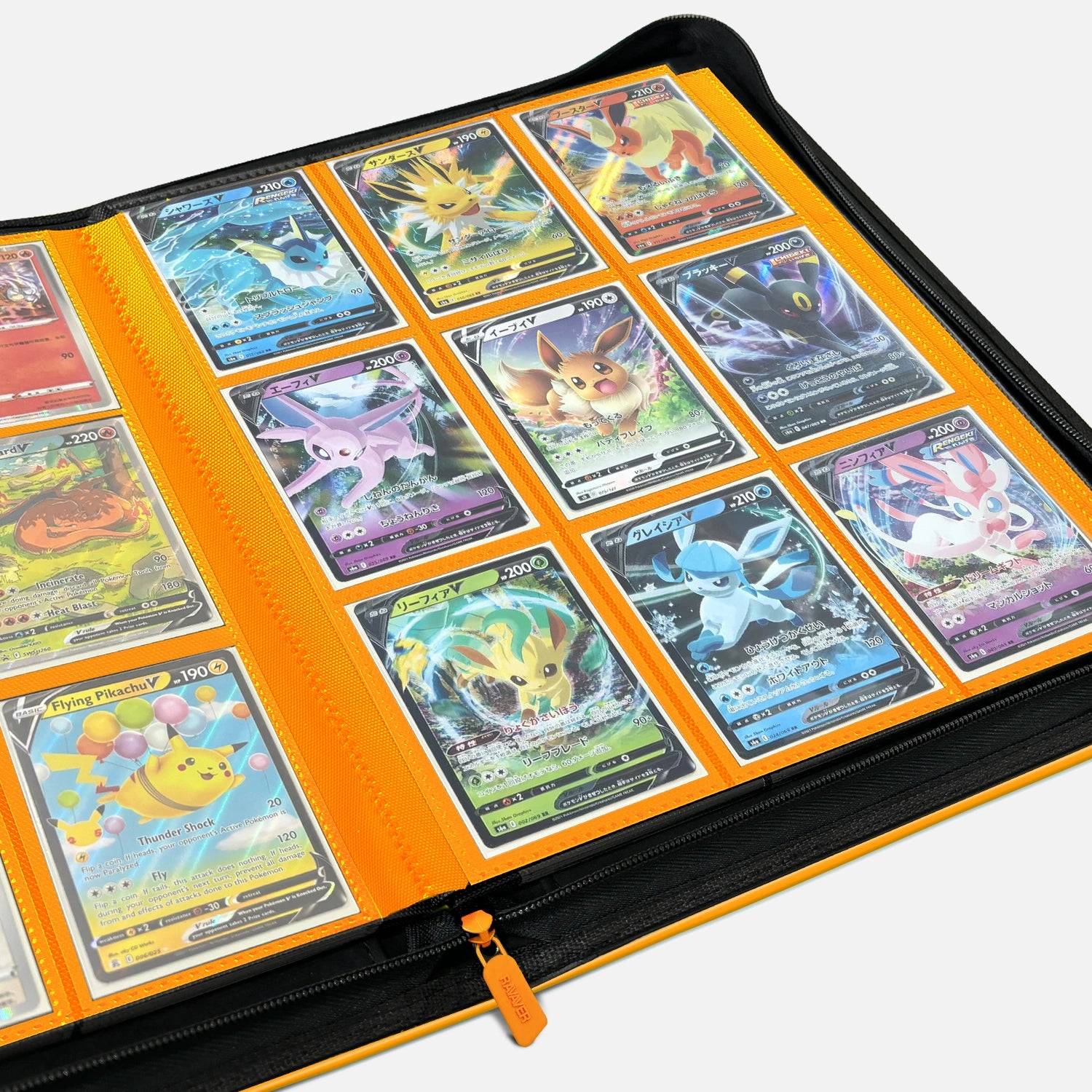
The right move: source cards according to the 70/25/5 channel strategy, but pair them with an archival binder that preserves condition for the long term. Ravaver's binders are built with toploader-compatible pages, full-zip closure, and archival-safe materials specifically so the Near Mint cards you sourced this month still look Near Mint in 2031.
Frequently Asked Questions
Is eBay or TCGplayer cheaper for buying Pokemon singles?
TCGplayer is cheaper for ~70% of master-set buying (commons through ultra rares) due to lower seller fees and cart consolidation savings. eBay is cheaper for graded slabs above $500 and vintage WOTC singles where its auction format produces better price discovery. The optimal strategy uses both platforms for what each does best.
Are TCGplayer cards more reliably Near Mint than eBay cards?
Yes, on average. TCGplayer's condition standards are explicit and consistently enforced through buyer dispute resolution. eBay condition descriptions vary widely by individual seller, and "Near Mint" from one seller may not match another's grading. For master-set binders, TCGplayer's consistency is worth the slight premium.
Do I pay buyer fees on eBay or TCGplayer?
No buyer platform fees on either, beyond shipping. Both platforms charge sellers, who then bake their fees into listing prices. The fees you see at checkout are seller-listed prices plus shipping, with no additional platform surcharge for the buyer.
Should I use eBay auctions for master-set chase cards?
Yes, for cards above $200. eBay auctions produce wider price discovery than fixed-price listings on both platforms, and the closing price typically reflects current market more accurately. Bid 5-10% below your max and let the auction work. Avoid sniping with under-feedback sellers; verify seller reputation before bidding.
How long does shipping take from each platform?
TCGplayer: typically 5-10 business days for US orders, sometimes faster for Direct shipments. eBay: highly seller-dependent, ranging from 3 business days (eBay Top Rated Sellers with same-day handling) to 14+ business days. Filter eBay listings by "Fast 'N Free" shipping for the fastest deliveries.
What to do this weekend
Pull your master-set checklist and split it by tier. Bulk tier (commons through ultras) goes into a TCGplayer Mass Entry list. Chase tier (anything above $80) gets a watch list on eBay sold listings to establish current market. Spend 30 minutes setting up the want lists, and the next 4-8 weeks of patient sourcing produces meaningfully better results than reactive single-platform buying.
If you haven't picked your target set yet, start with the 5-factor set selection framework. If you're already sourcing, audit your last order: were you over-paying on bulk by buying from eBay, or over-paying on chase by buying from TCGplayer? Fix the mix and the master set finishes faster and cheaper.
Sources:
- TCGplayer, "TCGplayer Fees", retrieved 2026-05-27, https://help.tcgplayer.com/hc/en-us/articles/201357836-TCGplayer-Fees
- eBay, "Selling fees", retrieved 2026-05-27, https://www.ebay.com/help/selling/fees-credits-invoices/selling-fees?id=4822
- eBay, "Trading Card Singles $1,000+ Promotion", retrieved 2026-05-27, https://pages.ebay.com/promo/2025/tc-singles/
- TCGplayer, "How to Spot Fake Pokemon Cards", retrieved 2026-05-27, https://www.tcgplayer.com/content/article/How-to-Spot-Fake-Pokemon-Cards