Most Pokemon collectors stop at storage. They sleeve, toploader, binder, and call it done. Then the cards sit in a drawer for years and nobody, including the collector, actually looks at them. Display is the missing third layer. And in 2026, with PSA grading volume past 12 million cards a year and chase cards crossing four figures, more collectors are asking the same question: what's the point of pulling a Charizard SIR if it lives in a binder pocket forever?
This guide walks through every realistic display option for a Pokemon TCG collection in 2026, from the cheapest toploader-on-a-shelf setup to glass-fronted shadowboxes for graded slabs. The goal isn't to push one method. It's to help you match display style to what you actually collect, what room the display lives in, and how much you care about long-term condition.
Key Takeaways
- Display is not storage. The two have opposite priorities and need different gear.
- UV exposure is the single biggest threat to displayed cards. Red and yellow inks fade first, which is why fire-type holos show damage before water-types.
- Magnetic one-touch holders ($2-5 each) are the cheapest display upgrade with the biggest jump in protection over bare toploaders.
- PSA slabs measure 3 7/16" by 5 1/2" and need frames with that exact opening, which is why generic photo frames don't work.
- The rotating display rule: if a card matters to you long-term, rotate it out of direct light every 6-12 months.
What does "displaying Pokemon cards" actually mean in 2026?
Displaying a Pokemon card is putting it somewhere it gets looked at, on purpose. That distinguishes display from storage, where the goal is to keep the card out of sight and in the best condition possible. Storage favors archival-grade sleeves, toploaders, full-zip toploader binders, and cool, dry, dark conditions. Display favors visibility, which inherently means more light, more handling, and more risk to condition over time.
The collector market in 2026 has split into three rough camps. One group treats every chase card as a future grading submission and never displays. Another group displays everything and treats fading as the cost of enjoyment. The third group, which is where most experienced collectors land, runs a hybrid: a rotating wall of mid-tier favorites in cheap display setups, and the actual grail cards either slabbed and shown in protected frames, or stored entirely.
None of those approaches is wrong. But each demands different equipment, and most beginners spend money on the wrong layer first. The single most common mistake is hanging raw cards in a sun-facing frame, then noticing the holo dulling a year later and having no idea what happened.
How does UV light actually damage Pokemon cards?
Direct UV exposure breaks down the pigments printed on Pokemon cards. According to PSA's own preservation guidance and follow-up testing by display brands, red and yellow inks fade fastest, which is why Charizard holos and fire-type secret rares show visible color loss before grass or water types in the same display. The card itself can also yellow as the cardstock oxidizes, and the foil layer on holos can develop a flat, washed-out look as the metallic dyes degrade.
Fade is not reversible. There's no restoration treatment that brings a sun-damaged Charizard back. That makes UV the one threat where prevention is the only option. UV-filtering acrylic and glass blocking 95% or more of UV light is now the gold standard, and serious display brands publish that spec on every product page. If a frame doesn't list a UV spec, assume it's letting through enough to matter on a multi-year timeline.
The other slow killer is humidity. Cards held above 65% relative humidity for extended periods can warp or develop micro-creasing along the edges. Most US homes run dry enough that this isn't a daily concern, but garage and basement displays get hit hardest. A cheap hygrometer next to the display is a five-dollar insurance policy.
What are the actual display options, ranked by cost?
Display gear runs from free to a few hundred dollars per card. Here's the realistic 2026 landscape:
| Method | Cost per card | UV protection | Best for |
|---|---|---|---|
| Bare toploader on a shelf | $0.15 | None | Bulk holos, low-stakes display, kids' rooms |
| Sleeve + toploader + display stand | $1-2 | None | Desk decor, rotating favorites |
| Magnetic one-touch holder | $2-5 | Most include UV protection | Mid-tier chase cards, raw display, future grading candidates |
| Wall-mount toploader frame | $8-15 | Depends on frame | Gallery walls, modular sets |
| Single-slab display frame (BCW, Bivitre) | $15-30 | UV-filtering acrylic standard | Single graded cards, gifts |
| Multi-slab shadowbox (Vaulted, Phantom) | $60-150+ | 95%+ UV blocking | Showcase sets, grail display, living rooms |
| Custom hardwood shadowbox | $200-500+ | UV-filtering acrylic | Collection centerpieces, vintage WOTC slabs |
The biggest jump in protection per dollar is going from a bare toploader to a magnetic one-touch holder. For two to five bucks, the card is fully enclosed against dust, moisture, and accidental fingerprints, and most one-touches sold in 2026 list UV-blocking specs on the packaging. That's why the magnetic holder is the standard recommendation for any card a collector might eventually want to grade.
What size frame fits a PSA slab?
This is the single most-Googled question in Pokemon card display, and the answer is specific. PSA slabs measure approximately 3 7/16" by 5 1/2", or roughly 87mm by 140mm. CGC and BGS slabs run within 1-2mm of those dimensions, which is why most modern slab frames are interoperable across grading companies. The BCW Interlocking Graded Card Frame, for example, has an interior window of 2 7/8" by 4 7/8" and an exterior of 5" by 7" by 1", and it's designed to hold any standard slab from PSA, BGS, CGC, SGC, CSG, or HGA.
This is why a generic 4x6 photo frame doesn't work for a slab. The slab's bezel is thicker than a photo, and the dimensions are off by enough that the slab either won't sit flat or slides around inside the matting. Buying a slab-specific frame is one of those small purchases that prevents a much bigger mistake.
What's the smartest display strategy for a mixed collection?
Most active collectors end up with a mix: a few graded grails, a stack of raw chase cards from the current set, and a binder of mid-tier holos that don't justify grading fees. The most efficient display strategy treats those three tiers differently.
- Grails go in single-card shadowboxes or multi-slab displays. These cards justify the $30-150 investment in proper UV-filtering protection because the cards themselves are worth $200+ and any condition loss is a financial event, not just an aesthetic one.
- Raw chase cards and grading candidates go in magnetic one-touches on a rotating shelf or desk. The one-touch protects the card while it's being decided on, and if you eventually grade it, the card never had to leave a protective shell.
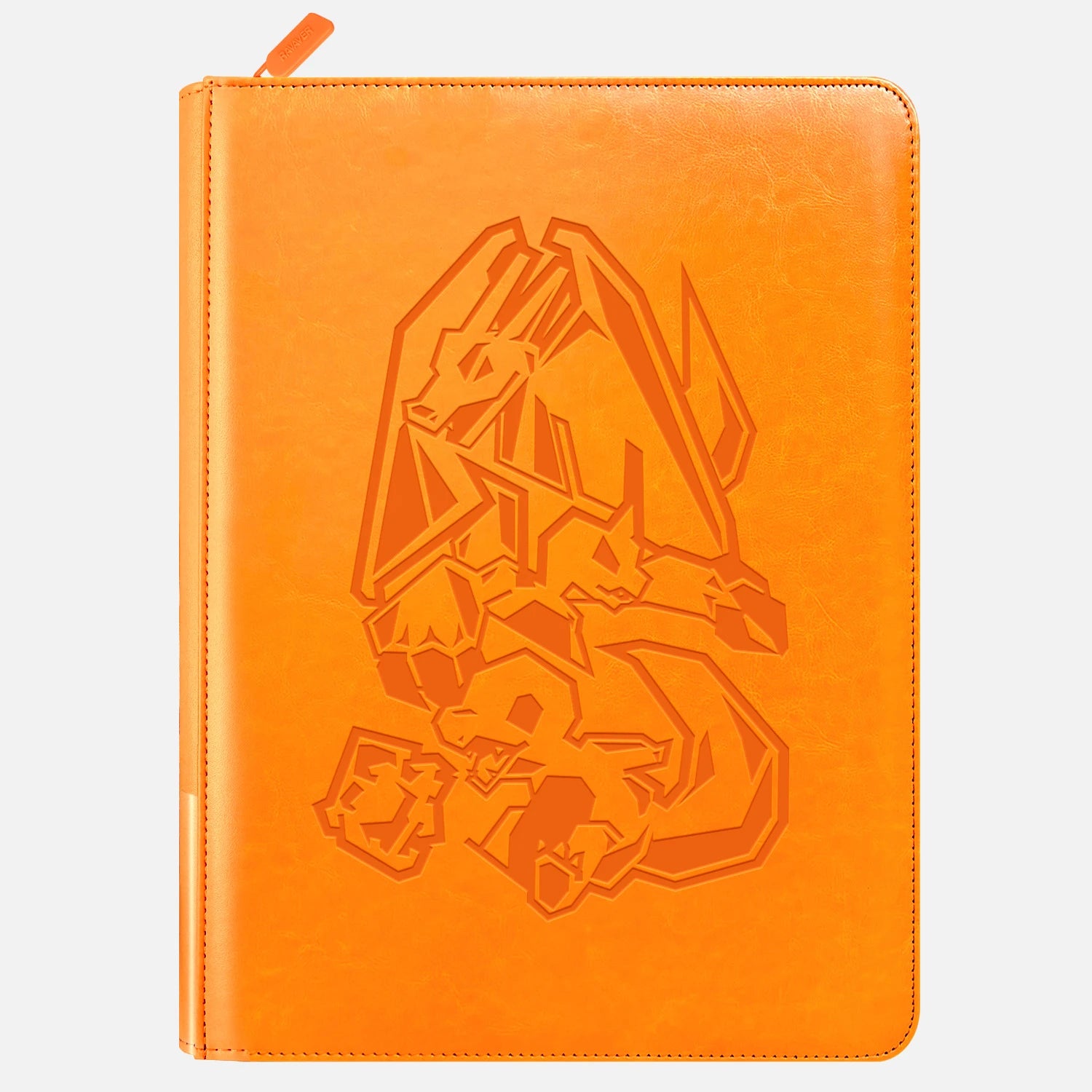
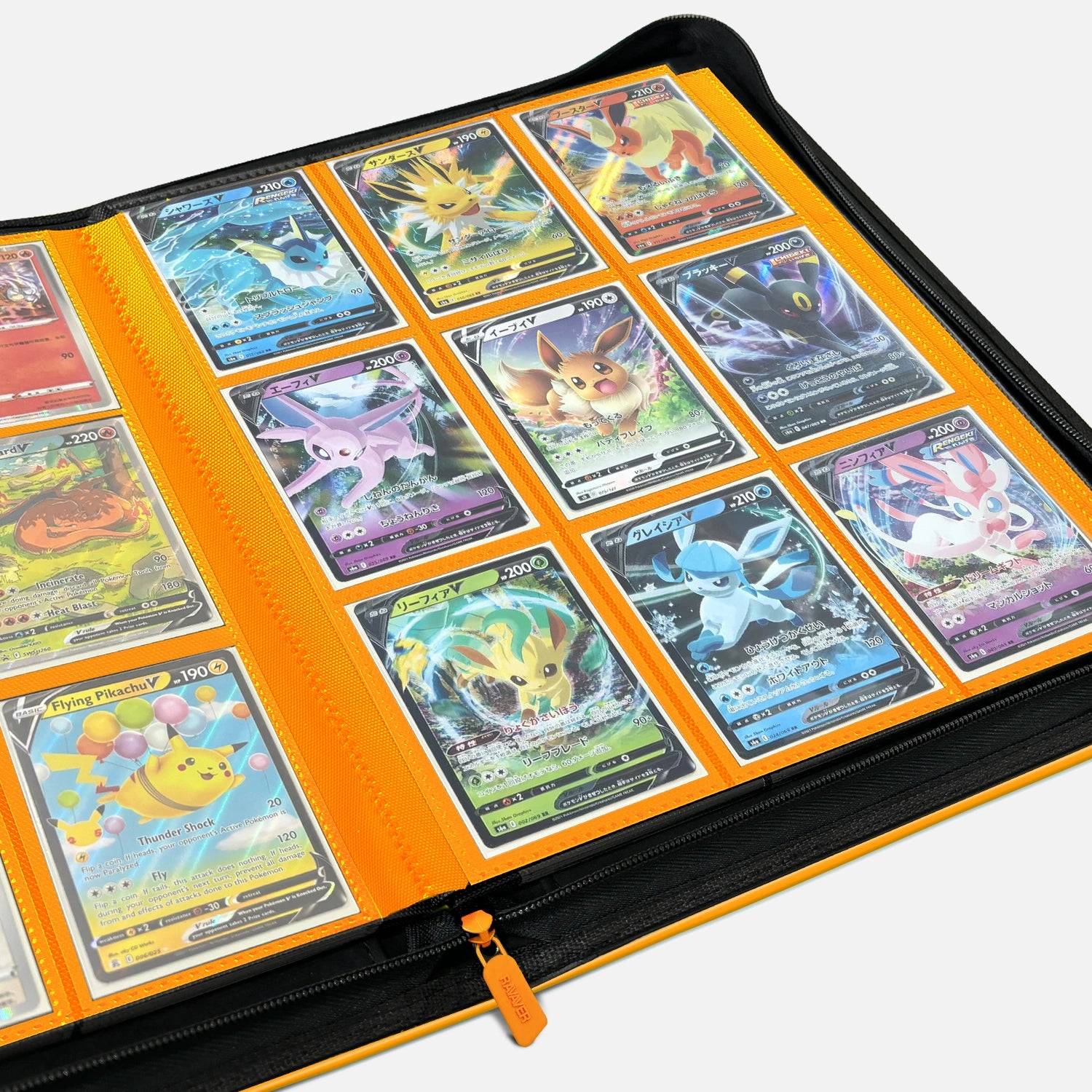
- Mid-tier holos and personal favorites go in a display binder. A premium binder is the in-between layer. The cards are visible when you open it, protected when it's closed, and the whole collection travels in one piece. This is what Ravaver builds toward, the binder that's worth pulling out at a card show because the cards inside earned it.
The reason this hybrid works: it matches display intensity to card value. A $30 holo doesn't deserve a $100 shadowbox. A $400 PSA 10 doesn't deserve to flap around in a binder pocket. Most beginner collectors get this wrong by treating every card the same way, either over-protecting bulk or under-protecting grails.
How long can a card sit on display before condition suffers?
The honest answer: it depends entirely on UV exposure and humidity. A card behind 99% UV-filtering acrylic, in a room that never gets direct sunlight, with stable indoor humidity, can sit indefinitely. The same card behind unprotected glass on a south-facing wall can show visible fading in 18-36 months.
The collectors who don't want to think about this run what's called the rotation system. Every six to twelve months, displayed cards get cycled back to storage and replacements come out. It sounds tedious, and it is, which is why most people don't actually do it. But for cards a collector cares about, rotation is the difference between displayed-and-preserved and displayed-and-degraded. Among the longtime collectors active on r/PokemonTCG, a common refrain is some version of "if you display it, accept that's now the card you display, not the card you eventually sell." That's a clean way to make peace with the trade-off instead of trying to have both.
Should displayed cards influence what you collect?
Yes, more than most collectors admit. The cards that look best in display are not always the cards with the highest secondary market value. Full-art trainers, alt-art SIRs, and large-frame artwork from sets like Surging Sparks or Twilight Masquerade tend to dominate display walls because the art reads from across a room. Tiny detail-heavy cards from older sets look amazing in hand but disappear behind glass.
For collectors building a wall, that means leaning into modern alt-arts and SIRs over compact vintage prints. For collectors building a financial portfolio that happens to be partly on display, the calculus reverses. Knowing which game you're playing changes the buying decisions, which changes what ends up framed.
Frequently Asked Questions
Can I display Pokemon cards in direct sunlight if the glass is UV-filtering?
Even with UV-filtering acrylic blocking 95-99% of UV, direct sunlight is still risky over multi-year periods because the small percentage that gets through accumulates. UV-filtering glass extends safe display time significantly, but it doesn't make sunlight neutral. The safest approach is to keep displays out of direct sun even with UV protection.
What's the difference between a magnetic one-touch and a regular toploader?
A toploader is an open-top rigid PVC sleeve that slides over a sleeved card. A magnetic one-touch is a two-piece acrylic case that snaps shut with embedded magnets and fully encloses the card. One-touches are thicker, more protective against dust and moisture, and most include UV-blocking. They cost $2-5 each versus $0.10-0.30 for toploaders, but for any card worth more than $20, the upgrade is usually worth it.
Do I need to grade a card before displaying it?
No. Many collectors display raw cards in magnetic holders specifically because they enjoy the card without locking in a grade. Grading makes sense if the card's value depends on third-party certification or if you plan to sell. Display alone doesn't require it.
What humidity level is safe for displayed Pokemon cards?
Aim for 40-55% relative humidity. Above 65% over extended periods, cards can warp or develop edge wear. Below 30%, the cardstock can become brittle. Most US homes naturally fall in the safe range, but garage or basement displays should use a hygrometer to monitor.
Is it safe to wall-mount a display where my kids can reach it?
Wall displays designed for cards typically use UV-filtering acrylic, which is much more impact-resistant than glass and won't shatter if knocked. For kid-height displays, acrylic wall frames are the safer choice. Heavy hardwood shadowboxes should be mounted with proper anchors regardless of height.
How do I display cards without permanently sticking anything to them?
Don't ever use adhesive, tape, or sticky-back materials directly on a card. Use a magnetic one-touch, toploader, or slab as the intermediate layer, and the frame holds that holder, not the card itself. Any frame that requires direct adhesion is not designed for collectible cards.
Are LED lights safer than incandescent for card displays?
Generally yes. LED bulbs emit minimal UV compared to incandescent or fluorescent sources, and they run cool, which avoids heat buildup that can warp cards in enclosed displays. Many collectors use small LED strips inside shadowboxes for showcase lighting without significant fade risk.
Where to take this next
If you've never displayed your collection, start with a single magnetic one-touch and your favorite raw card. Put it on your desk for a month. That's the lowest-stakes test of whether display changes how you feel about the collection. Most collectors find it does, which is when the upgrade decisions start: more one-touches, a wall frame, a shadowbox for the first PSA slab. The same way a binder upgrade changes how it feels to bring cards to a trade table, a real display setup changes how it feels to own the collection in the first place.
For the binder side of the same problem, where cards need to be visible-when-open and protected-when-closed, that's what we build at Ravaver. Toploader-compatible, full-zip, Pokemon-themed covers that don't pretend a flap binder counts as showing your collection.
Sources:
- PSA, Card Preservation and Display Guidance, retrieved 2026-05-12, https://www.psacard.com/articles
- BCW Supplies, Interlocking Graded Card Frame specifications, retrieved 2026-05-12, https://www.bcwsupplies.com/interlocking-graded-card-frame-black
- Phantom Display, UV Protection for Trading Cards, retrieved 2026-05-12, https://phantomdisplay.com/blogs/blog/protect-pokemon-cards-from-uv-damage
- TCG Protectors, UV Protection for TCG Collection 2025, retrieved 2026-05-12, https://tcgprotectors.com/blogs/trading-card-game-blogs/uv-protection-for-tcg-collection
- Vaulted Collection, Mastering Your Pokemon Card Display, retrieved 2026-05-12, https://vaultedcollection.com/blogs/vaulted-blog/your-ultimate-pokemon-card-display