A finished Pokemon master set isn't one collection. It's three. The graded chase cards belong somewhere your homeowners policy actually covers. The 400 raw doubles you accumulated chasing those chases need a different home. The 30 to 50 cards you actually want friends to see when they walk in your office, those need yet another setup. The mistake almost every collector makes after spending two years finishing a master set is treating these three groups as one storage problem. They either over-protect the cheap stuff or under-protect the grails.
This guide walks through the three-tier system veteran collectors use, with real temperature numbers, real insurance math, and the gear breakdown that explains why your storage budget should look less like one $400 binder and more like a $120 hygrometer, a bank box, and a $90 acrylic stand on your desk.
Key Takeaways
- Storage and display are different problems. Master set collectors who conflate them either ruin grails by leaving them in the sun or hide cards in slab boxes they never look at.
- The archival-grade range is 65–72°F (18–22°C) and 40–55% relative humidity — the same baseline the Library of Congress uses for paper artifacts.
- A three-tier system works: Tier 1 vault for graded slabs and grail singles, Tier 2 climate-controlled archive for raw doubles and sealed product, Tier 3 rotating display for the 30–50 cards you actually want seen.
- Homeowners policies typically cap collectibles coverage at $1,000–$2,500 per item, far below most modern master set chase totals. Once a single card crosses that, specialty insurance from Collectibles Insurance Services or Hugh Wood (now under Risk Strategies) typically costs $0.65–$1.50 per $100 covered annually.

The mistake that wrecks more master sets than humidity
The single most common failure mode I see in r/PokemonTCG collection-update threads isn't water damage or sun fade. It's a master set owner who treats their whole binder as a "display piece" and ends up with one of two outcomes. Either the grails sit in a binder pocket where every page-turn rubs a corner soft, or the entire collection lives in a slab box stuffed under the bed where the owner never looks at it. Both outcomes waste the two years they spent completing the set.
Storage and display answer different questions. Storage asks: how do I keep these cards in the same condition five years from now? Display asks: how do I see these cards every day without degrading them? Those are not the same question, and the gear that solves one is usually wrong for the other. A Pro-Fit-sleeved Charizard ex SIR sitting flat in a Riker mount on a north-facing wall is being displayed correctly. That same card behind glass in direct south-facing sunlight is being destroyed in slow motion.
The three-tier system separates the questions. Tier 1 is pure storage for the highest-value cards, where access matters less than condition stability. Tier 3 is pure display for the 30 to 50 cards you actually want seen daily. Tier 2 is the middle ground: climate-controlled archive for the raw doubles, near-mint extras, and sealed product that comes with finishing any modern master set. Once you sort cards into the right tier, every storage and display decision after that becomes easier.
What temperature and humidity range actually protects a Pokemon master set?
Trading card stock is essentially the same paper-and-ink substrate that museum archivists have been studying for a hundred years. The archival-grade range is 65–72°F (18–22°C) with 40–55% relative humidity. The American Institute for Conservation and the Library of Congress publish the same numbers for paper-based artifacts, and there's no reason to believe Pokemon cards age differently from any other coated cardstock when exposed to heat, light, or moisture.
The bigger risk is not absolute temperature or humidity. It's swing. A room that holds a steady 78°F is far less damaging than a room that cycles between 60°F and 90°F across a single day. Repeated expansion and contraction causes cards to warp, sleeves to micro-curl, and slab cases to develop the hairline gaps that PSA reholderings target.
Damage thresholds at a glance
| Condition | What happens to cards | Typical time to visible damage |
|---|---|---|
| Humidity below 30% | Card stock dries out, surface micro-cracks visible under 10x loupe, edge whitening accelerates | 6–18 months |
| Humidity above 60% | Warping, foxing (brown spots from mold/oxidation), corner softening, eventual mold growth | 3–9 months in summer climates |
| Temperature swings >15°F daily | Slab seam gaps, sleeve fogging, holographic foil micro-cracks | 12–24 months |
| Direct UV exposure (sunlight) | Surface fade (yellow shift on whites), holographic dulling, back yellowing | 3–12 months of partial daily exposure |
| Garage or attic storage | Combined heat + humidity swing + UV from skylights = all of the above at once | One summer is enough to drop a card a full PSA grade |
A digital hygrometer costs $10–$20 on Amazon, and it's the cheapest insurance you'll ever buy for a master set. Put one inside whatever closet or cabinet holds your collection and check it weekly for the first month. If it drifts outside the 40–55% range, silica gel packets handle small collections and a room dehumidifier handles everything else. For collectors in Florida, the Gulf Coast, or the Pacific Northwest, a dedicated dehumidifier is non-negotiable.
Tier 1 — Vault storage for graded slabs and grail singles
Tier 1 is the smallest tier by card count and the largest by value. For a finished Scarlet & Violet-era master set, this usually means somewhere between 4 and 15 cards: the chase Special Illustration Rares, the Hyper Rare Charizard ex variants, any graded copies you submitted on the master set's behalf, and any pre-modern singles you used to anchor a vintage master set.
The rule for Tier 1 is straightforward. These cards should not be in your house, or if they are, they should be in a UL-listed fire-rated safe rated for at least one hour. A bank safety deposit box runs $40–$120 per year depending on size, and for a master set's grail tier it's almost always the right answer. The slabs sit in their cases inside a fitted slab storage box (BCW makes a 25-slab box that fits PSA cases for under $20), the box goes in the deposit box, and you don't open it more than twice a year.
The objection most collectors raise is the same one I had for years — "but I want to see them." That objection is what Tier 3 solves. The cards you want to see aren't your grails. They're your favorites. Those overlap maybe 30% of the time, not 100%. The Charizard ex SIR worth $1,200 isn't going on your desk. The Pikachu full art you opened on stream and remember pulling, that one goes on your desk.
What goes in Tier 1
- Every graded card in the master set, regardless of grade
- Any raw single worth more than $300, sleeved in a Pro-Fit and toploadered
- Pre-modern singles (WOTC, e-Series, EX-era anchors for vintage master sets)
- Any card you'd cry over if it warped — including sentimental pulls without dollar value
Tier 2 — Climate-controlled archive for raw doubles and sealed product
Tier 2 holds everything that's part of finishing a master set but not part of the "trophy" stack. For a typical modern master set, this is the bulk of your card count: the 400-plus near-mint duplicates you pulled chasing the SIR, the reverse holos you swapped for chase cards in trade, the booster boxes you bought for the set you didn't crack, and any extra sealed product (booster bundles, elite trainer boxes) you kept as a long position.
The storage problem in Tier 2 is about volume, not value. You're storing a few hundred to a few thousand cards and a half-dozen sealed product items. The goal is climate stability, not maximum security. A finished interior closet on the main floor of a house — not a basement, not a garage, not an attic — is the standard setup. The closet gets a hygrometer, a thermometer, and a row of BCW or Ultra Pro storage boxes on a shelf, each box labeled with set and date.
Tier 2 gear that earns its place
| Item | Typical cost | What it solves |
|---|---|---|
| Digital hygrometer (ThermoPro, Govee, AcuRite) | $12–$30 | Tells you when humidity drifts before damage starts |
| BCW 5,000-count cardboard storage box | $15–$25 | Acid-free bulk storage for sleeved doubles |
| Silica gel packets (rechargeable) | $10–$20 per pack | Buffer humidity inside closed boxes |
| Mid-tier room dehumidifier (30-pint) | $180–$280 | Essential in humid climates, mostly unnecessary in dry ones |
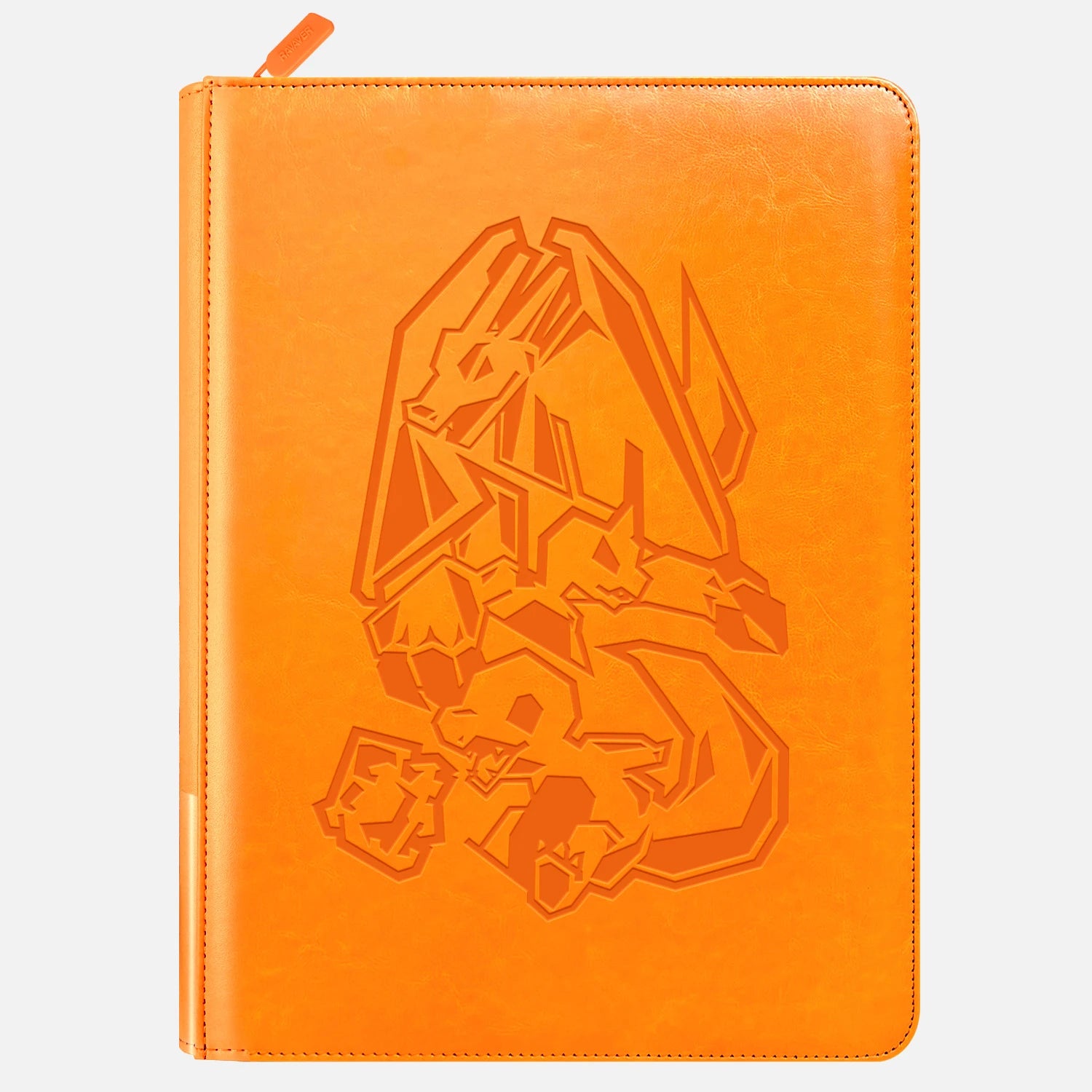
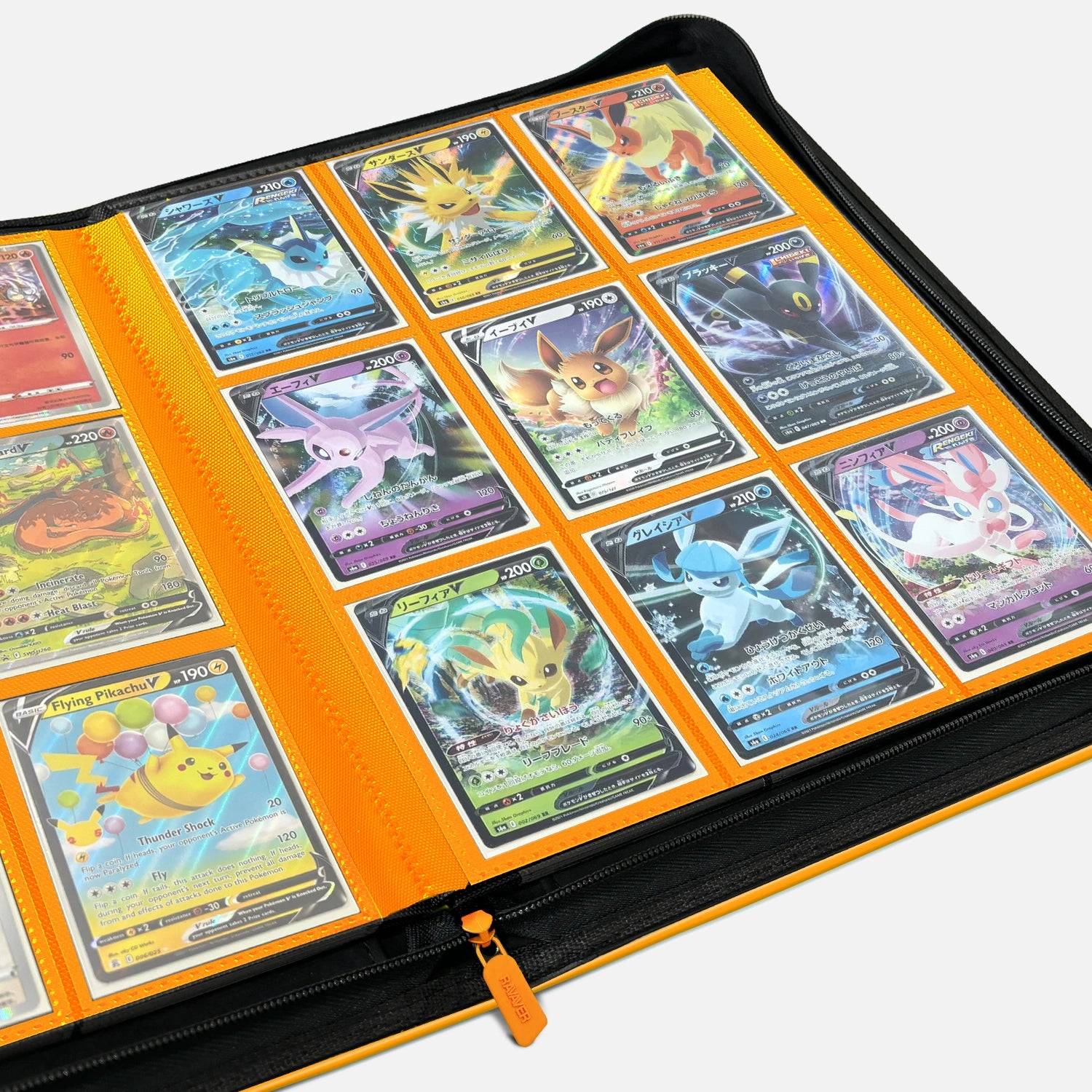
| Toploader binder (premium PU, full-zip, archival pages) | $60–$90 | Holds the high-end raw spread when you want flip-through access without sleeving every card individually (see Ravaver's toploader binder collection) |
The closet I keep my own Tier 2 archive in cost about $190 to outfit: $25 hygrometer, $80 in BCW boxes and sleeves, $20 silica packets, and a $65 binder for the "tour-the-set" raw cards I want guests to see without pulling individual boxes. The closet itself is dark, sits on the main floor, and has the door cracked an inch at night when I run the dehumidifier elsewhere on that floor.
Tier 3 — Rotating display for the cards worth showing
Tier 3 is where master set collecting becomes worth the effort. After two years of pulling, trading, grading, and tracking down singles, you should have 30 to 50 cards that you want to see every single day. Not every card in the master set. Not the grails (those are in the bank). The 30 to 50 cards that, when a friend walks into your office or workspace, you actually want them to ask about.
The defining feature of Tier 3 is rotation. Cards on display take environmental wear even in the best setup — UV from windows, dust accumulation, micro-handling damage when you swap one in or out. Veteran collectors solve this by treating display as a rotating exhibit, not a permanent shrine. A typical rotation is 30 days per card, swapped seasonally or whenever a new set drops. The cards not currently on display go back into Tier 2.
The setups that work for Tier 3, ranked by how often I see them work for master set collectors in collector communities and at card shows:
- Acrylic single-card stands on a desk or shelf. $4–$12 each. The single best display value per dollar in the hobby. Sleeve the card in a Pro-Fit, slide it into a toploader, drop the toploader into the stand. Indirect light only. Rotate every 30 days.
- Riker mount cases (8x10 or 11x14). $15–$30 each. Felt-lined display cases with glass tops. Hold 8 to 16 cards each depending on size. The collector standard for showing themed groups (full holos from one set, full SIR run, full reverse-holo line).
- UV-filtering shadow boxes (IKEA Ribba, framed art boxes). $25–$80 each. Best for wall-mounted permanent displays of a single grail or themed pull. The UV-filtering glass upgrade is non-negotiable for any wall display.
- Glass display cabinets (IKEA Detolf with LED upgrade). $80–$200 total. For collectors who want the "collection room" aesthetic. The Detolf is the unofficial Pokemon collector standard, but it requires LED strip lighting (not bulbs, which generate heat) and ideally a north-facing wall placement.
- Toploader binder open on a stand. The most underrated Tier 3 setup. A premium toploader binder, opened to one page on a wooden book stand, rotating which page is "up" every few days, gives you display variety without committing a single card to permanent exposure.
What doesn't work for Tier 3, despite what TikTok suggests: any setup that puts cards in direct sunlight, any wall display in a room with south-facing windows, any "permanent showcase" of cards you'd actually grade later, and any acrylic case sealed without an internal silica packet (sealed acrylic traps humidity).
Insurance math: when a master set crosses the home-policy ceiling
Once a finished master set crosses about $2,500 in replacement value, the insurance conversation stops being optional. Standard homeowners and renters policies in the United States typically cap collectibles coverage at $1,000 to $2,500 per category, and many cap individual items at $250 to $500 unless scheduled separately. A single Charizard ex SIR or graded WOTC anchor card can blow past those caps on its own.
The two collector-focused insurers most master set owners end up at are Collectibles Insurance Services (now operating as collectinsure.com) and American Collectors Insurance. Hugh Wood Inc. has historically served high-net-worth collectors and as of March 2024 operates under Risk Strategies after the acquisition closed.
What specialty collectibles insurance typically covers vs what it doesn't
| Covered | Usually not covered |
|---|---|
| Theft (home, in transit, at shows) | Market value depreciation |
| Fire, smoke, water damage | Damage from improper storage you knew about |
| Accidental damage (drops, spills) | Mysterious disappearance with no police report |
| Cards in safety deposit boxes | Cards on consignment to a third party |
| Cards being shipped (most policies) | Counterfeits discovered post-purchase |
Premium math is roughly $0.65 to $1.50 per $100 of declared value annually, depending on insurer, storage situation, and policy structure. A $15,000 master set declared at full replacement value with home storage in a fire-rated safe runs about $100–$150 per year. Move the high-value Tier 1 cards into a bank box and the premium typically drops 20% to 35%, because vault-stored collectibles are a much lower-risk profile from the insurer's perspective.
The piece nobody talks about: documentation. Insurers want a recent inventory with photos, purchase receipts, and grading certificates if applicable. The week you finish a master set is the week to do this. Sit down, photograph every card in good light against a neutral background, save the images and a spreadsheet to two separate cloud locations, and update the inventory whenever the set changes.
The three-tier setup most master set collectors actually buy
If you're starting from a finished master set and zero storage infrastructure, the realistic baseline budget to set up all three tiers properly is $250–$500 in the first year, plus the ongoing $40–$120 for a bank safety deposit box if your Tier 1 deserves one. Most collectors I know who completed a Scarlet & Violet master set spent more than that on the last three SIR singles they hunted down, so the storage budget is a small fraction of the total master set spend.

Think of a binder the way collectors actually think about a watch or a wallet: yeah, it holds stuff, but the one you carry around says something about you. The same principle applies to your whole storage system. Tier 1 says you take your money seriously. Tier 2 says you take your collection seriously. Tier 3 says you take your hobby seriously. Most master set owners stop at Tier 2 — boxes of cards in a closet — and wonder why the hobby starts feeling like inventory management instead of collecting. The fix is Tier 3.
Frequently Asked Questions
How long can Pokemon cards last in proper storage?
Properly stored cards — 65–72°F, 40–55% humidity, no UV exposure, in archival-grade sleeves and toploaders or slabs — should remain in their current condition for 50+ years. Cards from the 1999 WOTC base set still grade PSA 10 today when they were stored well, and there's no reason modern cards stored at the same baseline won't do the same. The cards that age badly are the ones stored in attics, basements, garages, or in direct sunlight, where condition degrades visibly within one to two years.
Is a binder safe for a finished master set, or do I need to slab everything?
A premium toploader binder with archival-grade pages, full-zip closure, and PU leather exterior is safe for raw cards in a finished master set, as long as the binder is stored in Tier 2 conditions and you're not flipping through it daily. The risk is mechanical wear from page turns, not chemical degradation. For the highest-value raws — anything over $300 — sleeve and toploader the card before putting it in the binder pocket, even if the binder claims to be toploader-friendly. For grails and graded cards, the binder is not the right answer. Those belong in Tier 1.
Should I store my Pokemon master set in a safety deposit box?
Yes for Tier 1 cards (graded slabs, grail singles over $300, pre-modern anchors), no for Tier 2 and 3. A safety deposit box at a bank runs $40–$120 per year and gives you both physical security and climate stability that a home safe usually can't match. The downside is access — you'll see those cards a few times a year, which is why Tier 3 exists for the cards you actually want to view daily. Most master set owners run a hybrid: grails in the bank, everyday cards at home, display picks on the desk.
What's the worst place to store a Pokemon collection?
Garages, attics, and car trunks, in that order. Each one combines two or three damage vectors at once. Garages get extreme temperature swings plus humidity spikes from rain and snow. Attics add summer heat that routinely exceeds 100°F in U.S. climates. Car trunks add UV from rear window exposure plus temperatures that hit 140°F in summer. One summer in any of these is enough to drop a near-mint card to lightly played, and one winter can warp a slab seam. The next-worst is any basement that floods more than once a decade.
Do I need to insure a Pokemon master set under $5,000?
Probably not as a standalone policy, but you should schedule it as a rider on your homeowners or renters policy. Standalone collectibles policies have minimum premiums around $100–$150 per year, which doesn't make sense for a sub-$5,000 collection unless you're shipping cards frequently. A scheduled rider on existing home insurance adds the collection to your policy at a lower marginal cost. Once the set crosses $10,000 — which is normal for any master set with graded chase cards — the dedicated policy from Collectibles Insurance Services or similar starts paying for itself.
What humidity level is too dry for Pokemon cards?
Below 30% relative humidity, card stock starts losing moisture content faster than it can re-equilibrate, leading to micro-cracks in the surface coating and accelerated edge whitening. Visible damage usually appears within 6–18 months of sustained low-humidity exposure. Collectors in desert climates (Arizona, Nevada, parts of Texas) routinely run humidifiers in their collection rooms during winter to keep humidity from dropping below 35%. A digital hygrometer makes the call obvious — if your reading is consistently under 35%, add a small humidifier or move silica out and a moisture source in.
How often should I rotate cards in a Tier 3 display?
Every 30 days is the standard veteran answer for any card on display under indirect light. For cards in direct or partial UV exposure (windows facing south or west), shorten that to 7–14 days, and reconsider the display location. The cards that stay on permanent display without rotation are usually the lowest-value cards you'd be willing to "sacrifice" to the slow fade of daily UV — a fun bulk holo, a sentimental pull, a card you wouldn't grade. Anything you'd consider grading later or selling later doesn't belong on permanent display.
What to do this week
If your master set is finished and you don't have a three-tier system yet, the highest-leverage move this week is to buy a $15 digital hygrometer and put it on the shelf where your collection currently lives. Read it daily for a week. If it's outside 40–55%, that's the first problem to solve before you spend anything else. If it's stable inside that range, the second move is to separate Tier 1 cards from the rest — pull the graded slabs and grail singles, sleeve them in a single BCW slab box, and decide whether they're staying in a home safe or going to a bank deposit box. Those two moves alone protect 80% of the value in most master sets, and they take less than a Saturday afternoon to execute.
Sources:
- Collectibles Insurance Services, "Pokemon Card Insurance," retrieved 2026-05-21, https://collectinsure.com/pokemon-insurance/
- Hugh Wood / Risk Strategies, "Collectibles Insurance," retrieved 2026-05-21, https://hughwood.com/industries/fine-art-collectibles/fine-art-collection-insurance/collectible-items/
- American Collectors Insurance, "Pokemon Card Collection Protection," retrieved 2026-05-21, https://americancollectors.com/pokemon-card-collection-protection/
- Risk Strategies, "Risk Strategies Acquires North American Operations of H.W. International B.V.," press release, retrieved 2026-05-21, https://www.risk-strategies.com/press-releases-risk-strategies-acquires-north-american-operations-of-h.w.-international-b.v
- r/PokemonTCG community discussions on storage, display, and master set completion, retrieved 2026-05-21, https://www.reddit.com/r/PokemonTCG/