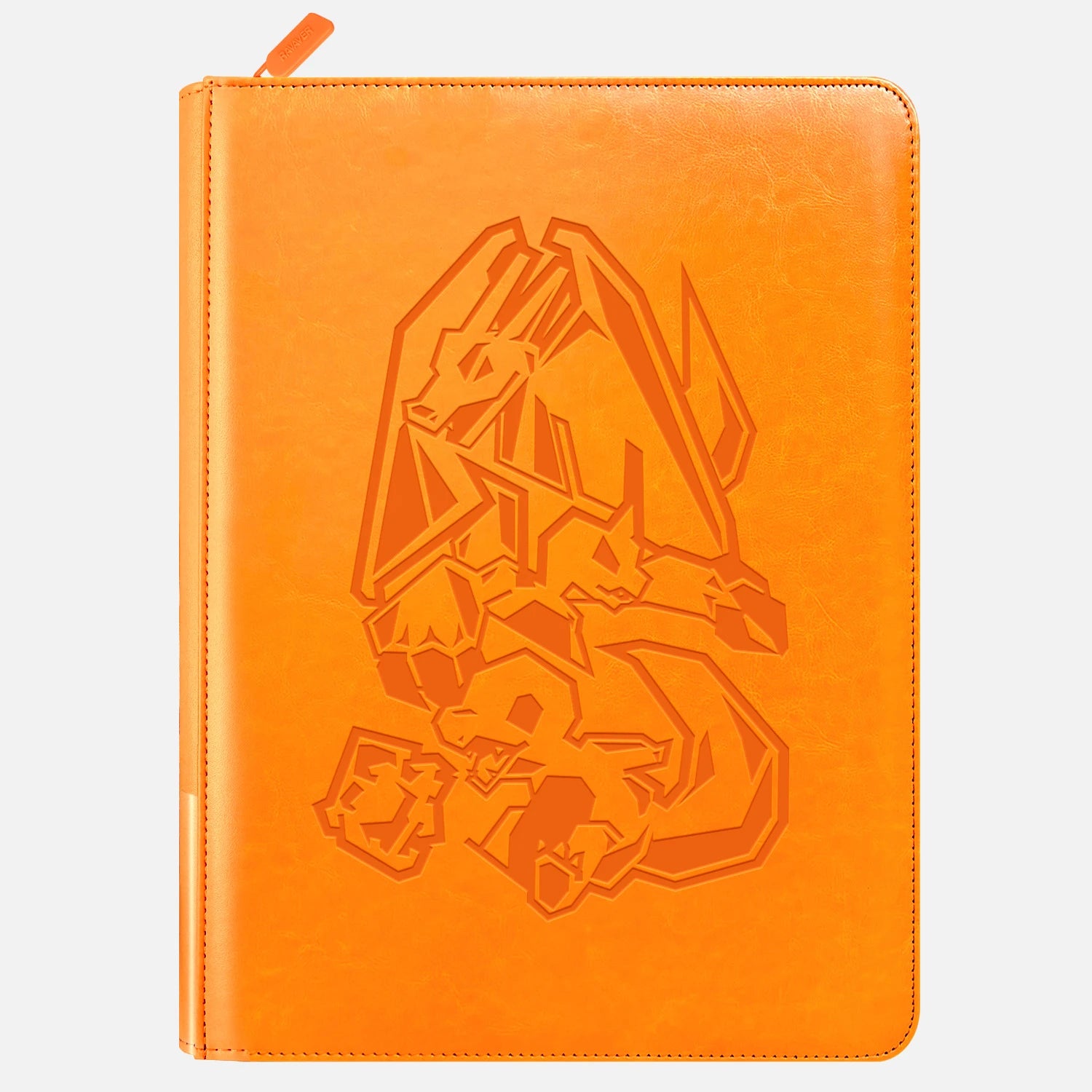
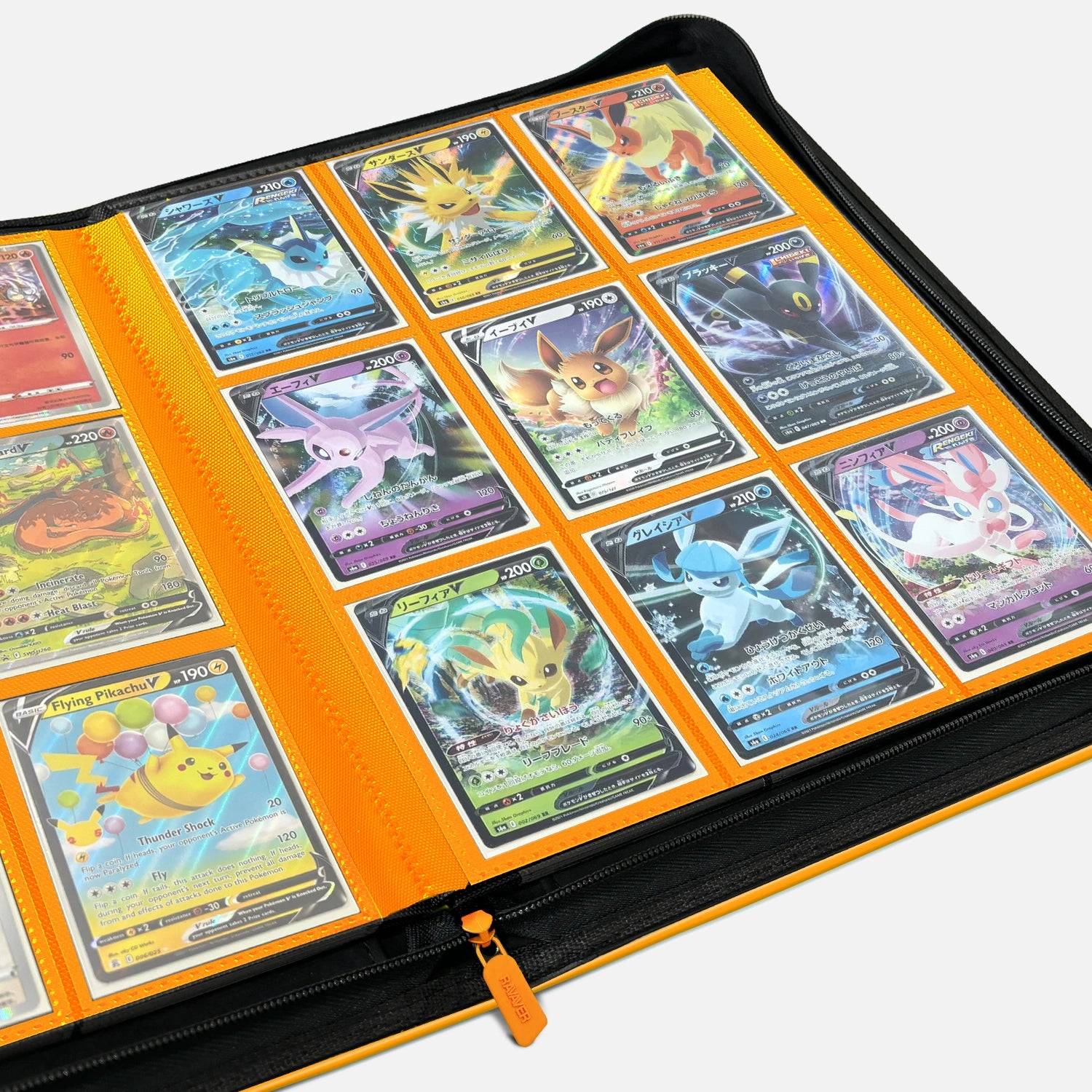
Three binder formats dominate the Pokemon collecting hobby right now: zippered binders with sewn-in pages, classic 3-ring binders, and side-loading binders (which can be either zippered or strap-closed but use a perpendicular page layout). All three claim to protect cards. Only two of them actually do, and the third one has a documented failure mode that ruins cards.
This piece walks through the comparison the way most buying guides skip: protection performance, real-world longevity, card damage rates, and total cost of ownership over a three-year window. The conclusion isn't that one format wins everything. It's that ring binders fail at a specific price point, zippered binders earn their premium under specific conditions, and side-loading is the format collectors learn about last and wish they'd learned about first.

Key Takeaways
- 3-ring binders are the documented cause of "binder dings" on Pokemon cards. Damage occurs at the page edges where rings press into the card material over months of storage.
- Zippered binders win on protection during transport and long-term storage. Side-loading binders win on per-card retrieval and pocket security at any orientation.
- Total 3-year cost favors zippered binders at the $50+ tier. Ring binders look cheaper upfront but trigger card damage that costs 10-50x more than the binder savings.
- The single best-performing format for cards over $20 each is a zippered binder with side-loading pockets, combining the two protection mechanisms.
The Three Closure Formats, Defined
Zippered binders. A perimeter zipper seals the binder on three sides. Pages are sewn into the spine, fixed in position, and the closed binder is effectively a sealed case. Most premium Pokemon binders use this format. Examples include the Dragon Shield Codex line, Vault X Exo-Tec series, and most premium PU leather binders in the $40-$90 range.
3-ring binders. Pages are loose-leaf, held together by a 3-ring metal mechanism. Pages can be added, removed, or rearranged at will. Closure is typically a fabric strap, a snap, or nothing at all. This is the cheapest format and the most common in retail. Examples include most binders under $20 and many "trading card album" products at general retailers.
Side-loading binders. Pages are sewn into the spine, but the pocket openings are perpendicular to the spine (cards load from the side of each page, not the top). The binder itself can be zippered or strap-closed, but the pocket geometry is what defines this category. Examples include the Dragon Shield Codex line (which is both side-loading and zippered), Ravaver's premium binders, and most newer designs released since 2022.
Protection: How Each Format Performs in Real Use
The protection test isn't whether a binder protects cards when it's sitting flat on a desk in a temperature-controlled room. Every binder passes that test. The real test is what happens when the binder is dropped, flipped sideways, stored vertically on a shelf, transported in a backpack to a card show, or left on a slightly humid garage shelf for six months.
| Protection Scenario | Zippered | 3-Ring | Side-Loading |
|---|---|---|---|
| Dropped flat | Cards stay in | Cards stay in | Cards stay in |
| Dropped on edge | Cards stay in | Pages shift, cards may eject | Cards stay in if zippered, may shift if strap |
| Stored vertically | No issue (pages sealed) | Gravity pulls cards toward bottom edge | Cards locked perpendicular to gravity |
| Transported in backpack | Sealed, no exposure | Pages can shift, dust enters | Sealed if zippered, partial if strap |
| Humidity exposure | Outer seal limits exposure | Open mechanism, full exposure | Outer seal limits exposure |
| Toploader-loaded cards | Fits if pockets are sized for it | Pockets too small, cards stick out | Fits if pockets are sized for it |
The pattern across these six scenarios is clear. Zippered and side-loading formats hold up across all six. 3-ring binders pass two of six (dropped flat, and that's about it). The other four scenarios are where the format breaks down.
The Binder Ding Problem (And Why It's a Ring Binder Issue)
The most documented binder-related damage type in the Pokemon TCG community is "binder dings": small dents or edge whitening on cards that have been stored in a binder for months. The damage shows up on the card edges, usually concentrated near where the page meets the binder mechanism. For graded cards, binder dings drop the grade by one or two PSA points, which translates to anywhere from a 30% to 70% value drop depending on the card.
Binder dings are not random. They're a ring-binder-specific failure pattern, and the mechanism is straightforward. In a 3-ring binder, pages are held in place by metal rings that pass through the page. The page material itself is thin enough to flex under storage weight. Over months, the page material near the rings shifts slightly under gravity (especially in vertically stored binders), and the metal ring edge presses through the page into the card edge. The result is a barely visible dent that PSA graders will catch and downgrade.
On r/PokemonTCG, threads about binder dings show up multiple times a year, and the answer is always the same: do not store any card worth grading in a 3-ring binder. The hobby-wide consensus is that sewn-in pages (either zippered or side-loading format) are the only safe option for graded-quality cards. This is repeated in PokeBeach's collector forums, in the Dragon Shield product documentation, and in PSA's own storage guidance.
For cards under $20 each, the binder ding risk is more about aesthetics than value. The damage still happens, but the cards aren't going to grading. For cards above $20, or anything you plan to grade, a 3-ring binder is the wrong format full stop.
Where Side-Loading Beats Zippered
Zippered binders are usually positioned as the premium tier, and they are. But side-loading binders quietly beat zippered binders on three specific dimensions, and the collectors who learn this late wish they'd known earlier.
Pocket security at any orientation. In a top-loading pocket (the standard for most zippered binders), there's a small gap at the top of each pocket where cards slide in. If the binder is tilted, flipped, or shaken, cards can slide out of the pocket toward the spine and end up loose inside the closed binder. In a side-loading pocket, the card is captured on all four sides once it's inserted. Even with the binder open and flipped upside down, the card stays in the pocket.
Browse-and-retrieve speed. Pulling a card out of a side-loading pocket is faster and lower-stress than pulling one out of a top-loading pocket. The hand motion is sideways, the card slides out laterally, and there's no risk of the card catching on the page above. Set completers who handle their cards weekly find this difference adds up.
Spine wear. Side-loading binders distribute page stress along the spine differently than top-loading binders. Over a multi-year horizon, side-loading binders tend to develop less spine deformation than top-loading equivalents at the same price tier.
The trade-off: side-loading binders are typically a slightly tighter fit for double-sleeved cards because the pocket geometry is less forgiving on width. If your collection is heavily double-sleeved, check the specific binder's pocket spec before buying.

Longevity and Total Cost of Ownership
Sticker price isn't the right measure for comparing binders. The right measure is total cost over the storage horizon, which for most serious collectors is at least three years and often longer. A binder that costs $15 and needs to be replaced every 18 months because the rings fail or the cover delaminates is more expensive in three years than a $50 binder that holds up for five.
| Binder Tier | Sticker Price | Expected Lifespan | 3-Year Cost | Damage Risk |
|---|---|---|---|---|
| 3-ring budget | $10-$15 | 12-24 months | $25-$40 (replacement cycle) | High (binder dings) |
| Zippered entry | $30-$45 | 3-5 years | $30-$45 | Low |
| Zippered premium | $60-$85 | 5+ years | $60-$85 | Very low |
| Side-loading premium | $55-$80 | 5+ years | $55-$80 | Very low |
The damage risk column matters more than the price column. A binder ding on a single chase card worth $200 (a single PSA-grade-eligible Charizard, for example) costs more than the difference between the cheapest binder and the most premium one on this table. The first time a 3-ring binder downgrades a valuable card from PSA 10 to PSA 8, the buying decision is settled.
What Collectors Actually Choose After 12+ Months in the Hobby
The shopping patterns of collectors who've been in the hobby for over a year are different from the patterns of new collectors. New collectors usually start with a 3-ring binder because that's what's sold at every retailer, and the format looks familiar. Within 12-18 months, almost all collectors who stay in the hobby move off of 3-ring binders for their core collection.
The progression on collector forums is consistent. Year one: 3-ring binder from a big-box retailer, plus whatever sleeves come with it. Year two: zippered binder for the main collection, 3-ring binder relegated to bulk. Year three onward: the 3-ring binder is gone, replaced by a second zippered or side-loading binder for trade-night or chase-card use.
The collectors who skip this progression and go straight to a zippered or side-loading binder for their first "real" collection don't go back. The decision usually saves them one or two years of avoidable card damage on whichever cards they cared about most.
When 3-Ring Binders Are Still the Right Choice
3-ring binders aren't wrong for every use case. They're wrong as the primary storage for valued cards. They're fine for bulk storage of low-value cards (under $1 each), for prototype-building or set-tracking projects where pages need to be rearranged frequently, and for kids learning to organize their first collection where the cost ceiling is low.
The mistake is using a 3-ring binder for cards that don't fit those use cases. Once the binder is holding even one card worth $50 or more, the protection economics flip and a sewn-page binder becomes the correct choice.
Frequently Asked Questions
Do binder dings actually drop PSA grades?
Yes. PSA grading explicitly evaluates card edges for whitening, dents, and surface impressions. Binder dings show up as edge whitening or shallow dents along the card edge, usually in a consistent pattern matching where the card sat in a ring binder. A card that would have graded PSA 10 raw can drop to PSA 8 with documented binder dings, which translates to a 50-70% price drop in the secondary market.
What's the difference between top-loading and side-loading binder pockets?
Top-loading pockets have an opening at the top of each pocket, so cards slide in from above (perpendicular to the binder spine). Side-loading pockets have an opening at the outside edge of each pocket, so cards slide in from the side (parallel to the binder spine). Side-loading is more secure because cards stay locked in even if the binder is flipped or stored vertically.
Can I use a zippered binder for cards in toploaders?
Only if the binder is specifically labeled as toploader-compatible. Standard zippered binders have pockets sized for sleeved cards, which are too small for cards loaded inside toploader sleeves. Toploader binders use wider, deeper pockets designed to fit a toploader-loaded card. Both products exist; the binder description will say which it is.
Why don't all premium binders use side-loading pockets?
Side-loading pockets are slightly more expensive to manufacture (the page geometry is more complex) and can be a tighter fit for double-sleeved cards. Some manufacturers stick with top-loading for cost or compatibility reasons. The trend since 2022 has been toward side-loading for the premium tier, but both formats are still sold at the premium price point.
Is a zippered 3-ring binder the same as a sewn-page zippered binder?
No. Some 3-ring binders are sold with an outer zipper that closes the cover, but the pages inside are still held by rings. This is a common source of confusion. A true zippered binder has sewn-in pages, no metal rings, and the zipper is part of the binder construction, not an accessory. Check the page binding before buying.
Your Next Step
If your current binder is a 3-ring format and you have any card worth more than $20 in it, move those cards into sleeves and into a sewn-page binder. The cost of the new binder is almost always less than the value of one card you'd lose to binder dings. For collectors building from scratch, skip the 3-ring tier entirely. Start with a zippered side-loading binder in the $40-$60 range, and the format question is settled for the next five years.
For a deeper look at how binders fit alongside sleeves and toploaders in a full protection stack, see our 2026 binder buying guide and our breakdown of the full Pokemon card storage stack. The closure question is one decision in a larger system, and the system works best when all the layers are chosen together.
Sources:
- PSA, Card Grading Standards: Edges and Corners, retrieved 2026-05-14, https://www.psacard.com/resources/gradingstandards
- r/PokemonTCG, Binder Damage and Storage Threads, retrieved 2026-05-14, https://www.reddit.com/r/PokemonTCG
- PokeBeach Forums, Binder Discussion Archive, retrieved 2026-05-14, https://www.pokebeach.com/forums