Look at a serious collector's setup and you'll notice something. The 1999 Base Set Charizard isn't sitting in the same protection as the bulk Energy cards. The chase SIR from the latest set doesn't share a binder page with someone's first holo. Every card is in a layer that matches what it's worth, not because the collector got fancy, but because they figured out the math.
That math is the storage stack. It's the difference between a hobby that holds value for 20 years and one that quietly bleeds equity every summer your AC dies. This guide walks through all four layers, how they work together, and how to match your stack to the card so you stop overspending on bulk and underprotecting your hits.
Key Takeaways
- Card protection works in four layers: sleeve, toploader, binder, and environment. Most damage happens when a collector skips a layer or doubles up the wrong one.
- The Library of Congress and most archival institutions recommend 30 to 50 percent relative humidity and 60 to 70 degrees Fahrenheit for paper-based collectibles. Pokemon cards are paper-based collectibles.
- PVC sleeves and pages are not archival safe. Polypropylene (PP) is the standard for everyday storage, and polyester (Mylar) is the gold standard for long-term encapsulation.
- A 1999 Base Set Charizard and a 2024 bulk Energy card do not need the same stack. Matching the layer cost to card value is how you stop wasting money.

Why "stack" thinking beats "what tool when"
Most card protection guides ask the wrong question. They ask, "should I use a sleeve or a toploader?" The answer is almost always both, but in a specific order, with each piece doing a different job. A sleeve is not a substitute for a toploader. A toploader is not a substitute for a binder. A binder is not a substitute for a climate-controlled room. They are layers of defense, and skipping any of them creates a failure point.
Think of it like archival paper storage at a museum. The document goes in a polyester sleeve, the sleeve goes in an acid-free folder, the folder goes in a metal box, and the box sits in a humidity-controlled vault. Each layer handles a specific threat: surface abrasion, edge damage, light, and air. Pokemon card protection is the same idea scaled down, and it works the same way.
The stack also lets you scale protection by value. A $0.10 bulk Charmander in a binder page is fine. A $300 raw 1st Edition Base Set Charizard in the same binder page is malpractice. Same binder, very different cards. The stack is how you draw that line.
Layer 1: Sleeves
A sleeve is the first thing that touches the card, and it has one job: stop surface abrasion. Every time a card slides into a toploader, gets handled, or moves inside a binder pocket, the surface is at risk. The sleeve absorbs that friction so the card itself never gets touched directly after the moment of pulling.
Three sleeve types matter:
- Penny sleeves are the thin, soft outer sleeves you've seen at every card show. They cost about a cent each. Their job is to wrap any card you're about to put inside a toploader. They are too thin to protect alone, but they are the cheapest insurance against scratches that exists.
- Perfect fit sleeves are stiffer inner sleeves designed to hug the card. Collectors use them as the first layer in a double-sleeve setup, especially for slabs you plan to send for grading. They are tight enough that the card doesn't slide.
- Premium opaque sleeves like Dragon Shield, KMC, or Ultra Pro Eclipse are thicker outer sleeves with colored backs. These are the ones you actually use in binders and play. They protect from edge whitening and add a backstop against light damage on the reverse side.
The two material rules to remember: polypropylene (PP) is the archival standard, and PVC is the enemy. Dragon Shield, KMC, Ultra Pro Pro-Fit, and Ultimate Guard all use PP. Cheap "clear" sleeves from generic brands sometimes use PVC, which migrates plasticizers over time and can fog the card surface or cause clouding. If a sleeve's product page doesn't say "PVC-free," assume it isn't.
Layer 2: Toploaders and semi-rigids
The toploader is the rigid second layer. Its job is to stop bending, flexing, and corner damage. A sleeved card slides into the toploader, and the combo becomes nearly impossible to bend during normal handling. This is the layer that turns a card from "fragile" into "tradeable."
For most modern cards, a standard 35-point or 55-point toploader from Ultra Pro is the default. Higher point ratings are for thicker cards, like SIRs or jersey cards in some sports lines. Most Pokemon cards are 20 to 25 points thick, so the 35-point toploader has a bit of breathing room without being sloppy.
Semi-rigids are the in-between option. They are stiffer than a sleeve, more flexible than a toploader, and designed specifically for cards heading to PSA, BGS, or CGC for grading. The graders prefer semi-rigids because they can pull the card out without prying, which means less risk of damage during intake. If you submit a card in a toploader, expect the grading service to either ask you to repackage or to do it themselves.
One detail most guides skip: never tape a toploader shut over the card. If you need to secure the top, use a team bag (a small resealable plastic bag) around the entire toploader. Tape touching the card or sliding inside the toploader is how careless trading damages thousands of dollars of cards every year.

Layer 3: Binders, boxes, and slab cases
This is where most of your collection lives, and it's the layer that makes the difference between a collection you bring out and one that stays in a closet. The binder is also the only layer non-collectors see, which means it carries social weight that the other layers don't.
There are three storage formats at this layer:
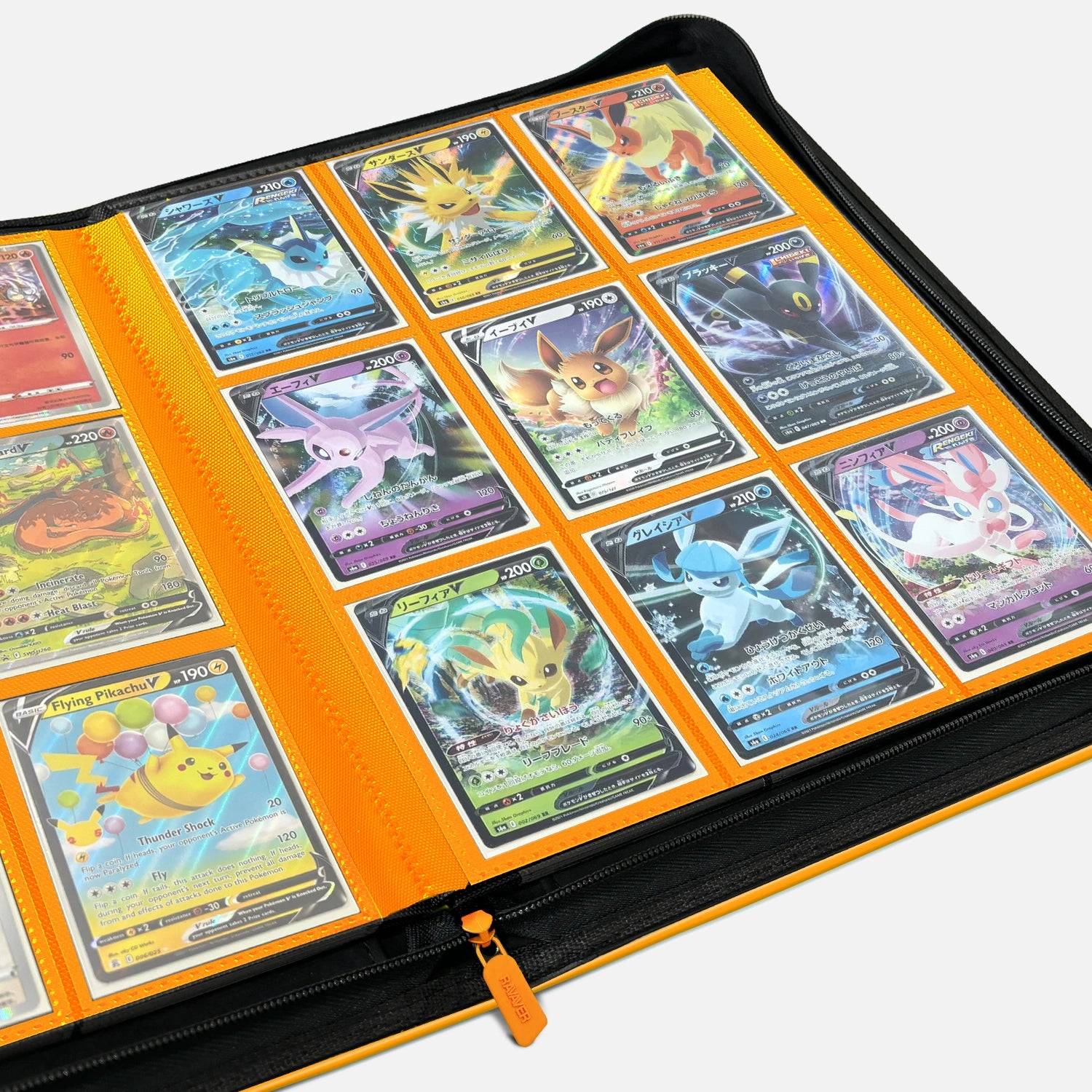
- Binders hold sleeved or unsleeved cards in pocket pages. The serious option is a side-loading, zip-closed binder with archival-safe (PVC-free) pages. Ring binders are an older format that bend cards over time as the rings rotate against pocket edges. Modern collectors avoid them for anything valuable.
- Card boxes and storage cases hold cards in sleeves or toploaders. They are cheaper per card than binders but offer zero visibility and minimal social value. Best for bulk, doubles, and trade fodder you don't need to look at often.
- Slab cases and display boxes hold graded cards in their PSA, BGS, or CGC holders. Once a card is slabbed, the slab itself is the protection. The slab case adds a layer against UV and dust during display.
For binders specifically, look for three things on the product page before buying: PVC-free pages (also marketed as archival-safe), full zip closure (open binders shed cards over time), and toploader-friendly pocket sizing if you plan to store sleeved or double-sleeved cards. A binder that can't fit a sleeved card was designed for paper, not Pokemon. Many collectors learn this the hard way after their first toploader binder upgrade.
One thing the binder layer also does that the other layers don't: it makes the collection portable in a way that survives the social moment. When you bring out a binder at a card show, in someone's living room, or in an Instagram unboxing, the binder is on display. The first three layers protect the card. The binder also protects the moment.
Layer 4: Environment
The last layer is the room the binder lives in. This is the layer most collectors don't think about until something goes wrong, and by then it's usually too late.
The numbers archivists use for paper-based collectibles are tight. The Library of Congress and similar institutions target 30 to 50 percent relative humidity and 60 to 70 degrees Fahrenheit, with as little fluctuation as possible. Fluctuation is the actual enemy. Cards that swing from 30 percent humidity in winter to 65 percent in summer warp, separate at the foil layer, and develop edge whitening that grading services flag.
Three common environments fail this test:
- Attics hit 100 degrees in summer and below freezing in winter in most US climates. PSA explicitly recommends against attic storage.
- Basements hit 60 to 70 percent humidity in summer in most non-arid US states, even with the dehumidifier you forgot to plug in. Anything above 55 percent enables mold growth on paper-based collectibles.
- Garages have a third problem most collectors miss: condensation from cars. Warm car interiors meet cool concrete floors, and the moisture has to go somewhere. Often it goes into anything porous within reach, including the bottom shelf where you stashed your storage boxes.
The fix for most collectors isn't a climate-controlled room, it's pulling the collection up to the main floor of the home. Interior closets on the first or second floor have the most stable humidity and temperature in the entire house. If you're storing a five-figure collection, the PSA Vault or a similar climate-controlled professional storage service starts to make sense. Below that, an interior closet with a hygrometer and one of the silica gel rechargeable canisters does most of the work.
How to match the stack to card value
Not every card needs every layer. This is the part of the storage stack collectors fight about most, and where SERP guides usually wave their hands. Here's the matrix that works in practice:
| Card type | Sleeve | Toploader | Binder/box | Environment |
|---|---|---|---|---|
| Bulk commons & uncommons | Optional | No | Card box | Interior closet |
| Modern holos ($1 to $25) | Penny + premium | Optional | Binder | Interior closet |
| Chase cards & SIRs ($25 to $300) | Penny + premium | Yes (35-pt) | Toploader binder | Interior closet + hygrometer |
| Raw vintage ($300+) | Perfect fit + premium | Yes or semi-rigid | Toploader binder | Interior closet + hygrometer + silica gel |
| Graded slabs (any value) | N/A | N/A | Slab case or display | Out of direct sunlight |
Three patterns worth noticing in that table. First, sleeves get more aggressive as value goes up. Second, the toploader appears the moment a card hits the $25 threshold. Third, environment is the only layer that matters for graded slabs because the holder handles everything else. Once a card is in a PSA or CGC case, you cannot improve the protection. You can only stop the room from doing damage.

The most expensive stack mistakes
Most damage isn't from a single catastrophe. It's from a collector skipping a layer to save money or doubling up the wrong layer because they read a Reddit post once and didn't think it through.
The four most expensive stack mistakes:
- Skipping the sleeve on chase cards. Even inside a toploader, the card slides during transport. Without a sleeve, every slide is a micro-scratch on the surface. PSA grading drops a half-grade for surface scratches that wouldn't have existed with a $0.01 penny sleeve.
- Using PVC binder pages. The original 1999 binder pages most of us grew up with were PVC. They yellow, they cloud, and over 5 to 10 years the plasticizers leach into the card surface. If you still have a binder from before 2010, check the page material before assuming it's safe.
- Storing in a basement or garage without humidity control. The damage from humidity isn't immediate. It's cumulative, and you don't see it until you pull the card out two years later and the surface is starting to wave.
- Skipping the toploader for "binder cards." If a card is worth more than $25 and you're storing it long-term in a regular binder pocket without a toploader, the page edge is pressing into the card edge every time you flip the binder. Edge whitening from this is the most common downgrade PSA flags on otherwise mint binder cards.
For a full breakdown including how to fix each one, the 7 storage mistakes that destroy investment value guide walks through the math on each.
Frequently Asked Questions
Should I sleeve every card I pull?
Not every card. Bulk commons and energies don't need protection beyond a card box. Anything you'd want to trade, anything with a holographic finish, and anything you'd flip for more than a few dollars should get at least a penny sleeve right out of the pack. The cost is roughly one cent per card, which is the cheapest insurance in the hobby.
Are Dragon Shield sleeves better than Ultra Pro?
For most collectors, the difference is rigidity and opacity rather than archival quality. Both brands use polypropylene, both are PVC-free, and both are acid-free per their manufacturer specs. Dragon Shield Mattes are slightly thicker and most players prefer them for play. Ultra Pro Eclipse is the closest equivalent. For pure storage in binders, either works fine.
How long do toploaders last?
Polypropylene and PETG toploaders, the standard materials, are chemically stable for decades when stored out of direct sunlight. The failure mode is usually not the toploader itself but the user. Cards left in toploaders for 5+ years sometimes develop indentation marks on the back from constant pressure if the toploader is too tight. Always pair with a sleeve, and the toploader essentially lasts forever.
Can I store binders flat or do they need to stand upright?
Stand them upright like books on a shelf. Stacking binders flat puts the full weight of the stack on the cards in the bottom binder, which over months can cause subtle pressure marks. Vertical storage also makes it easier to see what you have and rotate which binder is "active." Most archival institutions store paper-based collectibles vertically for this reason.
What humidity is actually safe for cards?
The archival standard is 30 to 50 percent relative humidity. Below 30, paper can get brittle and inks may crack. Above 55, mold becomes possible. The bigger problem is fluctuation. A room that swings from 30 percent to 60 percent and back over the year damages cards more than a steady 55 percent. Stable matters more than perfect.
Do I need silica gel packets in my storage boxes?
For most collectors in temperate US climates with central air, no. The home HVAC system already handles humidity. For collectors in humid climates (Florida, Gulf Coast, parts of Texas) or those storing in less controlled spaces, a rechargeable silica canister inside a sealed box helps buffer humidity spikes. They cost about $15 and last for years if you bake them dry every few months.
Are graded slabs (PSA, BGS, CGC) immune to storage problems?
Almost, but not entirely. The slab seals the card from humidity, dust, and direct light, so the surface is permanently protected. The slab itself can still scratch, scuff, or develop newton's rings between the inner plastic and the card if exposed to thermal cycling. Keep slabs out of direct sunlight and store them in display cases or slab boxes, not loose in a drawer.
Build the stack you actually need
The serious move isn't buying the most expensive everything. It's matching each layer's cost to the value of what it's protecting. A $0.05 sleeve over a $0.05 bulk card is wasted money. A $0.05 sleeve over a $500 raw Charizard is the best ROI in the entire hobby.
Start with the cards you've already pulled. Sort them by rough value into the four tiers in the matrix above. Then walk down the stack for each tier and check which layer is missing. Most collectors find one of two problems: they're either underprotecting their hits or overprotecting their bulk. Both cost money, just in different ways.
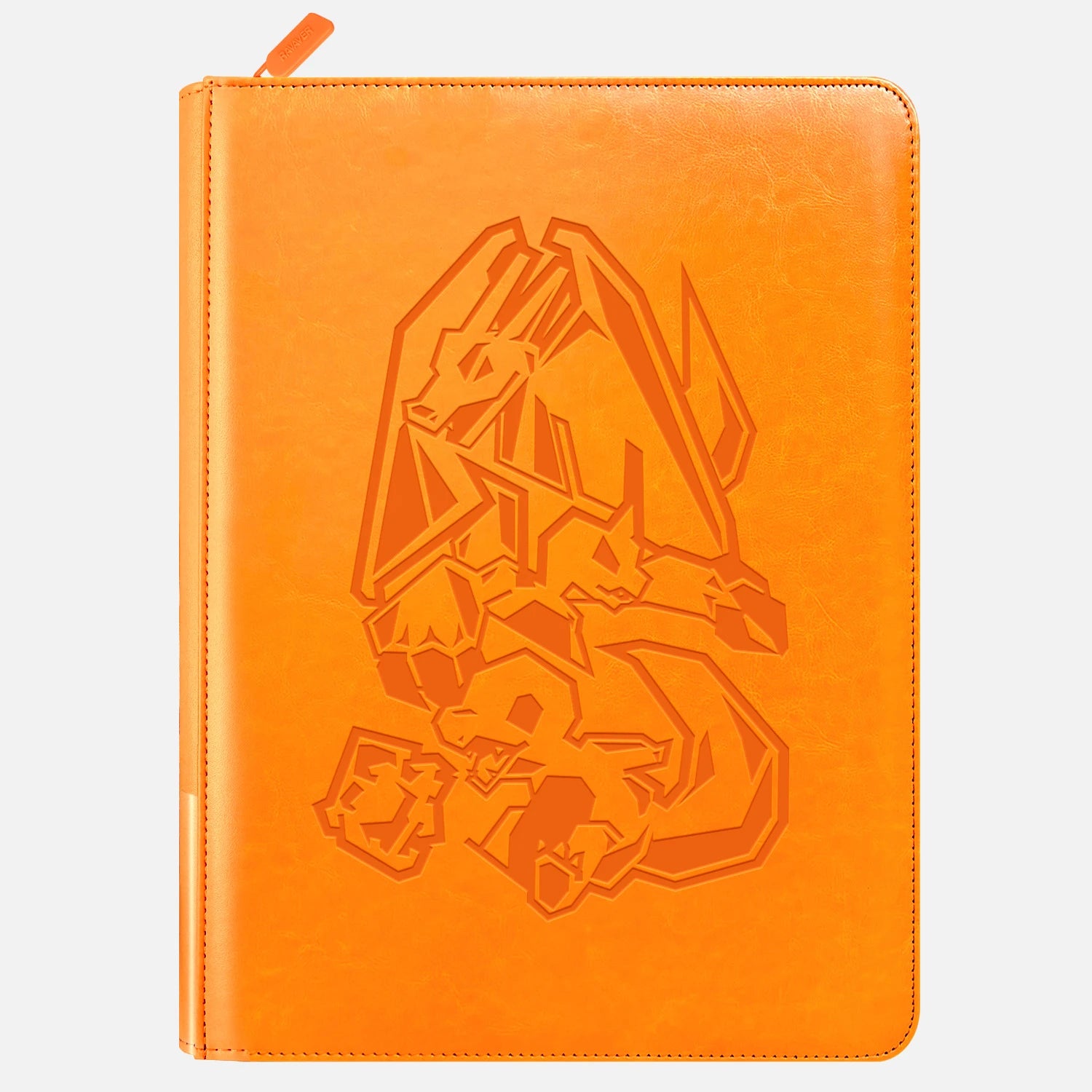
For the binder layer specifically, Ravaver builds Pokemon-themed toploader binders that handle the social side of the stack and the archival side at the same time. PVC-free pages, full-zip closure, and pocket sizing that fits sleeved or double-sleeved cards. The same binder that protects your chase cards from edge whitening is the one you can pull out at a trade table without explaining why you brought it.
Sources:
- PSA Blog, "Keys to Trading Card Storage and Preservation," retrieved 2026-05-13, blog.psacard.com
- PSA, "Trading Card Grading Service," retrieved 2026-05-13, psacard.com
- Northeast Document Conservation Center, "Preservation 101: Storage and Handling of Media Collections," retrieved 2026-05-13, nedcc.org
- Archival Methods, "Using Plastics in Archival Storage," retrieved 2026-05-13, archivalmethods.com
- Dragon Shield, "Are Dragon Shield Sleeves Acid Free?", retrieved 2026-05-13, about.dragonshield.com