Three collectors. Three setups. Same Charizard ex Special Illustration Rare in a PSA 10 slab. One keeps it in a toploader binder he pages through weekly. One has it screwed into a slab display frame on the wall. One leans it on an open shelf next to a couple of Funko Pops. All three think they made the right call. None of them are wrong, exactly — but only one of them solved for the job they actually care about most.
The toploader binder versus slab display versus open shelf debate gets framed online as if it's three options for the same problem. It isn't. Each one is optimized for a different combination of cost, protection, visibility, and access. Pick wrong and you'll either overspend or hate the result inside a year. Here's the comparison I wish I'd seen when I was setting up my first display in 2018.
Key Takeaways
- Toploader binders win on cost per card, browse-ability, and protection — ideal for the working layer of 50-400 cards you actually interact with.
- Slab display frames win on flex value and damage protection but are the highest cost per card on display, making them best reserved for 5-15 centerpiece slabs.
- Open shelves are the cheapest visible square footage but the weakest on protection — UV, dust, and tip-overs make them risky for anything above \$200 per card.
- Most serious collectors run all three, with a rotating display schedule that moves pieces between layers every 3-6 months to keep the setup feeling fresh.
What each option actually is
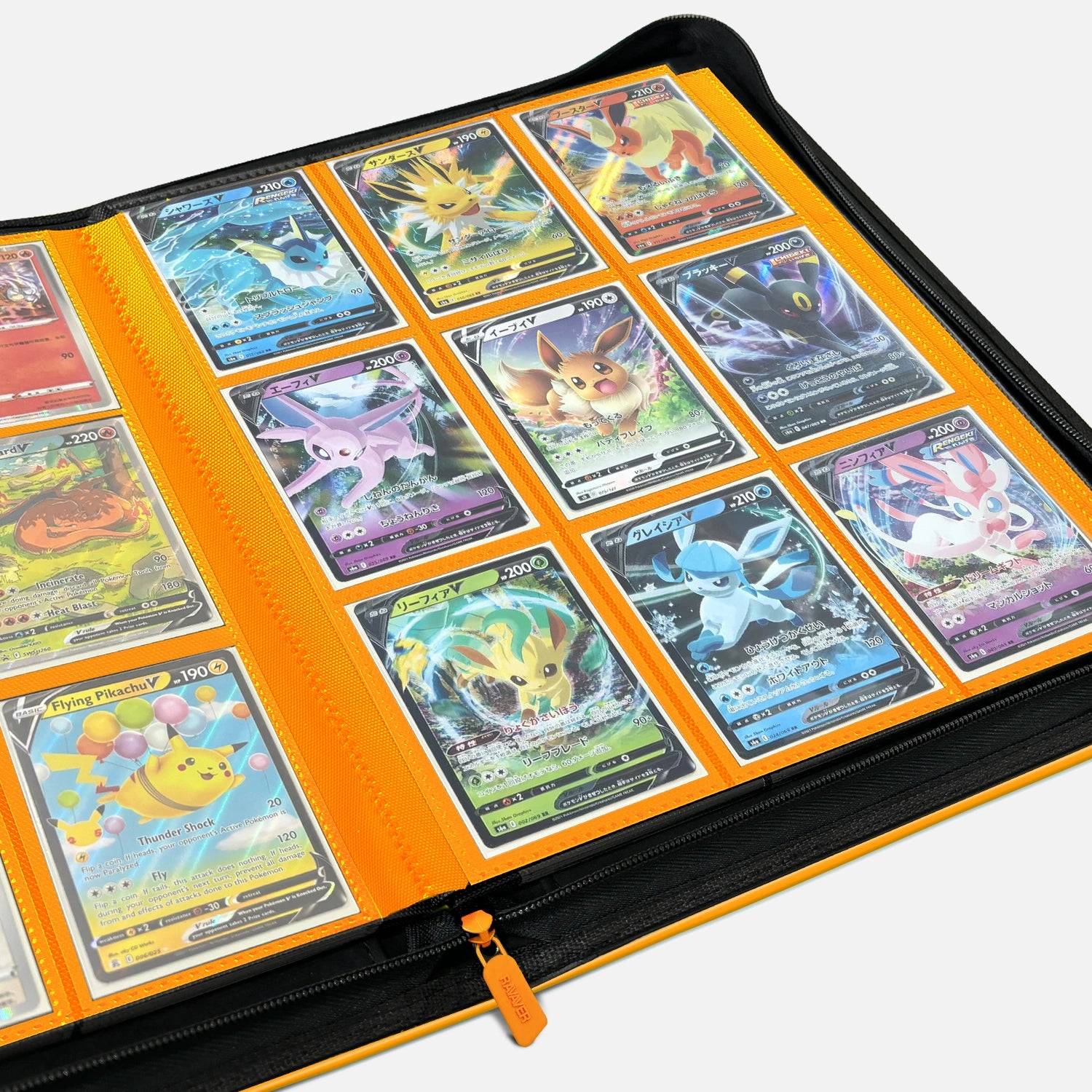
A toploader binder is a zippered or strap-closed binder built with deeper-than-standard pockets that fit cards already inside a hard plastic toploader sleeve. The capacity is usually 360-480 cards in a 9-pocket layout. Cards go in protected and come out without scuffing the edges.
A slab display frame is a wall-mounted or freestanding frame designed to hold one to five PSA, BGS, or CGC graded slabs in their hard plastic cases. The frame has cutouts sized for slab dimensions and usually includes glass or acrylic cover, with some models offering UV-filtering protection.
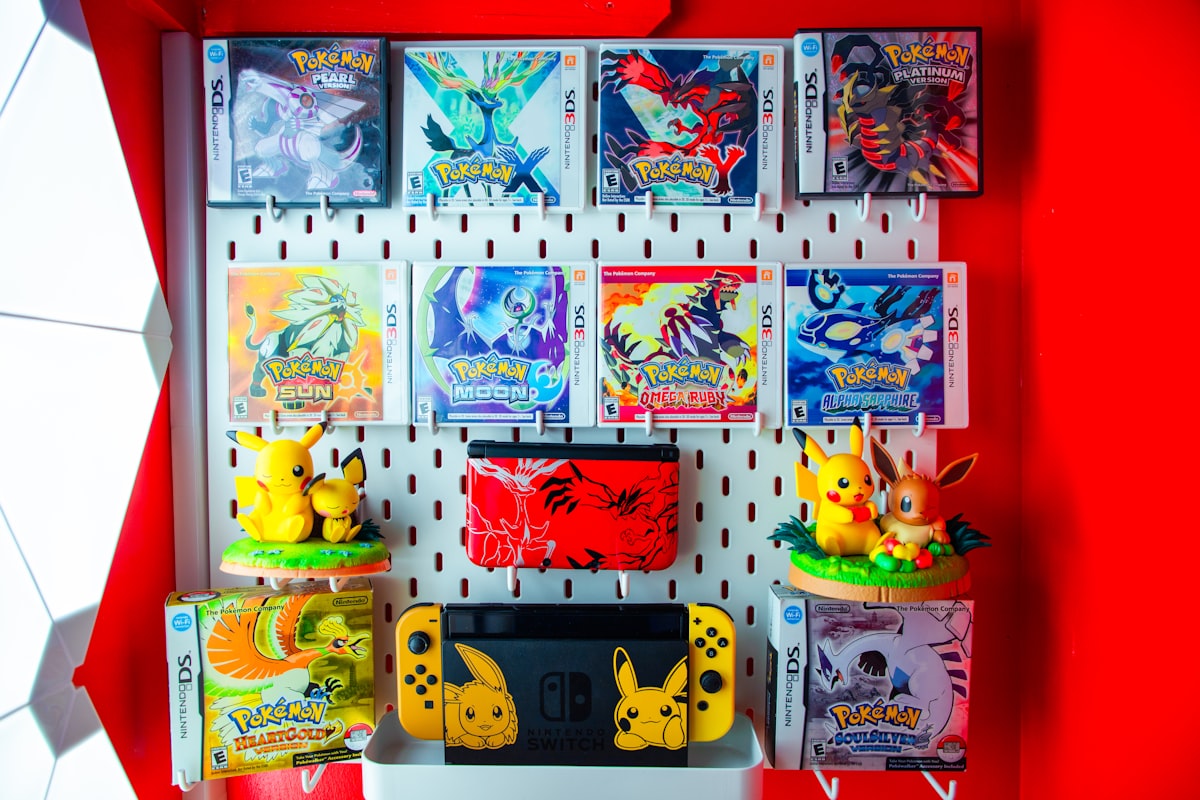
An open shelf is exactly what it sounds like — a wall shelf, floating shelf, or top of a bookcase where cards stand exposed to the room. Cards can be in slabs, toploaders, or even just sleeves, leaning against a small stand or each other.
Head-to-head: the comparison table
| Factor | Toploader Binder | Slab Display Frame | Open Shelf |
|---|---|---|---|
| Typical cost | \$40-\$90 (holds 360-480 cards) | \$30-\$150 per frame (holds 1-5 slabs) | \$15-\$80 (per shelf, capacity varies) |
| Cost per card displayed | \$0.10-\$0.25 | \$10-\$60 | \$1-\$10 |
| Protection from dust | Excellent (zipped enclosure) | Good (glass front) | Poor |
| Protection from UV | Excellent (closed) | Good if UV-filtering acrylic | None unless on interior wall |
| Protection from impact | Excellent | Good (mounted) | Poor (tip-over risk) |
| Visibility for guests | Requires opening | Excellent (wall-mounted) | Excellent (always visible) |
| Phone/content suitability | Great for browse videos | Static, limited angles | Good but background clutter |
| Portability | Excellent (take to shows) | None (fixed) | None (display only) |
| Capacity per square foot | Very high | Low | Medium |
| Best for | 50-400 active cards | 5-15 centerpiece slabs | 10-30 visible pieces with rotation |
Toploader binder: the workhorse
The toploader binder is the modern collector's daily driver. It holds a useful chunk of the collection at the lowest cost per card protected, lets you flip through pieces without unsleeving anything, and travels to card shows in a backpack. For active collectors building set runs or chase pulls, it's not really optional anymore.
Where it wins clearly is the working layer of your collection — the 50-400 cards you actually want to hold, sort, trade, or photograph in any given month. Pulling a slab off a wall frame to handle it is annoying. Pulling a toploader page out of a binder takes two seconds. The lower friction means you actually use the cards rather than just owning them.
The weakness is passive visibility. A binder closed on a shelf is invisible. A binder open on a desk is a flex object, but it's not doing the always-on wall art job. Collectors who try to use binders alone for their show-off setup end up with a closet of expensive binders nobody ever sees.
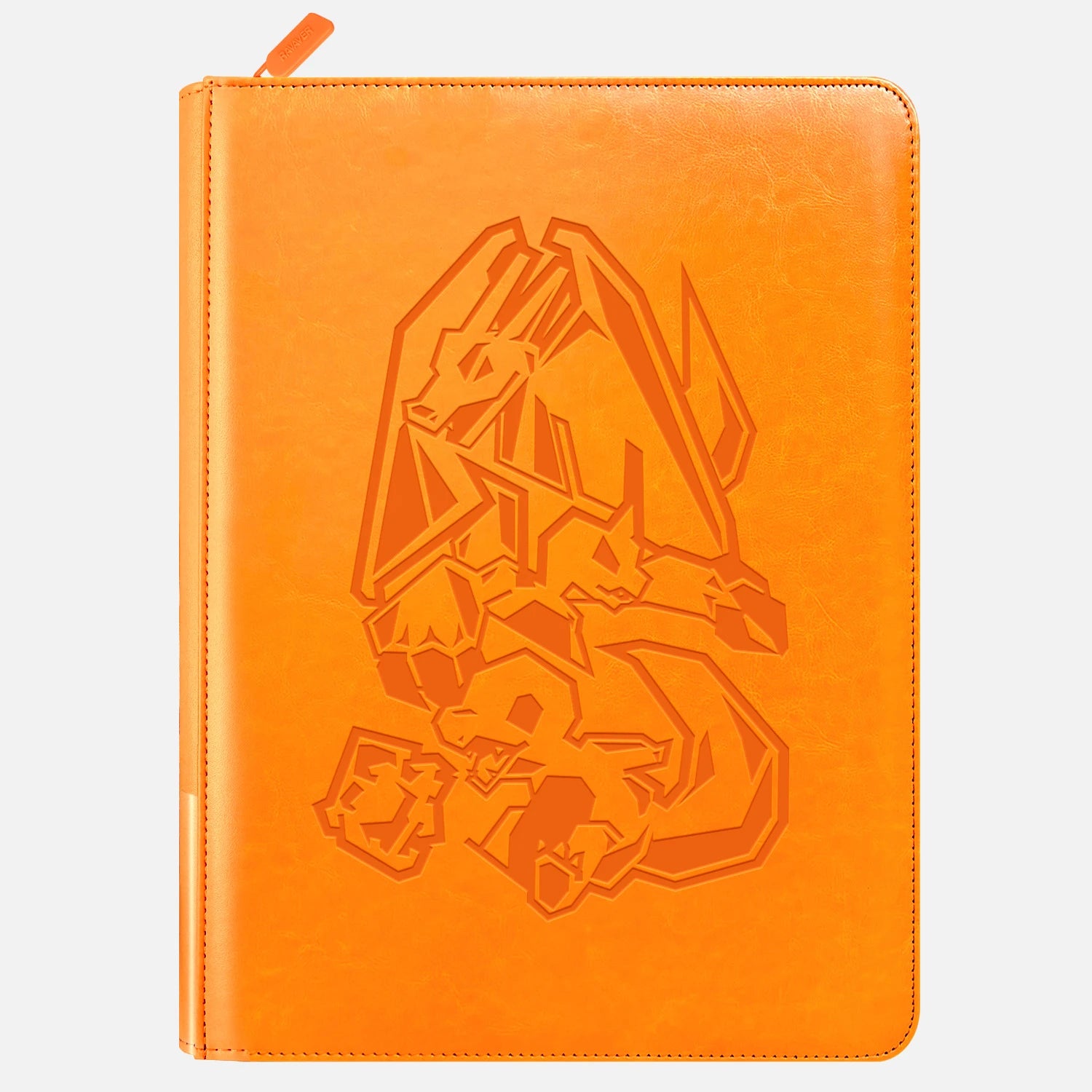
Spec choices that matter for the show-off use case: zippered closure (not strap), full-grain or premium PU exterior (looks like a real product, not a school folder), and 9-pocket toploader-compatible pages with side-loading orientation. We have a deeper binder buying guide covering specs in depth.
Slab display frame: the trophy mount
Slab display frames moved from niche product to mainstream around 2022 when grading volume hit critical mass. They're the cleanest way to mount a PSA 10 on a wall and have it read as a piece of art rather than a hobby artifact.
The math, though. A single-slab framed display runs \$30-\$60. A five-slab gallery frame runs \$80-\$150. If you have 50 graded cards, framing all of them isn't a setup, it's a renovation. The frame approach forces you to edit — which is good for the wall and good for the collection.
Where they earn their cost is the centerpiece role. The 1996 Base Set Charizard. The Umbreon ex SIR. The cards you want family, friends, and your future self to see first when they walk into the room. Five to fifteen of those, framed, with proper lighting (warm 3000K spots at a steeper than 45-degree angle to avoid glare), is the modern equivalent of a private gallery.
One specific watch-out: cheap frames don't seal against humidity, and the glass directly above a slab can act as a heat trap if it's in direct sun. Check the frame for back ventilation and UV-rated acrylic. The piece you're framing is probably the most expensive single object in the room — the frame is not the place to save \$20.
Open shelf: the easy mode
Open shelves are the cheapest, fastest way to make cards visible. A floating shelf, a few mini easel stands or acrylic risers, and your top 10 pieces are out in the room in about 20 minutes. For a starter setup with renter-friendly constraints, this is hard to beat.
The trade-offs add up over time. Dust settles on slab cases and inside the labels — cleanable but constant. UV exposure fades cards in toploaders within a couple of years on an exterior wall. Tip-over risk is real if you have pets, kids, or a household with lots of foot traffic. And the visual upgrade ceiling is lower — a shelf full of slabs leaning at the same angle starts looking samey fast.
Where open shelves earn their place is the working-layer accent zone. The 5-10 pieces you want visible right now that aren't your absolute top trophies. Lower-grade copies of cards you also own in PSA 10. Sealed product. Themed displays like "all the Eevee evolutions" or "every Charizard print I have." Pieces under \$200 each where the protection is good enough.
Skip the open shelf for anything over \$500 per card. The cost-of-loss math doesn't work out compared to a closed cabinet or a frame.
The rotating display tactic most collectors skip
The single biggest setup upgrade I made in the last five years cost nothing. I started rotating what was visible.
Here's the move: every three months, swap 30-50% of what's on the trophy wall, the open shelf, and the daily binder. Pieces that were in the binder move to display. Pieces from the display go into the closed cabinet. New pulls or recent purchases get a turn on the wall before they cycle out.
Three reasons it works. First, the same display becomes wallpaper to you within a few weeks — your eye stops landing on it. Rotation re-engages the collection. Second, it forces a quarterly handling and inspection of pieces, which catches early signs of slab cracking, sleeve yellowing, or moisture damage. Third, it makes the collection feel bigger than it is — friends visiting in March see different pieces than friends visiting in September.
The rotation matrix only works if you have all three storage modes. A binder alone has nothing to rotate to. A wall of frames alone is fixed. The combination is what unlocks the move.
How to allocate a starter budget across all three
If you're building a setup from scratch with around \$300 for display gear, here's roughly how I'd split it for a collection of about 200-400 cards with 5-10 graded slabs:
- \$60-\$90 on one quality toploader binder (your working layer, also your show binder)
- \$80-\$120 on a 5-slab gallery frame for centerpiece pieces
- \$40-\$80 on one floating shelf with built-in or puck lighting
- \$30-\$60 on a black PU leather photo mat and a basic ring light for content
This split gets you all four jobs covered — working, trophy, accent, and content — instead of pouring everything into one mode and wondering why the setup feels off. Read the full complete show-off setup guide for how the layers work together.
The verdict
If you only buy one: toploader binder. It does the most jobs for the least money, and you'll use it daily even after you upgrade everything else.
If you only display one piece: slab display frame for the actual trophy.
If you want everything visible at once on a tight budget: open shelf, but accept the protection trade-offs and keep pieces under \$200 each.
If you're building seriously: all three, with rotation.
Frequently Asked Questions
Can I put graded slabs in a toploader binder?
Standard toploader binder pages don't fit graded slabs — PSA, BGS, and CGC cases are too thick. Some manufacturers make slab-specific binder pages, but capacity drops dramatically (usually 2-4 slabs per page instead of 9 toploaders). For a working slab collection, a slab-specific binder is worth considering. For wall display, a slab frame still wins.
Are slab display frames good for resale value?
The frame itself doesn't add to a slab's resale value — the grade and the card do. But frames can prevent damage that hurts resale, especially fingerprints on the slab plastic and impact dings if the slab gets handled often. For long-term hold pieces, the frame protection is worth the cost. For pieces you might flip in the next year, a closed display case is more practical.
Will UV light damage my cards on an open shelf?
Yes, over time. Direct sunlight on cards causes visible fading and color shift within 6-24 months depending on intensity. Indirect daylight through a shaded window is much slower but still cumulative. Cards on an interior wall away from windows are essentially safe. UV-filtering sleeves and acrylic help but don't fully eliminate the effect over years.
How many graded slabs is too many to wall-mount?
There's no hard limit, but visually most rooms hit saturation around 20-25 framed slabs. Past that, the wall starts reading as cluttered rather than curated. Collectors with larger graded collections usually move to a glass-front cabinet or a built-in display unit that holds 50-100 slabs in an organized grid — different aesthetic, different cost tier.
Can I mix raw cards and slabs in the same display?
Yes, but keep them visually grouped rather than scattered. A shelf with one section of slabs at a consistent angle and another section of toploader-housed raw cards on small easels reads as intentional. Mixing them card-by-card across the same row reads as messy. Group by storage mode, then within each group, group by character or set.
What about graded card holders that aren't frames — are they worth it?
Acrylic slab stands cost \$5-\$15 and let you display individual slabs on any flat surface without mounting. They're great for the open shelf use case and for collectors who change their setup often. The downside is zero impact protection — a slab on a stand can tip and crack the case. For pieces over \$500, frames or cabinets are safer.
Next step
Audit your top 15 pieces first. Decide which 5 belong on the wall, which 10 belong in the working binder, and what gets rotated in next quarter. The decisions get easier once you've named the pieces. If you're shopping for the binder side of the setup, the Ravaver toploader binders are built for collectors running this kind of layered system — deep pockets, full-zip closure, Pokemon-themed covers that hold up at a card show.
Sources: