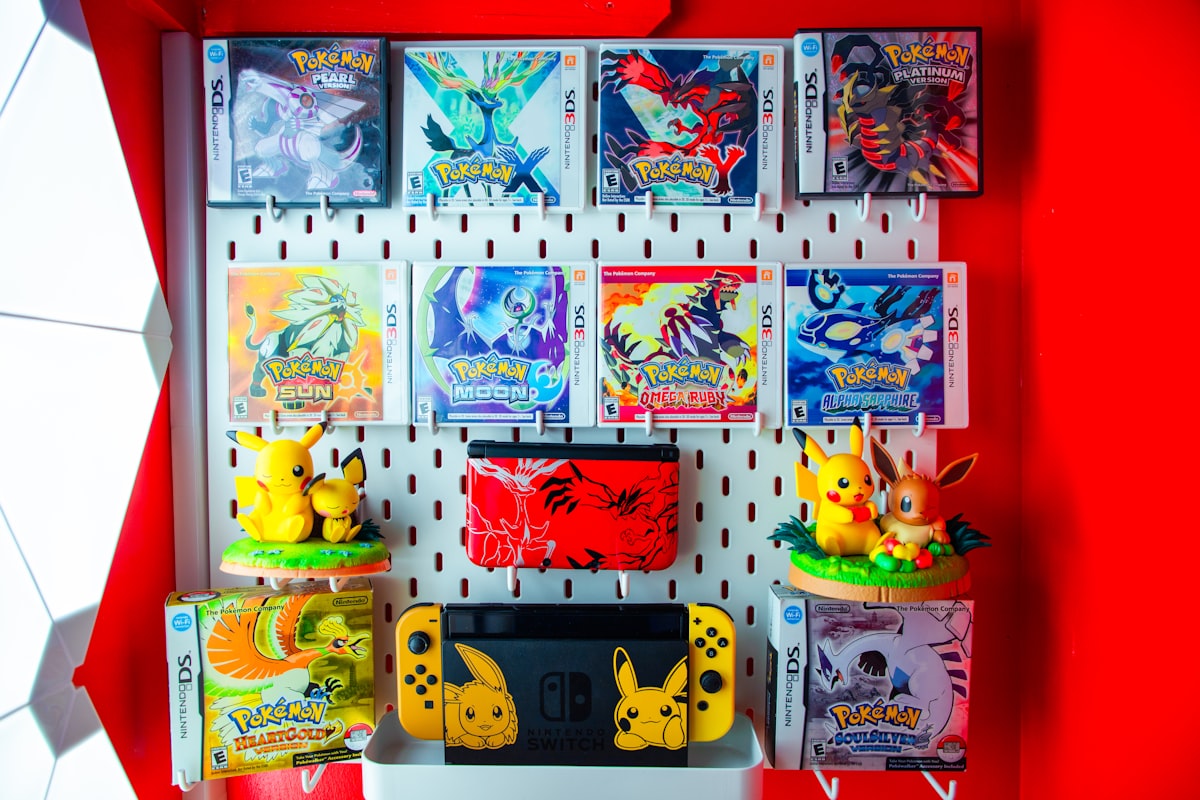
You walk into your buddy's place. The dude collects Yu-Gi-Oh, you collect Pokemon, doesn't matter — the first thing your eye does is scan the shelf. Where are the slabs? What's the centerpiece? Is the lighting hot or cold? Does the binder on the desk look like it costs more than the coffee table?
That instinct is doing all the work. The fact that you build a setup at home means you've already decided that other people seeing your cards is part of the point. The question is whether your setup is doing four jobs at once or just one — and most collectors are building for one and wondering why the other three fall flat.
A show-off setup at home is a visibility system, not a display project. It serves your daily pride, your phone camera, the friend who stops by, and the binder you grab when you head to a card show on Saturday. Get those four jobs straight and the whole setup snaps into place.
Key Takeaways
- A complete show-off setup runs on four jobs — daily pride, IG/TikTok content production, friends visiting, and trade-table prep — and the rookie mistake is optimizing for one and ignoring the other three.
- PSA graded over 11 million TCG cards in 2025, with roughly 6 million PSA 10 Gem Mints added to the market in one year — meaning the slab-as-trophy is now the cultural default, not a fringe move (SI cllct, 2025 PSA grading data).
- The four-layer system: trophy wall (slabs), working layer (binders), photo zone (lighting), and grab-zone (what you take to shows). Each layer has different priorities for lighting, security, and rotation.
- Most home invasions linked to TCG collections start with a public post — Reddit's r/PokemonTCG has a recurring "how much should I show" thread for a reason. Privacy and visibility aren't opposites; they're trade-offs you set deliberately.
What is a Pokemon "show-off setup" actually for?
A show-off setup is the section of your home — usually a desk, shelf, or wall — built around being seen with your collection rather than just storing it. The protection layer is solved by sleeves, toploaders, and binders. The show-off layer is a separate question: how does this collection make you feel when you sit at your desk, and how does it look in the back of your phone videos?
Three things happen once a collection moves past about 200 sleeved cards or its first PSA 10. The shoebox method stops working. Your daily routine starts including a 30-second "check on the cards" loop, like checking on a fish tank. And other people — partners, roommates, friends — start asking what they're looking at. At that point you're already running a setup; the only question is whether you're running it on purpose.
The four jobs a serious setup has to do
Every collector I've talked to over 15 years of being in the TCG ends up running their setup for some mix of these four jobs. The ones who feel good about their space have all four solved. The ones who keep tearing it down and starting over have usually optimized for one and ignored the other three.
Job 1: Daily pride (the one you do for yourself)
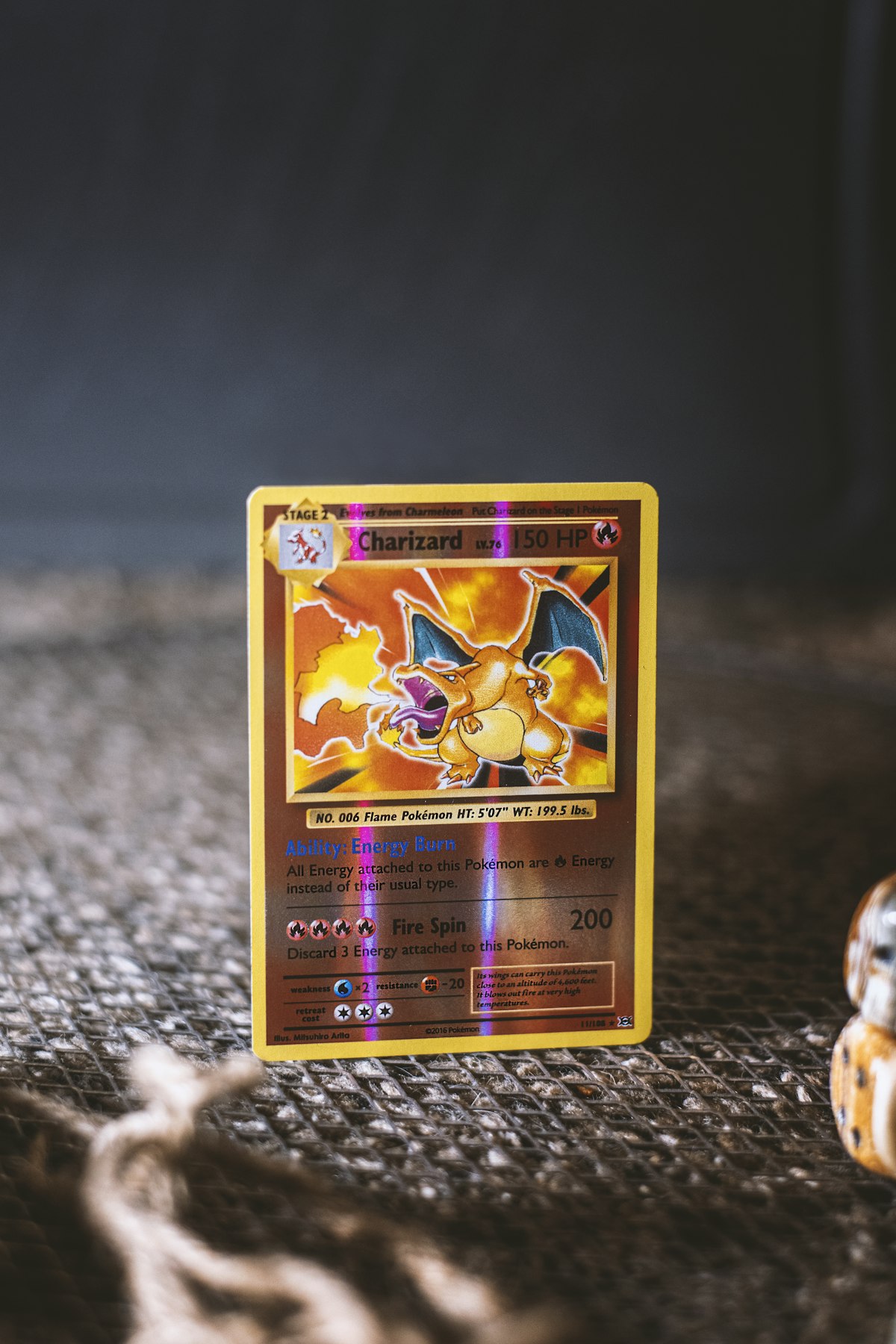
This is the layer that exists for nobody but you. The Charizard ex SIR that you pulled and got back from PSA as a 10. The vintage Blastoise you traded three modern chase cards for. The first Eevee evolution slab that started the binder. You want to be able to glance over from your desk at 11 p.m. and see them lit. No camera, no audience.
The mistake here is overbuilding for guests. If everything in the trophy zone is what your friends would notice, you've designed a stage instead of a home. Keep at least one piece in the daily-pride zone that nobody else gets — the slab you bought on a bad day to feel better, the bulk-pull that means something only to you.
Job 2: Phone-camera ready (the IG/TikTok zone)
Even casual collectors film a pull or two a month. The 25-35 male collectors who make up the bulk of the modern hobby are running phones in landscape for TikTok and portrait for IG. If your photo zone is wherever the cards happened to land, every video starts with you tidying for 90 seconds before you can shoot.
Photo zones don't need a fancy setup. A 16-inch by 24-inch piece of black PU leather or matte paper, two LED panels or a single 18-inch ring light at 5500K, and a phone tripod that hits the camera at a 45-degree angle. Total budget under \$80 and your content stops looking like a hostage video. We have a full photography setup for collectors guide that breaks down the angle math.
Job 3: Friends visiting (the social proof zone)
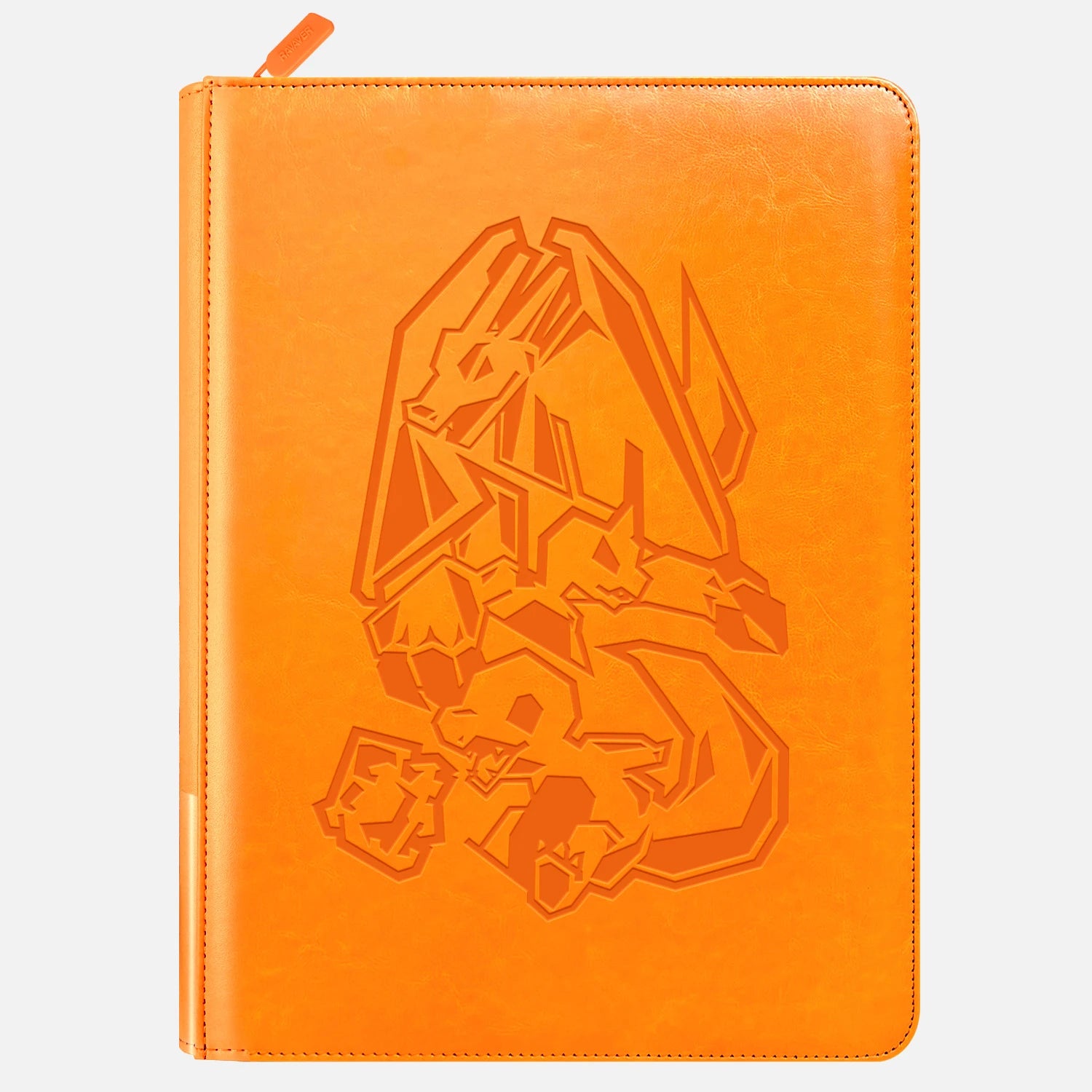
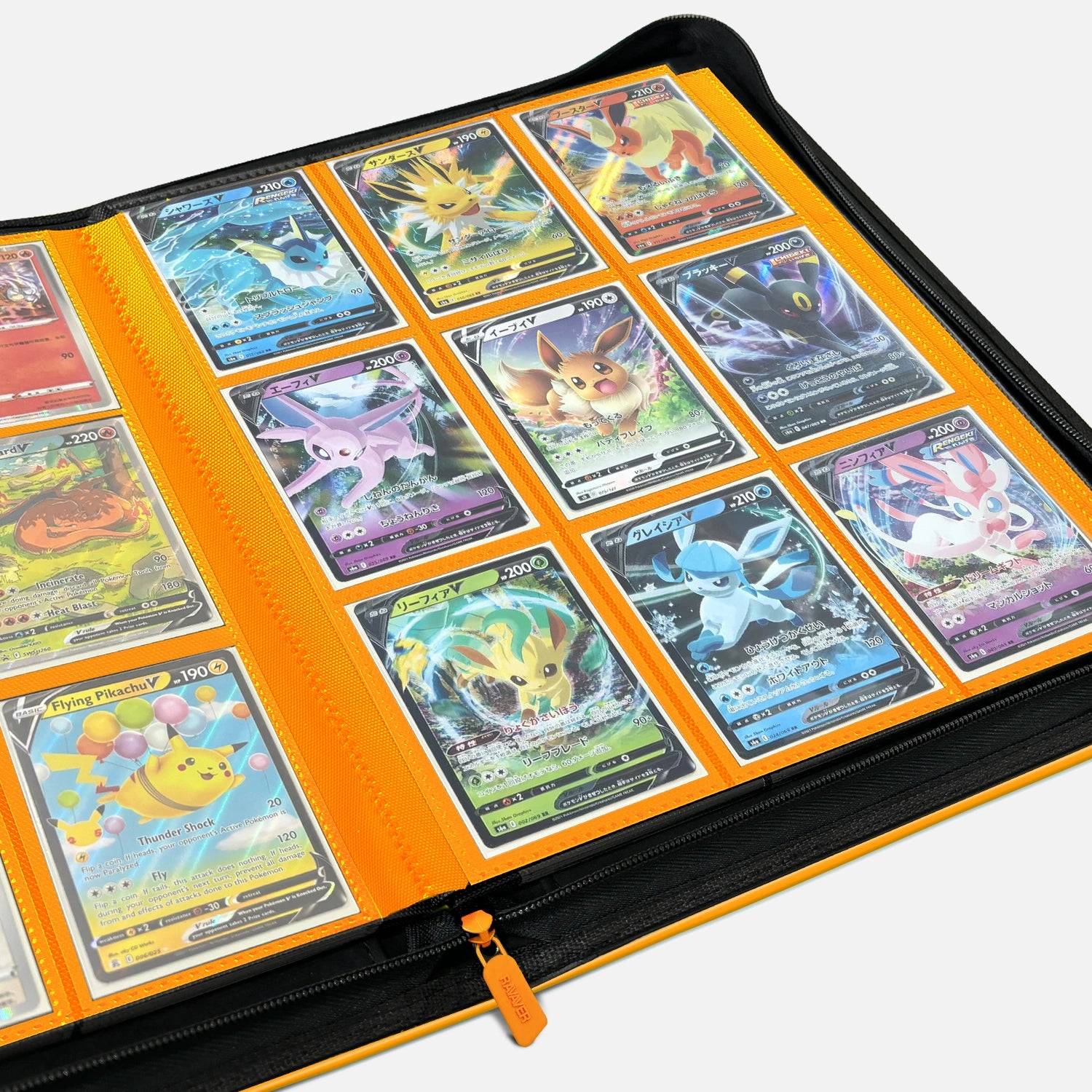
This is the zone where the binder lives — the one you grab off the shelf when somebody asks "what are you working on lately?" The protect-and-show binder is the modern collector's flex object. r/PokemonTCG has a recurring thread that goes something like "my buddy came over and now he wants to start collecting" — that conversion happens with the binder, not the shelf. A binder you can hand someone is doing work the wall can't.
The trap here is mismatched quality. A 480-card thick-stock zippered binder on the desk next to a \$2 store flexi-folder is the visual equivalent of wearing one nice shoe. Pick one good show binder for the friends-visiting zone and keep the cheaper utility binders out of sight.
Job 4: Trade-table prep (the grab zone)
If you're going to a card show, a local LGS trade night, or even just meeting up with a couple of collectors, what you grab off the shelf has to be ready. Toploader binders, slab books, trade-bait section — all visible, all packed. The setup that fails this job is the one where Friday at 8 p.m. you're tearing apart your collection trying to find the trade folder.
Our trade table playbook from earlier this week covers the bring list. The home setup angle is: every item on that bring list should have a home in your trade-table grab zone, and that zone should be one shelf or one drawer, never scattered.
The four-layer setup, mapped
Once you've sorted the four jobs, the physical setup becomes a four-layer stack. Each layer has different requirements for lighting, security, and how often it rotates.
| Layer | What lives here | Best location | Lighting | Rotation |
|---|---|---|---|---|
| Trophy wall | Top 5-10 graded slabs, signed pieces, grail cards | Wall opposite desk or behind monitor (in eyeline) | Warm directional spots (3000K), angled to avoid glare | Quarterly |
| Working layer | Active set-completion binders, sealed product on display, current chase hunts | Open shelf or floating shelves at eye level | Ambient room light + one accent | Monthly |
| Photo zone | Black mat, ring light or LED panels, phone tripod, microfiber cloth | Desk surface or a fold-down table | 5500K daylight, 45-degree off-axis | Set up only when shooting |
| Grab zone | Show binder, toploader binder, trade folder, pen/loupe pouch | One closed shelf or drawer near the door | None needed | Before every trade trip |
The reason this works is that each layer has a job, so each layer's design choices answer to a single question. The trophy wall isn't trying to be photo-ready (warm light kills white balance for shooting). The photo zone isn't trying to be always-on (it's only set up when you're shooting). The grab zone is closed because nothing about it needs to be visible. Everyone breaks this hierarchy and pays for it.
The grading-era pressure on "show-off" decisions
The volume of grading has changed what a serious display looks like. PSA graded close to 20 million items in 2025, with more than 11 million of those being TCG cards — overwhelmingly Pokemon (cllct grading data). With a gem rate near 50%, that's roughly 6 million PSA 10 slabs added to the supply pool in a single year.
What that means for your setup: the slab is no longer a rare object. A wall of 30 slabs that would have read as elite in 2019 reads as the cost of entry in 2026. The flex moved up the rarity ladder — modern Special Illustration Rare alt arts in PSA 10, vintage WOTC in slabs above 8, and the storage method itself. The binder, the case, the way you light the wall — those signal the level now, not the slab count.
The collectors I see making the biggest visual upgrades in 2026 aren't adding more slabs. They're tightening the trophy wall down to 8-12 pieces, upgrading the binder, and finishing the room with one strong piece of furniture or lighting. Less, but heavier.
Lighting: the part most setups get wrong
If you've ever bought a card you saw in a video and felt mild disappointment when it arrived, you've been on the receiving end of good content lighting. Lighting is what separates a setup that looks like a collector's room from one that looks like a sales floor.
Two rules cover most cases. The trophy wall wants warm, directional light hitting the slabs from above and slightly off-center. Picture-frame lights or small puck LEDs in the 2700K-3000K range work; daylight bulbs make the room feel like a dentist's office. Cards behind glass need the light angle steeper than 45 degrees, otherwise you get a giant reflection where the card should be.
The photo zone wants cool, even light — 5500K daylight, two sources at 45 degrees off the camera axis, or one big diffused source plus a bounce card. Holo cards reveal their best detail when the light skims across the surface rather than hitting it head-on. That's why every good pull video has the creator slowly tilting the card; they're looking for the angle where the foil catches.
Security: what nobody talks about until it's too late
Pokemon card theft moved from niche concern to mainstream news cycle over the last two years. A shop robbery in Pennsylvania this year saw nearly \$10,000 in cards walk out the door. A UK collector lost a collection valued at over £200,000 to a home break-in (gamingbible coverage). CNN ran a piece in April 2026 framing Pokemon cards as an international crime spree, which is a strange sentence to read but also a real signal about where the market is.
None of that means hide everything in a safe. It means a few practical adjustments to a show-off setup:
- The trophy wall is not visible from the street. Curtain or angle the room so a window doesn't broadcast it.
- Anything over \$500 in single-card value goes in a slab and stays in a closed cabinet or drawer when you're not actively showing it. The trophy wall holds replicas, lower-value graded copies, or the same series in lower grade.
- Insurance — a homeowner's or renter's rider for collectibles runs surprisingly cheap once you have an itemized list with grades and serial numbers.
- Public posts of your full collection with dollar values attached are the single biggest amplifier of risk. Post pulls, post grails, but don't pair them with a running tally.
We have a longer piece on whether and how to share your collection value publicly that goes deeper on this.
Budget tiers: what a real show-off setup costs
Most setup guides skip the money question. Here's roughly what each tier looks like as of mid-2026, assuming you already have the cards.
| Tier | Spend on display gear | What you're getting |
|---|---|---|
| Starter | \$150-\$300 | One quality 480-card show binder, a 9-pocket display sheet, basic puck lights, photo mat |
| Mid | \$400-\$900 | Adds a wall shelf with picture lights, one slab display frame for the centerpiece, a proper ring light or LED panel kit for content |
| Built | \$1,200-\$3,000+ | Glass-front lockable cabinet, color-controlled spotlights, multiple binders for different sub-collections, two-light photo zone with backdrop, lockbox for high-value slabs |
The starter tier covers most of what a collector with 1-3 chase grails actually needs. The mid tier is where the setup starts feeling like a room someone designed on purpose. The built tier is for collectors clearing five figures in collection value who want it to feel like a private gallery.
How to build it in the right order
Done in the wrong order, a setup costs twice as much and you end up replacing things. Done in the right order, every upgrade is additive.
- Audit the collection first. Know what you have, what's graded, what's worth displaying, what should stay in long-term storage. Use a spreadsheet or one of the inventory apps; just have the number.
- Solve protection before display. Sleeves, toploaders, binders, vaults — get your storage stack sorted so the show-off zone isn't doing protection work.
- Pick the trophy 8-12 first. Not the whole shelf. The actual centerpiece. Build the wall around those pieces.
- Buy the binder before the wall fixtures. A binder is used daily; wall lighting is used passively. The ROI per dollar is much higher on the working object.
- Photo zone last, but cheap. Don't sink money into wall art before the content layer. A \$60 ring light and a black mat is enough to look pro.
- Rotate, don't add. Every six months, swap pieces between the trophy wall and the working layer. Keeps the room feeling new without spending.
Common setup mistakes that kill the whole thing
- The cluttered shelf. More than 15 visible objects starts reading as hoarding. Edit.
- Mixing eras visually. Vintage WOTC and modern alt arts both look great, but on the same shelf they fight. Group by era or by character set, never random.
- Wrong height. Eye level is the rule. Slabs above the door or below the desk get ignored.
- Window-facing trophy walls. UV fades, period. Even "UV-coated" sleeves don't fully solve it over years. Move the trophy wall to an interior wall.
- Letting the photo zone double as the trophy zone. They have opposite lighting needs. Either separate them or accept that you'll be moving lights every time you shoot.
- Skipping the grab zone. If you ever go to a show, this layer matters more than the wall.
Frequently Asked Questions
How many cards do I need before a "show-off setup" makes sense?
The threshold isn't card count, it's whether you have any pieces you specifically want seen. Most collectors hit that point around their first PSA 10 or their first set of completed chase pulls. If you have at least three pieces you'd point a friend at, you have enough to build a trophy layer. Below that, focus on storage instead.
Should I display graded slabs or raw cards in toploaders?
Graded slabs are designed for display — they're scratch-resistant, tamper-proof, and easier to mount. Raw cards in toploaders work, especially for cards under \$100 where grading doesn't make financial sense. The hybrid setup most collectors land on is slabs for the centerpiece and toploaders for the working layer. We break the trade-off down in the slabs vs raw decision guide.
What lighting color temperature should I use for displaying cards?
Use 2700K-3000K warm light for the trophy wall and 5500K daylight for the photo zone. Warm light makes the room feel like a gallery; daylight makes content look color-accurate. Mixing them in the same space creates muddy reflections and bad photos. If you only have one light source, pick the one that matches the job you do most.
How do I keep my setup from looking like a kids' room?
Three moves: limit visible objects to under 15, group by visual theme rather than scattering, and replace any neon-bright accents with one neutral surface (black PU leather mat, dark wood shelf, matte gray frame). The cards bring the color; the surroundings should be quiet. If the room reads as "hobby corner" rather than "collector's space," it's usually the background, not the cards.
Is it worth insuring my Pokemon card collection?
Once the total replacement value crosses about \$2,000, a collectibles rider on your homeowner's or renter's insurance is almost always worth the cost — typically \$1-\$2 per \$100 of insured value annually. Keep an itemized list with grades, serial numbers, and recent comp prices from TCGplayer or eBay. Most policies will pay out on theft, fire, and water damage; very few cover gradual environmental damage like UV fading, which is why the trophy wall placement matters.
How often should I rotate what's on display?
Every three to six months for the trophy wall, monthly for the working layer. The reason is psychological — the same display becomes wallpaper to you within a few weeks, and a rotation re-engages the collection. It also forces you to handle and inspect cards regularly, which catches early signs of damage or moisture.
Can I run a show-off setup in an apartment without permanent fixtures?
Yes, and most modern setups are renter-friendly. Picture rails, peel-and-stick LED strips, freestanding display cabinets, and command-strip-mounted shelves cover most of what you'd want. The trophy wall doesn't need to be a wall — a tall bookcase with internal lighting or a glass-front credenza does the same job and goes with you when you move.
Next step
Start with the trophy 8-12 pieces. Decide what they are this week, before you spend a dollar on shelves. The whole setup gets easier once you know what it's pointing at. If you're working on the binder side of the setup, the Ravaver binder collection is built for the show-off layer specifically — Pokemon-themed covers, toploader-compatible, with the kind of build quality a friend notices when you hand it to them.
Sources:
- SI cllct, “Pokemon Powers 2025: PSA's Biggest Grading Year in Company History,” retrieved 2026-05-15, link
- cllct, “Pokemon cards dominating grading submissions in 2025,” retrieved 2026-05-15, link
- PSA Population Report, retrieved 2026-05-15, link
- CNN Business, “Pokemon cards are igniting an international crime spree,” April 2026, retrieved 2026-05-15, link
- GamingBible, “Thieves steal $200,000 Pokemon card collection,” retrieved 2026-05-15, link