Most collectors put off building real card storage because they assume it costs hundreds. Then a heat wave hits, the AC fails for three days, and they pull a $200 chase card out of a regular plastic shoebox with edge whitening that wasn't there last summer. The actual cost of a properly built long-term storage box for a few thousand Pokemon cards is about $75 and a Saturday afternoon.
This guide walks through the exact build, the parts list, where the temptation to cheap out costs you 10x more later, and the one upgrade most builders skip that doubles the system's effective life. The target setup holds roughly 2,000 to 3,000 sleeved cards or 500 to 800 toploaders.
Key Takeaways
- A long-term Pokemon card storage box that meets archival standards costs about $75 total: $40 for the box, $20 for inserts and dividers, $10 for humidity control, and $5 for a hygrometer.
- The single biggest mistake is using clear plastic bins from Target or Walmart. The plastic is usually a polyethylene blend that off-gasses and isn't archival safe.
- Polypropylene archival boxes (BCW, CardboardGold, Gemloader) are the standard for paper-based collectibles and cost roughly the same as the wrong plastic bin.
- Add a rechargeable silica gel canister and a hygrometer. The two upgrades together cost $15 and prevent the slow humidity damage that destroys most home-stored collections.

What this $75 build actually gets you
Before walking through the steps, here's the target setup. The build holds about 2,500 sleeved cards across two compartments (one for current set bulk, one for tier-2 keepers), plus a separate slot for toploaders. It maintains relative humidity within the archival range of 30 to 50 percent year-round in most US climates with central air, and it survives a 4-day AC outage without spiking past 55 percent. It fits on a closet shelf or under a bed.
What it isn't: a substitute for a climate-controlled professional vault if you're storing a five-figure collection. Above that value, the math changes and a service like the PSA Vault or a similar climate-controlled storage facility starts to make sense.
Step 1: Buy the right box ($40)
The box is the foundation, and the wrong box undoes everything else. Three options work for this build:
- BCW 5000-Count Storage Box ($15 to $20): The collector standard. Acid-free corrugated cardboard, polypropylene-lined, stackable. Holds about 2,500 sleeved cards or 5,000 unsleeved. Comes in 800-count, 3200-count, and 5000-count sizes. The 5000-count is the right size for this build.
- CardboardGold Card Vault ($30 to $40): Step up from BCW with a magnetic close and reinforced corners. Still acid-free archival cardboard. Worth the upgrade if you're storing higher-value cards and want a box that opens cleanly without flex.
- Gemloader Storage Box ($25 to $35): Mid-tier option. Polypropylene exterior, archival foam interior, good for toploader-heavy collections.
Skip clear plastic storage bins from Target, Walmart, or Costco. The marketing material doesn't say what they're made of, and most are low-grade polyethylene with off-gassing properties that aren't archival safe for paper. The price looks similar to a BCW box, but the long-term cost is much higher.
Step 2: Add dividers and inserts ($20)
An empty 5000-count box with cards loose inside doesn't work. The cards shift, the bottom layer gets crushed under the weight of the top layer, and removing one card disturbs fifty. Three insert types fix this:
- Tabbed dividers ($5 per pack of 25): Cardstock dividers you can label by set, year, or category. Label them with a pen, not stickers (adhesive off-gasses over time).
- Card row spacers ($5 to $10): Acid-free cardboard inserts that compartmentalize the box into rows. Most BCW boxes ship with one or two of these, but more help.
- Toploader inserts ($10): Foam or cardboard sleeves designed to hold toploaders upright in a row. Critical if you're storing graded slabs or single high-value toploaders.
The single best $5 you'll spend in this build is on row spacers. They prevent the cards from leaning, which is what causes the slow bending damage you don't notice until grading time.
Step 3: Add humidity control ($10)
This is the upgrade most home builds skip, and it's the difference between a storage box that protects cards for one year and one that protects them for 20. Two options:
- Rechargeable silica gel canister ($10 to $15): Brands like Eva-Dry and Dry & Dry make 40-gram and 80-gram canisters that absorb humidity, change color when saturated, and recharge in a regular oven. They last for years. One 40g canister handles a 5000-count box.
- Boveda humidity packs ($5 to $10): Designed for cigars but used by some card collectors. They maintain a target humidity (49% is the most relevant pack for cards). They are single-use and need replacement every 4 to 6 months.
The rechargeable canister wins long-term. The cost is a few dollars more upfront, and after the first six months you stop replacing anything. Bake it dry every few months at 200 to 250 degrees Fahrenheit and it's ready for another round.

Step 4: Add a hygrometer ($5)
You can't manage what you can't measure. A small digital hygrometer slips into the box and reads humidity and temperature. The $5 to $10 versions from ThermoPro or AcuRite are accurate to within 2 to 3 percent, which is plenty for storage decisions.
What to do with the reading:
- Check the hygrometer once a week for the first month after building the box. Look for the steady-state reading.
- If the reading is in the 30 to 50 percent range, you're done. The system works.
- If the reading is consistently above 55 percent, add a second silica gel canister or move the box to a more controlled room (interior closet on the first or second floor).
- If the reading is below 25 percent, the air is too dry. Cards can get brittle. This is more common in winter in cold climates with running heaters. The fix is usually a humidifier in the room, not in the box.
Step 5: Pack the cards correctly
The build only works if the cards inside follow the basic stack rules. The full storage stack guide walks through the layered system. For this box specifically:
- Sleeve every card you're putting in. Penny sleeves are fine for bulk, premium sleeves for keepers.
- Stack sleeved cards in rows, label down. Don't pack them tight (need maybe 5 percent breathing room).
- Use the dividers to separate sets or value tiers. Don't mix bulk with chase cards in the same row.
- Toploaders go in their own section, standing upright, not lying flat. Lying flat compresses the bottom toploader and the cards inside it.
- Leave one corner empty for the silica canister and hygrometer. Don't bury them under cards.
Step 6: Place the box correctly
Box placement matters as much as box construction. Three rules:
- Interior closet on the first or second floor. Bedroom closets, hallway closets, and home office closets are the most stable spaces in most homes.
- Off the floor. Set the box on a shelf or in a drawer, not directly on the floor. Floor temperatures fluctuate more than waist-height temperatures, and any small water leak hits the floor first.
- Out of direct sunlight. No matter how stable the closet temperature is, UV from a window can fade card surfaces over years. Closets without windows are the best.
Skip these locations: attics (extreme temperature swings), basements (high humidity in most US states), garages (condensation from cars and concrete), and rooms with exterior walls that face direct sun (heat soak).
The total budget breakdown
| Item | Brand option | Cost |
|---|---|---|
| Storage box | BCW 5000-count or equivalent | $15 to $40 |
| Dividers | BCW tabbed dividers (25 pk) | $5 |
| Row spacers | BCW or Ultra Pro spacers | $5 to $10 |
| Toploader insert | Foam or cardboard sleeve | $5 to $10 |
| Silica gel canister | Eva-Dry 40g rechargeable | $10 to $15 |
| Hygrometer | ThermoPro or AcuRite digital | $5 to $10 |
| Total | $45 to $90 |
The mid-budget build comes to about $75. The cheap version (BCW 5000-count, basic dividers, Eva-Dry canister, basic hygrometer) runs about $45. Both work archivally if you place the box correctly. The difference is durability and ease of use, not cards-safe versus cards-unsafe.
When the storage box stops being enough
This build is rated for collections in the four-figure range. If your collection crosses into five or six figures, the math starts to favor either professional storage like the PSA Vault or a dedicated climate-controlled room with monitoring.
The signals that you've outgrown a $75 storage box:
- You can't physically fit your collection in two or three boxes anymore
- Any single card you own is worth more than the entire box's contents
- You're transporting cards out of the box more than once a month (every removal is wear)
- You're storing graded slabs alongside raw cards (different needs)
At that point, graded cards move into slab cases or display systems, and the most valuable raw cards move into binder-based storage with a toploader binder for portability. The $75 box stays as bulk and tier-2 storage.
Frequently Asked Questions
Can I use a clear plastic bin from the home goods store instead?
Not for long-term storage. Clear plastic bins are usually low-density polyethylene that off-gasses over time and isn't archival rated. The price is similar to a BCW or CardboardGold box, but the long-term effect on cards is meaningfully worse. Use clear bins for temporary moves, not for the box that lives in your closet for 10 years.
How often should I check the hygrometer once the box is set up?
Once a week for the first month, then once a month after that. The readings should be steady in the 30 to 50 percent range. Spike alerts mean the room conditions changed (HVAC issue, seasonal swing) and the silica canister needs recharging.
Does the box need to be airtight?
No, and most archival boxes intentionally aren't. Airtight containers trap humidity at whatever level was inside when you sealed them, which is usually whatever your home was at that moment. Breathable boxes let the silica canister buffer humidity over time, which is what you want.
Can I store sealed booster packs in the same box?
Yes, in a separate compartment. Sealed packs are more durable than individual cards but still benefit from stable humidity. Don't pack them tight against sleeved singles. The wrapper materials are slightly different and shouldn't share long-term contact.
What if my room has wild humidity swings?
Two fixes. First, run a dehumidifier in the room itself (in summer in most US states) and a humidifier in the room (in winter in cold climates with central heat). Second, use two silica canisters in the box instead of one, which doubles the buffer capacity.
Build it this weekend
The whole build takes about 90 minutes if you have the parts. Most BCW and CardboardGold boxes ship in 2 to 3 days from major card retailers, and the silica canister plus hygrometer ships from Amazon overnight. Total elapsed time from "my cards aren't protected" to "my cards are in an archival-rated, humidity-monitored long-term storage system" is about a week.
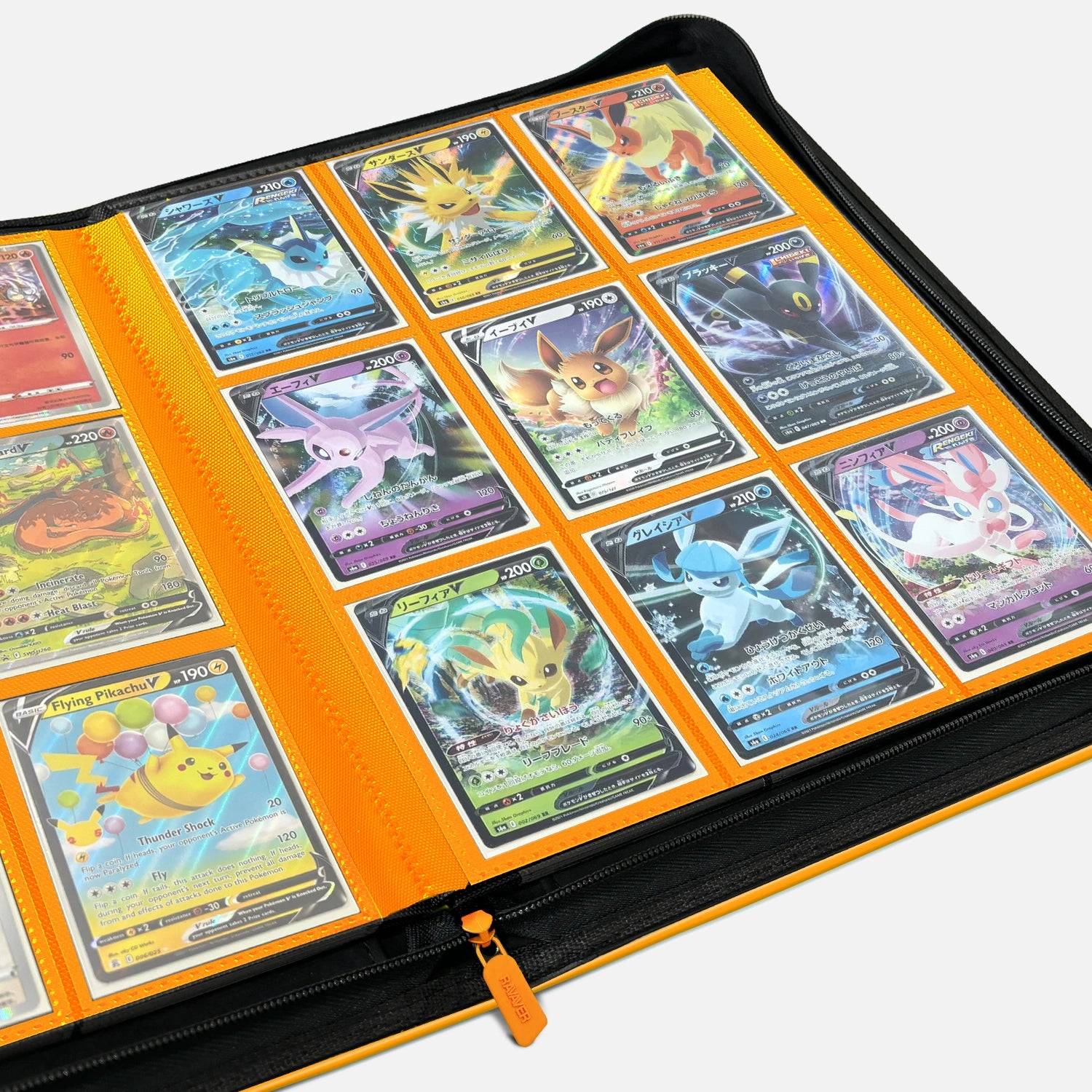
For the cards that need more than a storage box (the chase cards, the binder-page collection, anything you'd bring to a trade table), Ravaver's toploader binder line handles the social side of the stack while a $75 storage box handles the bulk and tier-2 collection. Both layers complement each other, and the box keeps the binder count down to what you actually use.
Sources:
- PSA Blog, "Keys to Trading Card Storage and Preservation," retrieved 2026-05-13, blog.psacard.com
- PSA Vault overview, retrieved 2026-05-13, psacard.com
- Northeast Document Conservation Center, "Preservation 101," retrieved 2026-05-13, nedcc.org