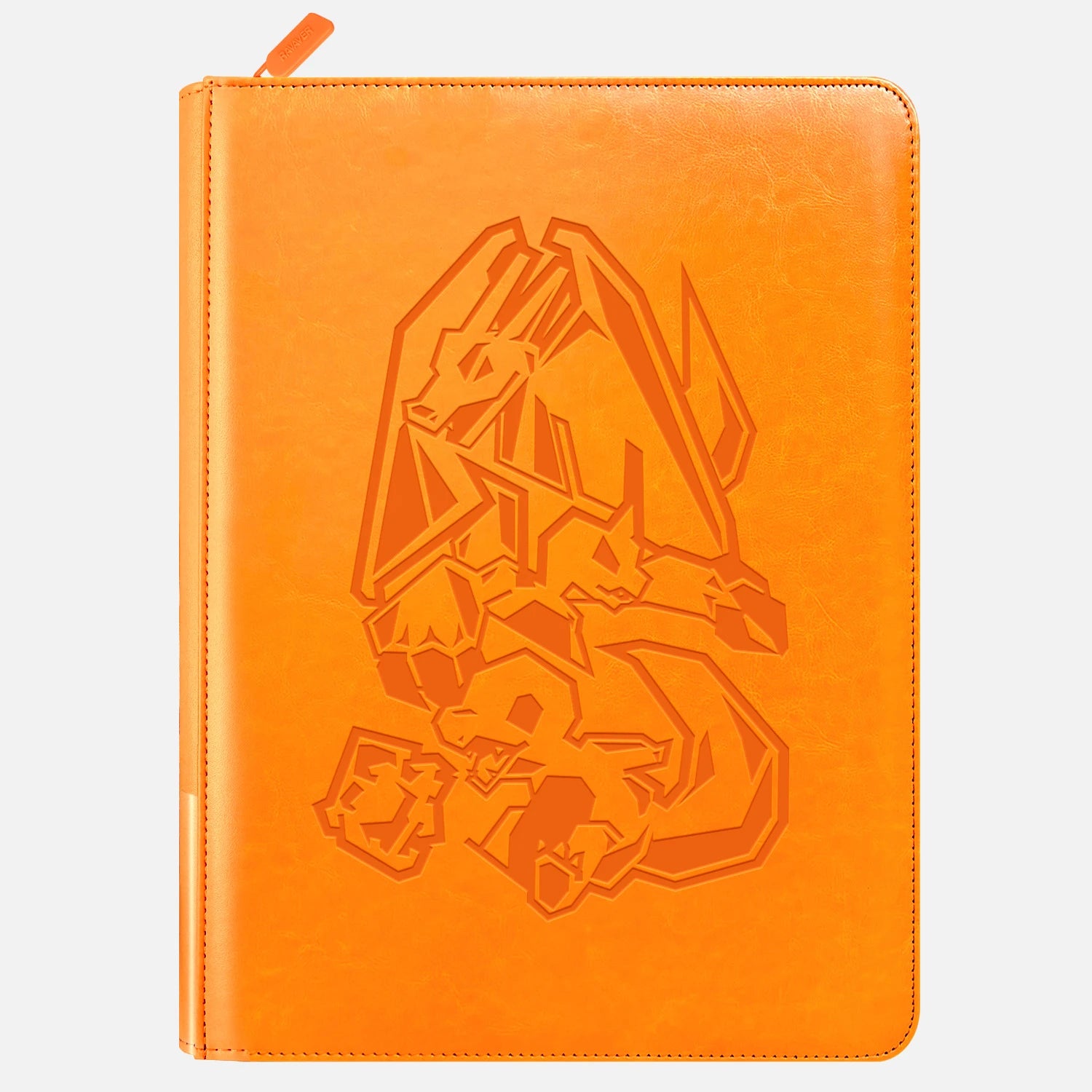
Most binder sizing advice gives you card count and stops there. "Get a 360-card binder if your collection is small, a 720-card binder if it's bigger." That's the wrong question. Card count is the output of the right question, which is: what is this binder for?
A binder you keep at home for set completion is a different size than a binder you take to a card show, which is a different size than a binder built to show off a curated chase collection. Same hobby, three different binders, three different sizes. This piece walks through the decision by use case, not by card count.
Key Takeaways
- Pocket count is fixed by the cards (9-pocket for standard Pokemon cards, 4-pocket for slabs, 12-pocket for high-capacity bulk). The real sizing decision is page count.
- Home binders for set completion: 360-540 cards. Show binders for trade nights: 180-360 cards. Showcase binders for chase cards: 90-180 cards.
- Going over 720 cards in one binder hurts browsability and stresses the spine. Splitting into two binders works better than one oversized binder.
- The right size leaves 20-30% spare capacity for growth. A binder that's already full on day one will need to be replaced within 12 months.
Pocket Count: What 9-Pocket, 4-Pocket, and 12-Pocket Actually Mean
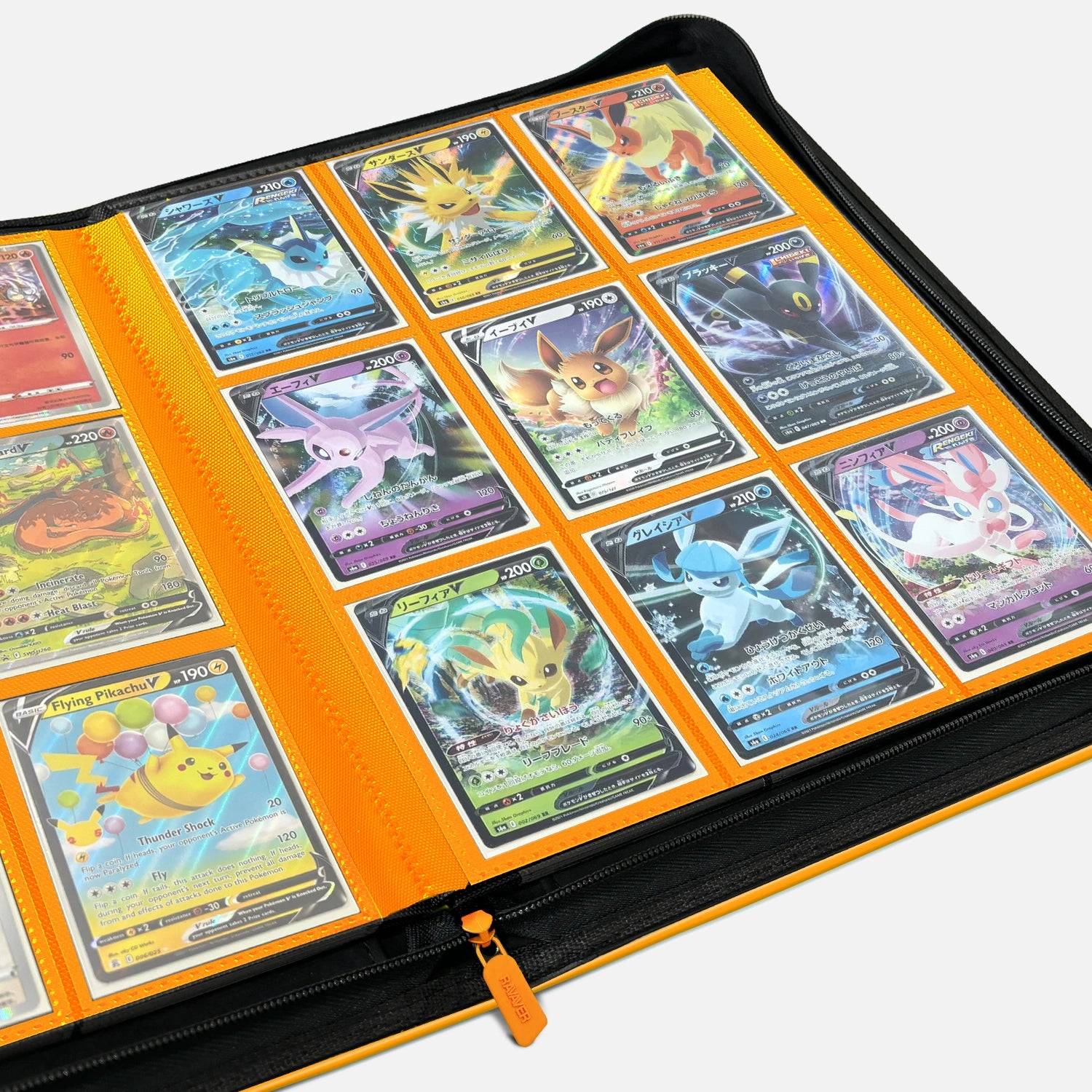
Pocket count refers to how many cards fit on a single page. Standard Pokemon cards are 2.5 by 3.5 inches, which is sized for a 9-pocket page (3x3 grid). That's the format almost every Pokemon binder uses, because it's the format the cards are sized for.
4-pocket pages exist for oversize cards: graded slabs (cards in PSA, CGC, or BGS holders), jumbo promotional cards, and Pokemon Center exclusives in larger formats. If your collection is mostly raw or sleeved cards, you don't need 4-pocket pages. If your collection is mostly graded, you might need a slab binder, which uses a different page format entirely.
12-pocket pages exist for high-density storage of bulk cards. The pockets are slightly tighter than 9-pocket, which can be a problem for double-sleeved cards. Most collectors stick with 9-pocket and don't run into the 12-pocket question until they're storing thousands of bulk cards and need to compress space.
For most collectors, the pocket count question is settled before the binder is bought: 9-pocket, end of decision. The real sizing question is page count, which determines total card capacity.
The Three Use Cases That Decide Page Count
| Use Case | Target Capacity | Page Count | Binder Style |
|---|---|---|---|
| Home set completion | 360-540 cards | 20-30 pages | Standard 9-pocket, zippered, side-loading |
| Trade night / card show | 180-360 cards | 10-20 pages | Premium 9-pocket, double-sleeve fit, exterior design |
| Chase card showcase | 90-180 cards | 5-10 pages | Toploader binder, premium exterior |
| Bulk overflow | 720+ cards | 40+ pages | 9-pocket high-capacity, strap or zipper |
| Graded slab display | 30-80 slabs | 4-pocket slab pages | Dedicated slab binder |
The Home Set-Completion Binder
This is the binder for working through a set: Scarlet & Violet 151, Surging Sparks, an older set you're going back to fill in. The binder lives on a shelf or in a closet, not in transit. Browsability matters more than transport security. Capacity needs to fit the set with room for variants.
A modern Pokemon main set is typically 150-200 cards in the base set. With reverse holos, full arts, alt arts, and secret rares, the master set count climbs to 250-350 cards. A 360-card binder handles a single modern set comfortably with room for upgrades. A 540-card binder handles a master set with room for special variants. Anything beyond 540 starts adding weight and browsability friction; if your set is bigger, split into two binders.
The Trade Night / Card Show Binder
This is the binder you bring to a trade table or a card show. Cards in this binder are typically your tradeable inventory: cards you're willing to part with, plus a few showcase cards for context. The binder gets handled by other people, so closure and exterior matter. Capacity is smaller because you're not bringing the whole collection.
The sweet spot is 180-360 cards. That's enough volume to give other collectors something to browse, but small enough that the binder is portable and the spine doesn't sag from weight. Premium exterior (PU leather, character art, or distinctive cover) earns its keep at trade tables because the binder itself sends a signal about how seriously you take the hobby. Same reason serious players pay attention to their trade-table setup more broadly.
The Chase Card Showcase Binder
This is the binder for your top 50-100 cards: chase cards, alt arts, SIRs, graded raws ready to send to PSA, or a personal collection of favorites that don't trade. The binder is small on purpose. Every card in it is a card you've chosen to highlight.
Capacity is 90-180 cards, which translates to 5-10 pages. The format is usually a toploader binder, because the chase cards in it are typically toploader-loaded or double-sleeved at a minimum. Premium exterior is the standard at this tier; this is the binder that gets pulled out when someone asks "what's your best card," and the answer is supposed to land visually before you say a word.

Why Bigger Isn't Always Better
The temptation when buying a first binder is to go big. "I'll grow into it." In practice, oversize binders create three problems collectors only notice after they've been used for a year.
Browsability drops past 540 cards. Finding a specific card in a 720+ card binder takes longer than finding the same card across two 360-card binders sorted by category. The brain doesn't navigate 40-page binders as well as it navigates 20-page ones.
Spine stress. Most binders under $100 are engineered for a sustained card load of about 540 cards. Beyond that, the spine starts to bow over time, and the zipper carries more lateral stress with every closure. Heavy binders fail at the spine and the zipper before they fail at the pages.
Weight at trade tables. A 720-card binder fully loaded weighs noticeably more than a 360-card binder. If the binder ever leaves the house, the weight question is real. Card shows are long days, and lugging a heavy binder around drains energy that's better spent on the actual trades.
The working consensus on collector forums is the same as the math: multiple smaller binders beat one oversized binder. Splitting by set, by era, or by purpose makes the collection easier to navigate and easier to handle.
For Gift Buyers: The Sizing Question Is Easier
If you're buying a binder as a gift, the sizing question is simpler than it is for a collector buying for themselves. The recipient's collection will grow into whatever capacity you give them, so the optimization is for the gift moment plus reasonable headroom.
A 360-card binder is the safe gift target. It's large enough to feel substantial when the box opens, small enough that it doesn't look intimidating for a recipient who's earlier in their collecting. If you know the recipient is already deep in the hobby with a sizable collection, move up to a 540-card binder. Don't go above 720 for a gift; the size starts working against the moment.
How to Estimate Your Current Collection Size
If you don't already know your card count, a quick estimate works. Cards in a stack 1 inch tall is about 100 cards (slightly less if the cards are sleeved). A standard shoebox half-full of cards is roughly 500-800 cards. A Pokemon Center hobby box full of cards is roughly 1,000-1,500 cards. From there, figure out how much of the collection you want in binders versus other storage formats, and pick the binder sizes accordingly.
Most collectors keep 30-50% of their collection in binders and the rest in storage boxes or other formats. The binder percentage tilts higher for collectors who focus on set completion and display, and lower for collectors who hold large bulk inventories.
Frequently Asked Questions
How many cards does a 9-pocket binder hold?
A standard 9-pocket binder holds 360 cards in 20 pages, 540 cards in 30 pages, or 720 cards in 40 pages, with cards on both sides of every page. If you single-side load (front of each page only), the capacity is half. Most collectors fill both sides on the front pages and single-side on the back pages, which lands somewhere in between.
What's the difference between 4-pocket and 9-pocket binders?
9-pocket pages are sized for standard Pokemon cards (2.5 by 3.5 inches) in a 3x3 grid. 4-pocket pages are sized for oversize cards like graded slabs, jumbo cards, and Pokemon Center exclusives in larger formats. If your collection is mostly raw or sleeved cards, you need 9-pocket. If it's mostly graded slabs, you need 4-pocket or a dedicated slab binder.
Should I buy one big binder or two smaller ones?
Two smaller binders almost always beats one big binder past the 540-card threshold. Browsability improves, spine stress drops, and you can organize the collection by category (sets, eras, types) instead of having everything piled in one place. The exception is if you're building a single master set that needs to be browsed as one unit.
How much spare capacity should my binder have?
20-30% spare capacity is the right target. A binder that's already 95% full on the day you load it will be over capacity within 6-12 months as new pulls come in. Leaving 20-30% empty pages at the back gives you growth room without committing to oversize.
Is a 720-card binder ever the right choice?
Yes, for collectors building a single master set across multiple variants (alt arts, secret rares, full arts) of a large modern set, or for collectors who specifically want one binder that holds an entire era. 720 is the upper edge of what's reasonable in one binder. Beyond that, splitting into two is almost always the better answer.
Do graded cards go in regular binders?
No. Graded cards live in slabs (the hard plastic holders from PSA, CGC, or BGS), which don't fit in standard binder pockets. Graded slabs go in dedicated slab binders with 4-pocket pages sized for the slab format, or in slab display cases on a shelf. For collectors considering grading a card, our piece on whether to display graded slabs or raw cards covers the trade-offs.
What size binder is best for a kid getting into Pokemon?
For a young collector just starting out, a 240-360 card binder in the $30-$50 range hits the right balance. It's large enough to feel substantial and small enough that the collection looks meaningful as it grows. The most important features at this stage are sewn-in pages and a strap or zipper closure, not size.
Your Next Step
Pick the binder size by use case first, then check that the capacity matches your collection plus 20-30% growth headroom. Home set completion: 360-540 cards. Trade nights and card shows: 180-360 cards. Chase card showcase: 90-180 cards. If you're not sure which category you fall into, start with a 360-card home binder; it's the size that adapts to the most use cases without committing too far in any direction.
For the broader decision of which binder format to buy at the size you've chosen, the 2026 Pokemon binder buying guide covers the five core decision points: pocket layout, closure, compatibility, capacity, and material. Size is one decision in the larger framework.
Sources:
- r/PokemonTCG, Binder Capacity Discussion Threads, retrieved 2026-05-14, https://www.reddit.com/r/PokemonTCG
- PSA, Preserving TCG Cards: Storage Options, retrieved 2026-05-14, https://www.psacard.com/articles/articleview/14066/preserving-tcg-cards-storage-options
- Bulbapedia, List of Pokemon Trading Card Game Expansions, retrieved 2026-05-14, https://bulbapedia.bulbagarden.net/wiki/List_of_Pokémon_Trading_Card_Game_expansions